MIAMI, FL · SOLAR
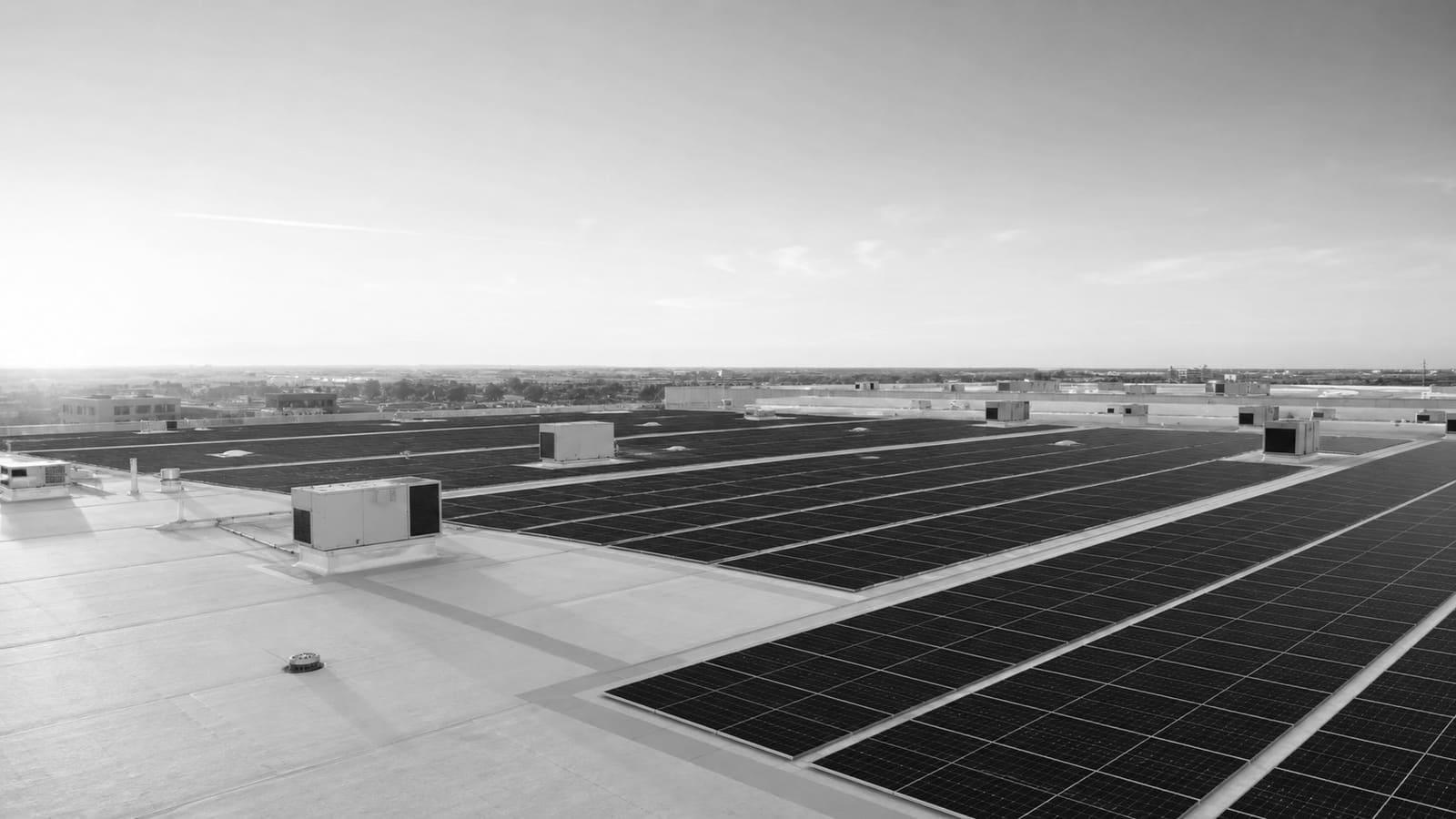
Commercial solar installation in Miami.
We design commercial solar installation for Miami roofs, power use, wind exposure, permitting, and inspections.
Start with the building, not the panels.
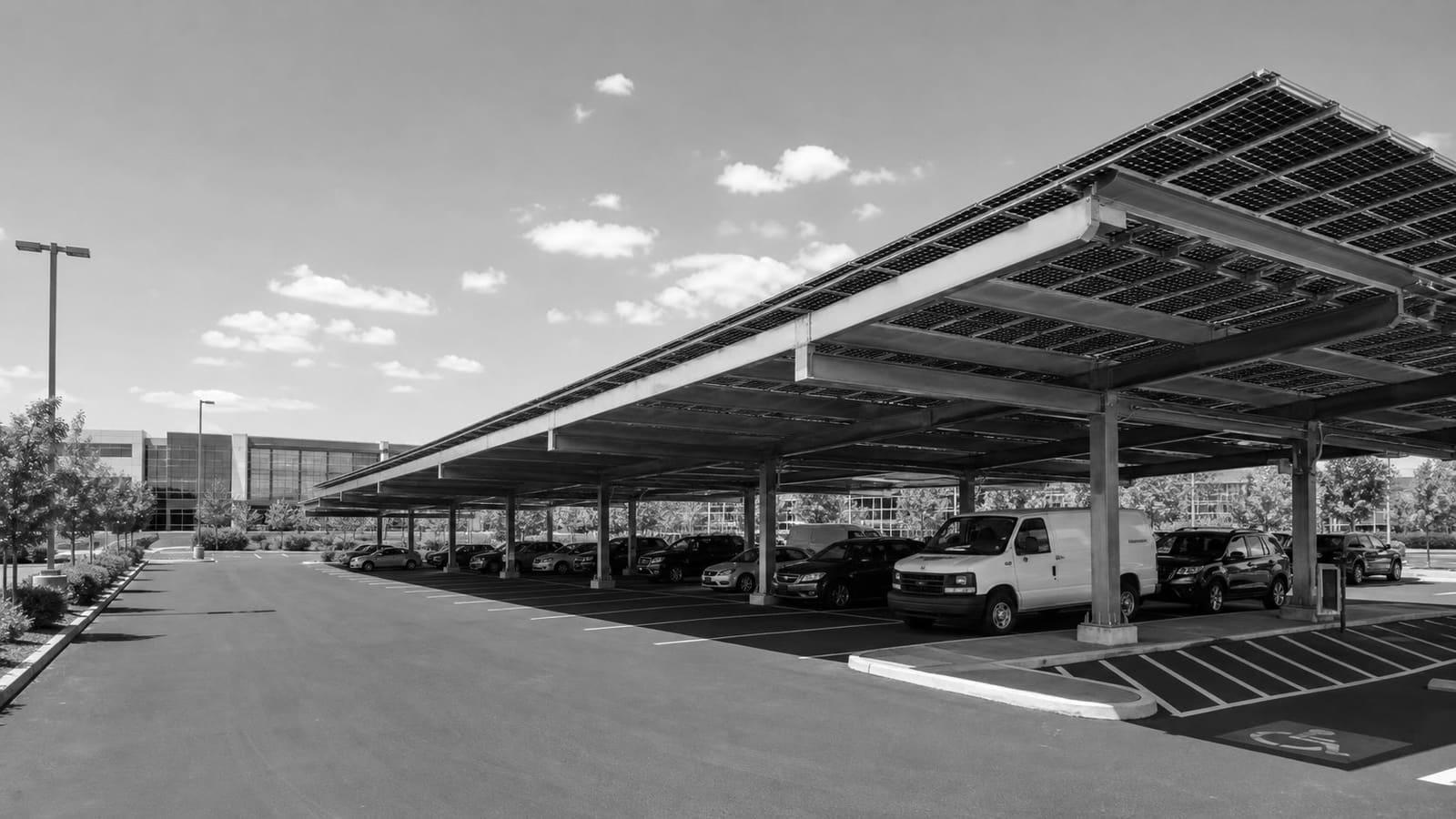
A commercial solar project has to fit the site, the roof, the electrical system, and the utility rules. We start with a solar feasibility study, then compare rooftop solar with solar carports where parking offers the stronger site.
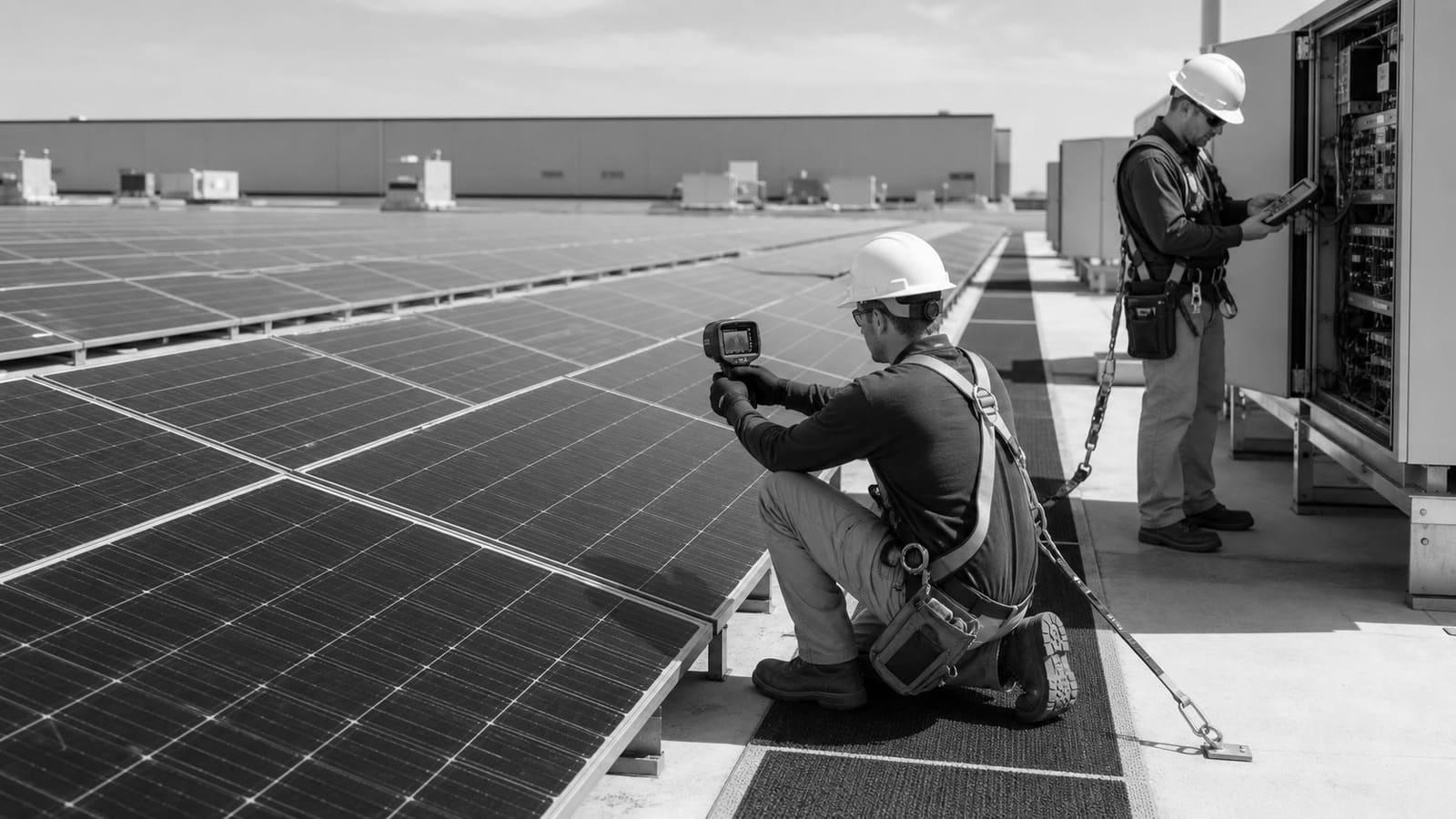
One team carries design, permits, utility interconnection, construction, commissioning, and solar maintenance. We also compare direct ownership with solar financing and PPAs, and add battery storage only when it has a clear job.
START HERE
How should a Miami business plan rooftop solar?
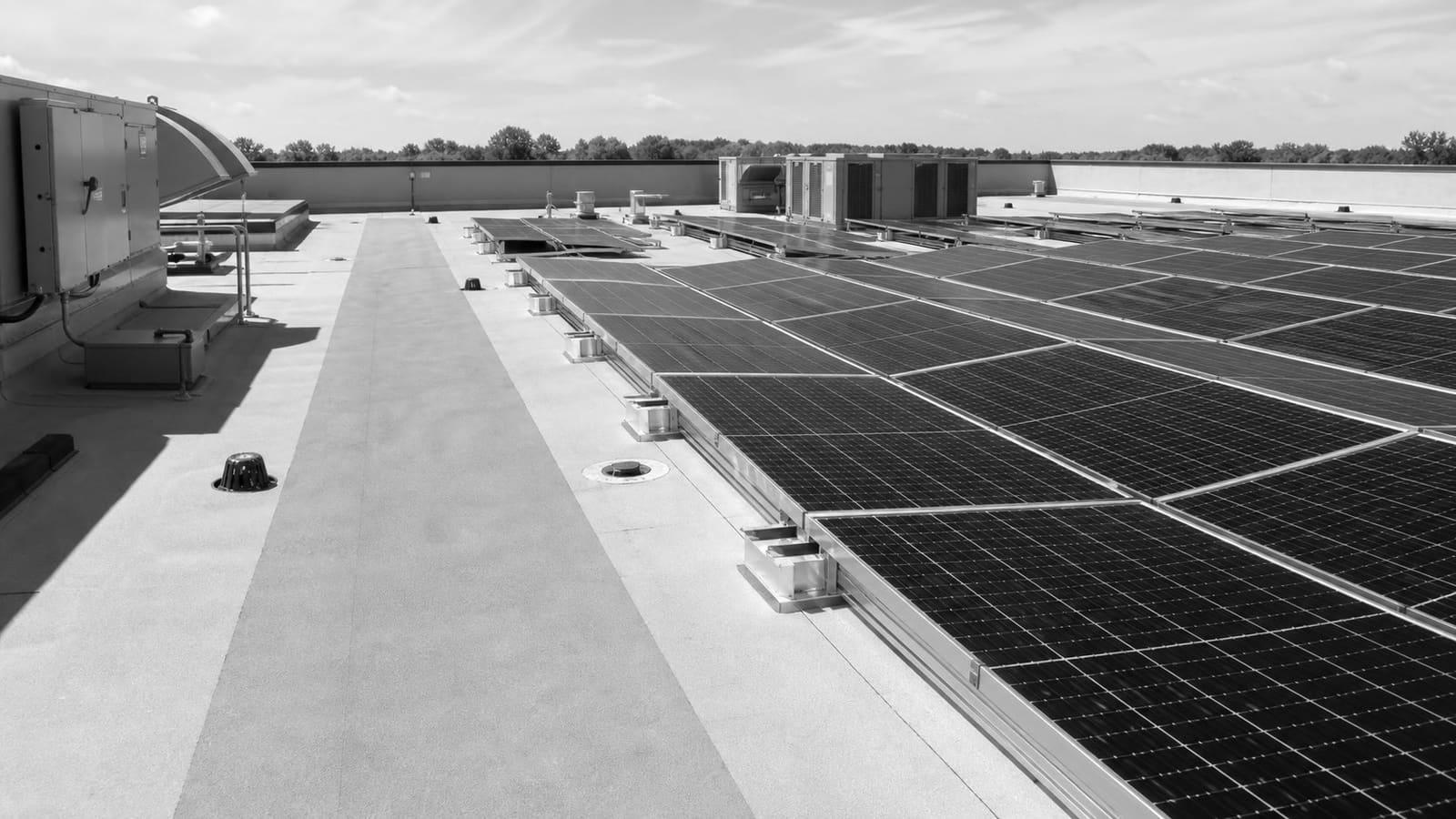
Commercial solar installation in Miami must pair on-site power goals with hurricane-zone engineering. We plan the panels, inverter, roof attachment, and product approvals as one system so the design can produce usable building power and address severe wind exposure. Panels make direct current, and the inverter changes it to alternating current for the building. Surplus power may flow to the grid through net metering. A roof that cannot support a compliant attachment plan is a poor fit until that issue is resolved.
Wind design can decide the project
Miami-Dade is in Florida’s High-Velocity Hurricane Zone. That makes wind loading, roof attachment, and product approval key buying checks for rooftop solar. We use those conditions to guide equipment selection and engineering from the first drawing. A panel layout is not ready to buy if its attachment plan does not address the roof and hurricane wind loads. That gap can change the layout, chosen products, permit documents, or whether the roof should receive solar at all.
Roof fit checks
What changes commercial solar installation plans in Miami?
Wind-load design
PASS/FAIL
We check whether the system design addresses HVHZ wind loading. A failed check changes the layout, equipment, or attachment design before permit plans move forward.
Roof attachment
ROOF
We check the named attachment method for the building roof. If it cannot support the engineered array, the roof is not ready for the planned system.
Product approval
PRODUCT
We check the product approval record for the selected rooftop equipment. Missing approval changes the product choice or stops that design from moving ahead.
Power conversion
INVERTER
We match panels that make direct current with an inverter that supplies alternating current. That choice changes how solar power connects to building loads.
WHAT WE HANDLE
Everything under the solar door.
PROJECT PLANNING
How does rooftop solar power a Miami commercial building?
Panel output
DC
Panels convert sunlight into direct current. This output determines what the inverter must accept.
Inverter output
AC
The inverter changes direct current into alternating current used by the building. Its fit changes how the array serves on-site loads.
On-site use
LOAD
We compare the planned system with the commercial building’s power use. That comparison guides how much generation should serve the facility.
Surplus power
GRID
Surplus electricity may flow back to the grid under net metering. That option changes the utility connection plan.
Permit path
What does Miami commercial solar installation need before approval?
- Confirm whether the site is inside the City of Miami permit process; that decides which building office receives the project.
- Prepare drawings that show wind loading and the roof attachment method; those details shape the permit package.
- List the selected products and their approval records; a missing record can force an equipment change.
- Plan for the City of Miami building inspection; the inspection result decides whether the permitted installation can pass.
BEFORE YOU BUY
What should Miami facility teams compare before buying solar?
- Compare proposals by the stated HVHZ wind-load approach, because wind engineering can change the full rooftop design.
- Compare the exact roof attachment method, because the wrong fit can make the planned array unsuitable for the roof.
- Compare product approval records for the named equipment, because missing records can block the proposed design.
- Compare the panel and inverter pairing, because direct current must be converted to alternating current for building use.
- Compare permit drawings and inspection scope, because the City of Miami enforces construction rules and provides permit and inspection paths.
QUESTIONS
Straight answers.
Why does a Miami commercial solar roof need hurricane-zone engineering?
Miami-Dade is in Florida’s High-Velocity Hurricane Zone. We account for wind loading, roof attachment, and product approval when planning the array.
What equipment makes solar power usable inside a commercial building?
Panels create direct current. An inverter changes it to alternating current that the building can use.
Can extra solar power go back to the grid in Miami?
Surplus power may flow to the grid under net metering. We treat that as a utility connection decision for the planned system.
Which Miami records affect a rooftop solar project?
Permit documents, product approval records, and building inspection results affect whether the selected design can move forward and pass.
GET STARTED
Tell us about the building.
Whatever the trade, we scope it, price it, and put the right crew on it. Site visits are free, always.
MORE SERVICE AREAS