The short answer
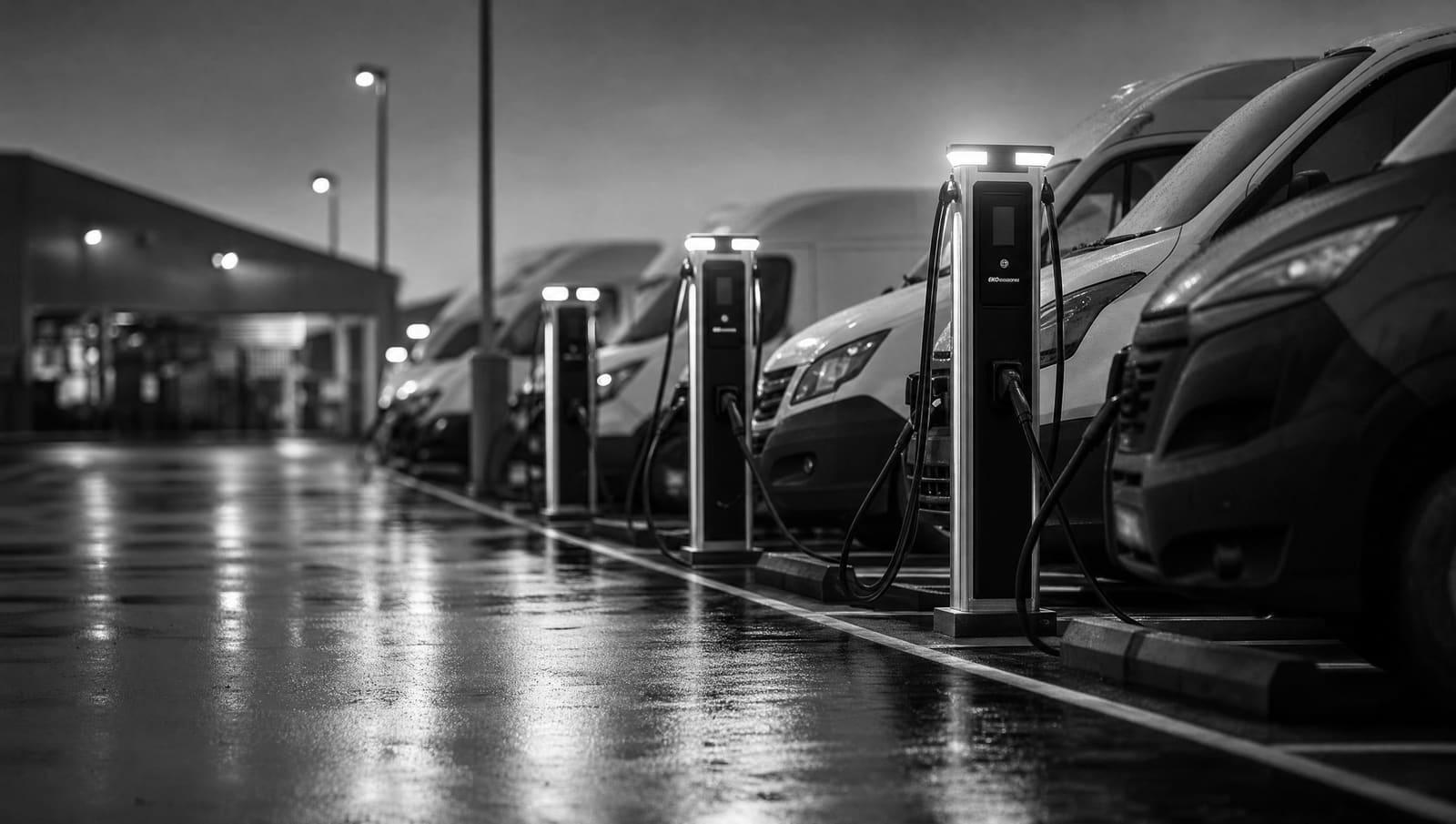
Commercial EV charger installation in Homestead.
A complete commercial installation covers the site and electrical assessment, charger selection, design, utility coordination, permitting, construction, inspection, network setup, testing, and turnover. Level 2 usually serves vehicles parked for hours. DC fast charging supports shorter stops but can require a much larger electrical scope and earlier utility involvement.
The site review must confirm available power, charger locations, cable reach, parking use, equipment access, communications, and a practical route for conduit.
Start with operations
Choose the charging plan before choosing hardware
The right charger is the one that prepares the required vehicles before they leave. Begin with who will charge, how long each vehicle stays, how much energy it needs, and whether charging can be scheduled. A workplace may favor several Level 2 ports because cars remain parked for hours. A fleet with short turnaround windows may need faster equipment or tightly managed charging. Public charging can add payment, access, signage, data, and support requirements.
Also decide whether the first phase is the full build or the start of a larger plan. Future ports can affect panel sizing, conduit routes, communications, parking layout, and utility discussions today. Documenting that plan before procurement helps the designer avoid infrastructure that becomes a constraint later.
Scope control
What belongs in the installation budget
A useful budget separates the charger purchase from the work needed to power, protect, connect, and operate it.
Equipment fit
Level 2 and DC fast charging create different projects
Level 2 equipment connects to AC power and relies on the vehicle to convert that power for its battery. It is often a sound fit when employees, tenants, guests, or fleet vehicles remain parked long enough to charge gradually. A project can include wall-mounted or pedestal units, dedicated circuits, shared power controls, network connections, and parking protection.
DC fast charging converts power outside the vehicle. That changes far more than the cabinet. The design may need greater service capacity, larger electrical equipment, more space, added cooling considerations, and closer coordination among the owner, engineer, contractor, equipment provider, and utility. Fast charging should therefore follow a measured energy and turnaround requirement, not a general wish for the fastest charger.
Connector support, cable reach, environmental rating, warranty coverage, networking, payment tools, and serviceability also matter. Ask vendors to identify which functions require subscriptions and what happens if communications fail. The selected charger must fit both the vehicles and the operating model.

Project complexity
What makes one installation simpler than another
Two projects with the same port count can require very different work. The difference usually sits between the electrical source and the parking spaces.
Lower complexity
Capacity and a clear route already exist
The panel can support the planned load, charging spaces are close to power, communications are available, and construction avoids difficult surface restoration.
Higher complexity
Power or site work must expand
The project needs service changes, long conduit runs, trenching, new distribution equipment, coordinated shutdowns, or a layout that must preserve daily operations.
Site assessment
Turn the operating plan into a buildable scope
A commercial site review should begin at the electrical service and end at each proposed charging space. The team should record service and panel information, review existing loads, examine protective devices, and map a realistic pathway for conductors. It should also note pavement, landscaping, drainage paths, walls, occupied areas, and spaces needed for electrical equipment.
The parking review is just as important. Confirm which vehicles use the spaces, when they arrive, when they leave, and whether another vehicle can block access. Place equipment so cables reach without crossing walking routes or creating daily handling problems. Include lighting, signs, protective posts, security, and communications where the operating plan requires them.
The resulting scope should show existing conditions, assumptions, proposed charger locations, electrical routing, construction limits, and future provisions. If important conditions remain hidden or unverified, the proposal should state how they will be investigated and how changes will be priced.
Bring useful records to the walkthrough
Available electrical drawings, interval load data, parking plans, vehicle schedules, fleet energy needs, and expansion goals can make the first design discussion more productive.
Operating model
Decide who owns the experience after construction
Installation ends when the equipment works, but ownership continues. Commercial buyers should assign responsibility for driver access, pricing, customer questions, software administration, energy reporting, inspections, cleaning, repairs, and warranty claims. Networked charging can provide useful control and data, but it may also introduce subscriptions and communications dependencies.
Procurement should test the operating model before a product is selected. Ask who monitors faults, how support is requested, which replacement parts are available, and whether the station can still provide useful service during a network interruption. These answers belong in the buying decision, not in a conversation after opening day.
Owner managed
More direct control
The property team controls access and policy but must assign staff, software administration, support, and maintenance responsibilities.
Managed service
More vendor involvement
A provider may handle selected operating tasks, but the agreement should define fees, data access, response duties, and ownership boundaries.
Procurement
Compare the whole life of the charging system
A low equipment price does not guarantee a low project cost. Compare construction, electrical upgrades, software, communications, warranties, preventive care, repair support, payment processing, and expected replacement needs. Review commercial EV charging cost as a full installed system rather than a row of charger prices.
For a phased project, ask bidders to separate the active charging scope from future-ready work. Spare raceway or planned distribution space may be useful when expansion is likely, but every allowance should connect to a stated future port count and power strategy. Avoid paying for vague readiness that is not shown on the drawings.
Treat incentives and tax benefits as possible offsets, not guaranteed funding. Federal guidance points businesses to the 30C eligibility locator and states that qualifying projects could receive a credit of up to 30 percent of eligible purchase and installation costs. Eligibility depends on current rules and location. Verify the address, requirements, timing, and tax treatment before approving the budget.
Bid comparison
Five things every comparable quote should show
Give bidders the same operating requirements and ask them to state assumptions. A clear comparison should include these five items.
01
Defined equipment
List charger models, port count, power, connectors, mounting hardware, warranties, and required subscriptions.
02
Complete electrical scope
Show panels, protection, metering, conductors, conduit, controls, trenching, restoration, and excluded upstream work.
03
Design and approval duties
Assign drawings, utility coordination, permit submissions, corrections, inspections, and closeout documents.
04
Construction schedule
Separate design, approvals, equipment lead time, site work, shutdowns, inspection, activation, and owner dependencies.
05
Commissioning and support
Include test charging, network setup, staff training, warranty contacts, maintenance options, and acceptance criteria.
Keep planning locally
Related EV charging pages in Homestead
Get a defensible number
Price the equipment and the building together.
Send the address, operating target, and target opening date. Flux will identify what must be verified before the project can be priced.
Price my chargersQuestions
Straight answers.
How does a commercial EV charger installation project begin?
Begin with the vehicles and the site. Define who will charge, arrival and departure times, energy needs, access rules, and future growth. Then review the electrical service, panels, existing loads, proposed spaces, conduit routes, communications, and construction constraints. This information supports equipment selection and a buildable scope.
Should a Homestead commercial property choose Level 2 or DC fast charging?
Choose based on dwell time and required energy. Level 2 often fits vehicles that remain parked for hours. DC fast charging can serve short turnaround needs, but it may create a larger electrical and utility scope. A mixed system can work when the property serves users with different schedules.
Can load management avoid an electrical service upgrade?
Load management can limit or distribute charging demand, so it may help a site use available capacity more effectively. It does not guarantee that an upgrade can be avoided. The decision requires a load review, an operating plan, compatible chargers or controls, and a design that protects the building's other electrical needs.
What should happen before chargers are ordered?
Confirm the charging plan, site layout, electrical concept, network requirements, utility coordination needs, approval path, equipment lead times, and responsibility matrix. Ordering too early can lock the project into hardware that does not fit the service, connectors, software, mounting plan, or permit design.
What does commissioning include?
Commissioning should verify safe energization, correct charger settings, communications, access controls, payment functions when used, and a successful charging session at every port. Turnover should also provide approved documents, equipment information, warranty contacts, software access, staff guidance, and a clear method for reporting faults.
Are commercial EV charging incentives available in August 2026?
Potential tax benefits or other programs must be checked at the time of purchase. Federal guidance directs businesses to the 30C eligibility locator and notes a possible credit of up to 30 percent for qualifying infrastructure. Location, current rules, deadlines, labor requirements, and tax circumstances can affect eligibility. Do not treat an incentive as secured until the project and applicant have been verified.
Sources used for this guide
- [1]afdc.energy.gov — Alternative Fuels Data Center: Procurement and Installation for Electric Vehicle Charging Infrastructure
- [2]betterbuildingssolutioncenter.energy.gov — DOE Better Buildings Commercial EV Charging Infrastructure Guide
- [3]driveelectric.gov — Public electric vehicle charging infrastructure playbook · Joint Office of Energy and Transportation
- [4]energy.gov — DOE Federal Workplace Charging Program Guide