Start with the full scope
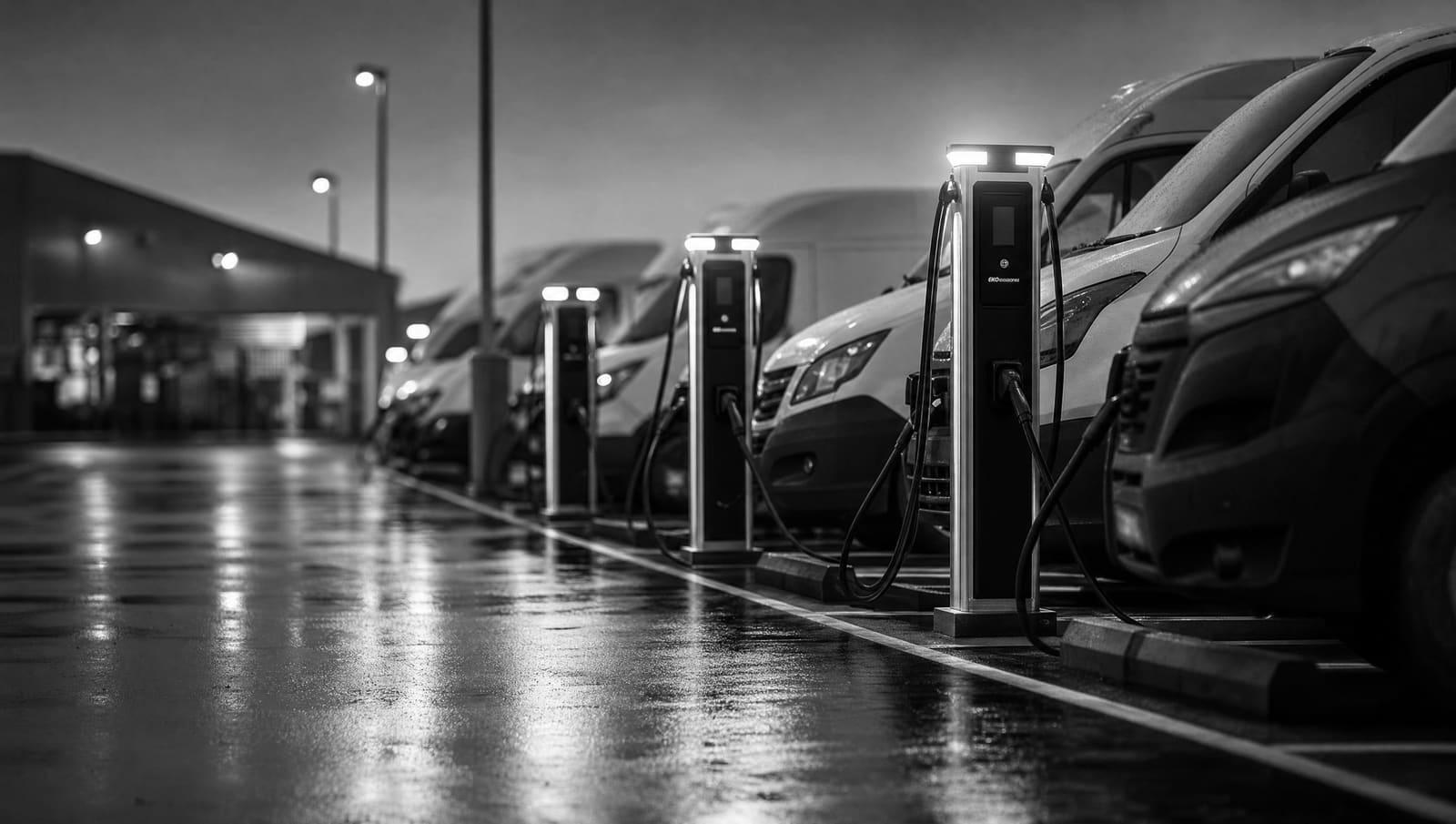
Commercial EV charger installation in Garden Grove.
A complete commercial installation covers the site and electrical assessment, charger selection, utility coordination, design, permitting, construction, equipment setup, testing, and turnover. Level 2 charging often serves vehicles parked for hours. DC fast charging serves shorter stops but can require a much larger electrical and utility scope.
The site review must verify electrical capacity, parking use, cable routes, communications, accessibility needs, expansion plans, and any utility work before equipment is ordered.
Set the operating plan first
Three choices shape the entire installation
Begin with the vehicles, not a charger catalog. Ask who will charge, how long each vehicle stays, how much energy it needs, and when it must leave. Those answers guide charger power, port count, access rules, and electrical demand.
Next, decide whether charging is a workplace benefit, a fleet tool, a tenant service, or a public amenity. A public station may need payment, driver support, signage, data reporting, and reliable internet. A private fleet may care more about scheduled charging and departure readiness.
Finally, decide what growth looks like. The first phase may include only a few active ports, but conduit paths, panel space, communications, and parking layout can prepare the site for later phases. This avoids disturbing finished pavement more than necessary. It also gives the electrical design a clear near-term and long-term target.
Read the whole project
The budget is larger than the charger
A useful budget separates equipment from the work needed to serve it. For a deeper planning discussion, review commercial EV charging cost factors.
Choose the charging level
Level 2 and DC fast charging solve different problems
Level 2 equipment connects to the building’s AC electrical system, while the vehicle handles the conversion needed by its battery. It is often the practical choice when cars remain parked for a meaningful part of the day. Workplaces, shared parking, and other long-dwell settings should size charging around the energy vehicles need before departure, not only the highest charger rating available.
DC fast equipment performs the AC-to-DC conversion outside the vehicle. It can serve drivers or fleets that need shorter stops, but the installation plan may change sharply. Higher electrical demand can affect service equipment, utility coordination, space for electrical hardware, thermal management, and operating costs. A facility should not choose DC fast charging only because it is faster.
Compare usable charging outcomes. A lower-power port that serves a vehicle throughout a long parking window may meet the need with less infrastructure. A fast charger can be justified when vehicles turn quickly, share a charger across shifts, or cannot remain parked long enough for Level 2. The right selection comes from vehicle schedules, required energy, compatible connectors, and the site’s electrical limits.
Know the construction conditions
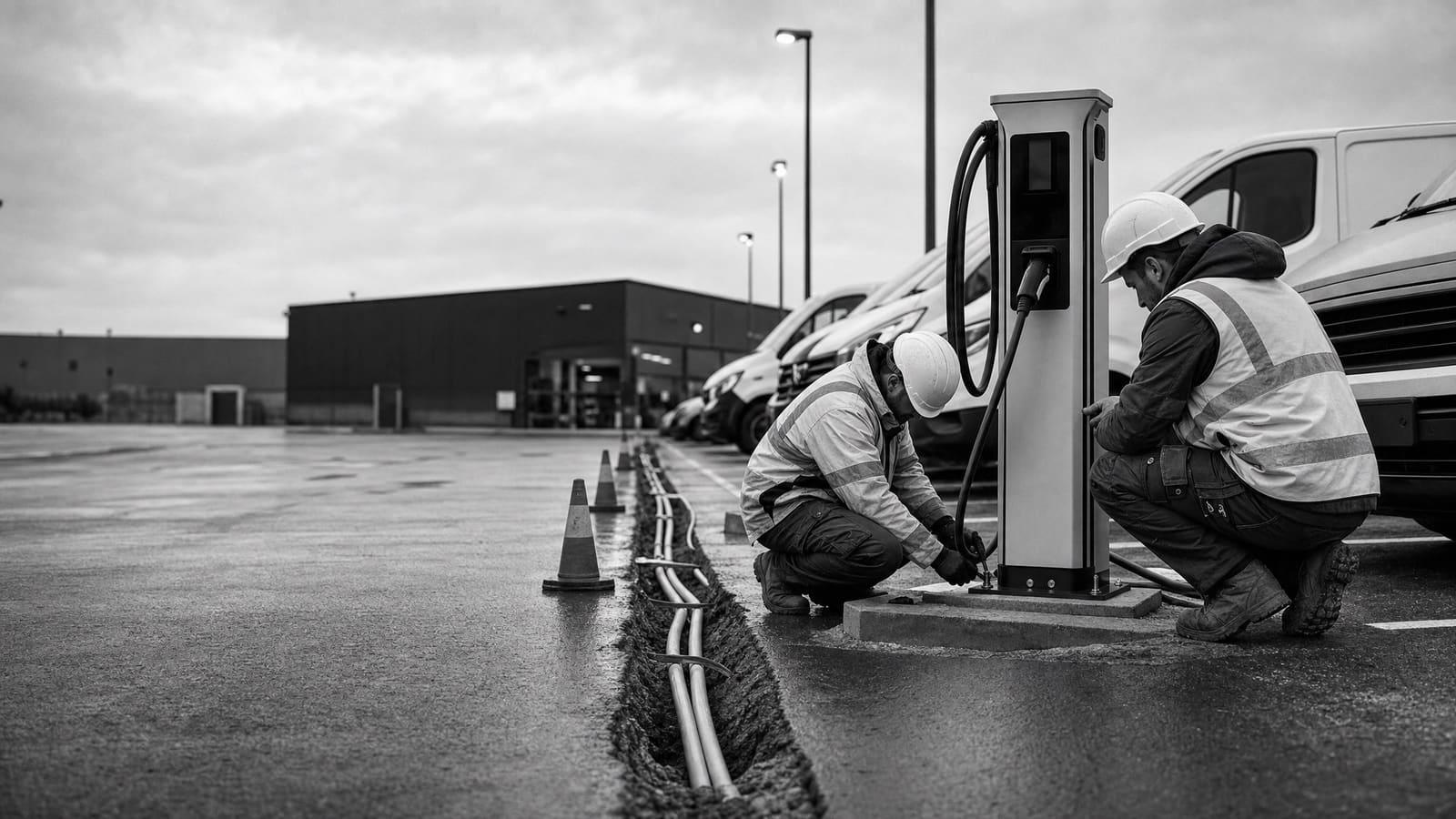
Some sites are straightforward; others need major coordination
The charger count alone does not show project complexity. Existing power, equipment space, routing, communications, and utility involvement can make similar-looking parking plans very different installations.
Lower complexity
Capacity and short routes already exist
The electrical system can support the load, parking is near the source, equipment has a clear mounting location, communications work, and construction avoids difficult surface restoration.
Higher complexity
New infrastructure must reach the parking area
The project needs service changes, new distribution equipment, long underground routes, extensive pavement work, utility upgrades, or staged construction around active facility operations.
Verify before procurement
What a commercial charging site review should answer
A site review should connect the charging goal to physical evidence. The reviewer should document the electrical service, meter, main distribution equipment, relevant panels, available equipment space, and the likely route to each charging area. Load information then supports a preliminary view of whether the existing system may serve the proposed load or whether design alternatives need study.
The parking review should cover stall use, vehicle movement, mounting positions, cable reach, protection from vehicle impact, signage, lighting, and accessible use. It should also identify surfaces that may be opened and restored. For networked stations, the team should test or plan communications rather than assume a signal will be available at the charger.
The review also needs an operating brief. Record expected users, arrival and departure patterns, required energy, charging priority, payment rules, reporting needs, and responsibility for driver support. These details help the designer compare dedicated circuits, shared power, managed charging, and possible phases. The result should be a written basis for design, not just a count of parking spaces.
Ask for assumptions in writing
The site-review record should state the proposed load, charger type, routing concept, known constraints, items still requiring verification, and decisions that could change the scope.
Plan beyond construction
Ownership and operation deserve equal attention
A charger becomes part of the facility after the installer leaves. Before purchase, assign responsibility for electricity, software accounts, pricing, access permissions, driver questions, inspections, cleaning, repairs, and warranty claims. Confirm who owns the equipment and who controls its data.
Networked equipment can support payment, utilization records, remote monitoring, and access rules. It can also introduce subscriptions, communications dependencies, account administration, and vendor support needs. Non-networked equipment may be simpler, but it offers fewer controls. The correct choice depends on the service the facility intends to operate.
Owner-operated
Keep direct control
The facility buys the equipment and manages policies, software, electricity, maintenance, and upgrades. Confirm staff capacity and support arrangements before launch.
Third-party role
Define every responsibility
If another party owns, networks, bills, or services the stations, the agreement should state costs, data rights, uptime duties, support, and exit terms.
Build a durable procurement plan
Phase the site without creating a stranded system
A phased project can control the first construction scope while preserving room to grow. Separate the number of ports needed now from the number the facility may need later. Then ask the designer which shared assets should be sized or placed for both phases. These may include equipment space, distribution pathways, conduit, communications, and the parking arrangement.
Future-ready does not mean buying every charger at once. It means making deliberate choices where later work would be disruptive or difficult to reverse. The proposal should distinguish installed equipment, passive preparation, reserved capacity, and assumptions about future utility service. It should also explain whether managed charging can limit combined demand while still meeting vehicle schedules.
Procurement should compare total ownership obligations, not just the equipment price. Review software terms, network compatibility, warranties, replacement access, maintenance, payment processing, data export, and the process for changing providers. Include commissioning and staff training in the purchase. For budget planning, keep hardware, construction, professional services, utility work, and recurring charges separate so decision-makers can see what changes between options. The EV charging cost guide can help organize those questions before bids are compared.
Compare bids on equal terms
Five items every comparable quote should show
A low total can hide exclusions. Require each bidder to state the design basis, construction scope, equipment, outside dependencies, and turnover work in the same order.
01
Charging basis
List users, vehicles, dwell times, required energy, port count, power, connectors, access rules, and growth assumptions.
02
Electrical and civil scope
Show panels, switchgear, conductors, conduit, trenching, mounting, protection, restoration, and the route used for pricing.
03
Approvals and utility responsibilities
Identify drawings, calculations, permit work, inspections, utility applications, fees, studies, upgrades, and the party responsible for each.
04
Equipment and recurring services
Name charger models, warranties, network features, communications, subscriptions, payment costs, software terms, and expected delivery assumptions.
05
Testing and turnover
Include commissioning, test charging, account setup, training, manuals, closeout documents, support contacts, exclusions, and acceptance criteria.
Keep planning locally
Related EV charging pages in Garden Grove
Get a defensible number
Price the equipment and the building together.
Send the address, operating target, and target opening date. Flux will identify what must be verified before the project can be priced.
Price my chargersQuestions
Straight answers.
What does a commercial EV charger installation include?
A complete scope normally includes site assessment, electrical review, charger and network selection, design, utility coordination, permits, electrical and civil construction, equipment installation, inspections, commissioning, training, and closeout documents. The quote should clearly identify any owner or utility work outside that scope.
Should our Garden Grove facility install Level 2 or DC fast chargers?
Choose based on required energy and parking time. Level 2 is often suitable when vehicles remain parked for hours. DC fast charging is better suited to short turnaround needs, but it can require more electrical equipment and utility coordination. A mixed design may fit sites with different users.
How do we know whether the existing electrical service can support charging?
An electrical assessment must review the service and distribution equipment, available space, existing loads, proposed charging load, and operating schedule. The design team can then study dedicated capacity, managed charging, phased deployment, or service changes. A visual panel check alone is not enough.
Do commercial chargers need to be networked?
Not always. Networking is useful when the facility needs payment, access control, utilization data, remote monitoring, or reporting. It also creates software, communications, and support obligations. Simple private charging may need fewer features, but the operating policy should be settled before equipment is selected.
When should the utility become involved?
Engage the utility during planning when the proposed load may affect the electrical service, metering, rate treatment, transformer, or other utility-owned equipment. Early coordination helps expose studies, upgrades, responsibilities, and schedule dependencies before the final equipment order.
How should we evaluate incentives or tax credits in August 2026?
Treat every program as time-sensitive. Verify the property address, eligible equipment, labor rules, application timing, tax status, and current program funding with the administering authority and a qualified tax adviser. Do not approve a project budget that depends on an unconfirmed benefit.
What should happen during commissioning?
Commissioning should confirm that each port energizes and charges a compatible vehicle, safety functions operate, network and payment features work, access rules are correct, and monitoring reports accurate status. The owner should receive training, warranties, manuals, account access, test records, and support contacts.
How can we prepare for more chargers later?
Define the likely future port count during initial design. Evaluate equipment space, conduit routes, communications, parking layout, electrical distribution, and load management with that target in mind. The quote should separate active chargers from passive preparation and avoid promising future capacity that has not been verified.
Sources used for this guide
- [1]afdc.energy.gov — Alternative Fuels Data Center: Procurement and Installation for Electric Vehicle Charging Infrastructure
- [2]betterbuildingssolutioncenter.energy.gov — DOE Better Buildings Commercial EV Charging Infrastructure Guide
- [3]driveelectric.gov — Public electric vehicle charging infrastructure playbook · Joint Office of Energy and Transportation
- [4]energy.gov — DOE Federal Workplace Charging Program Guide