The direct answer
Commercial EV charger installation in Fort Smith.
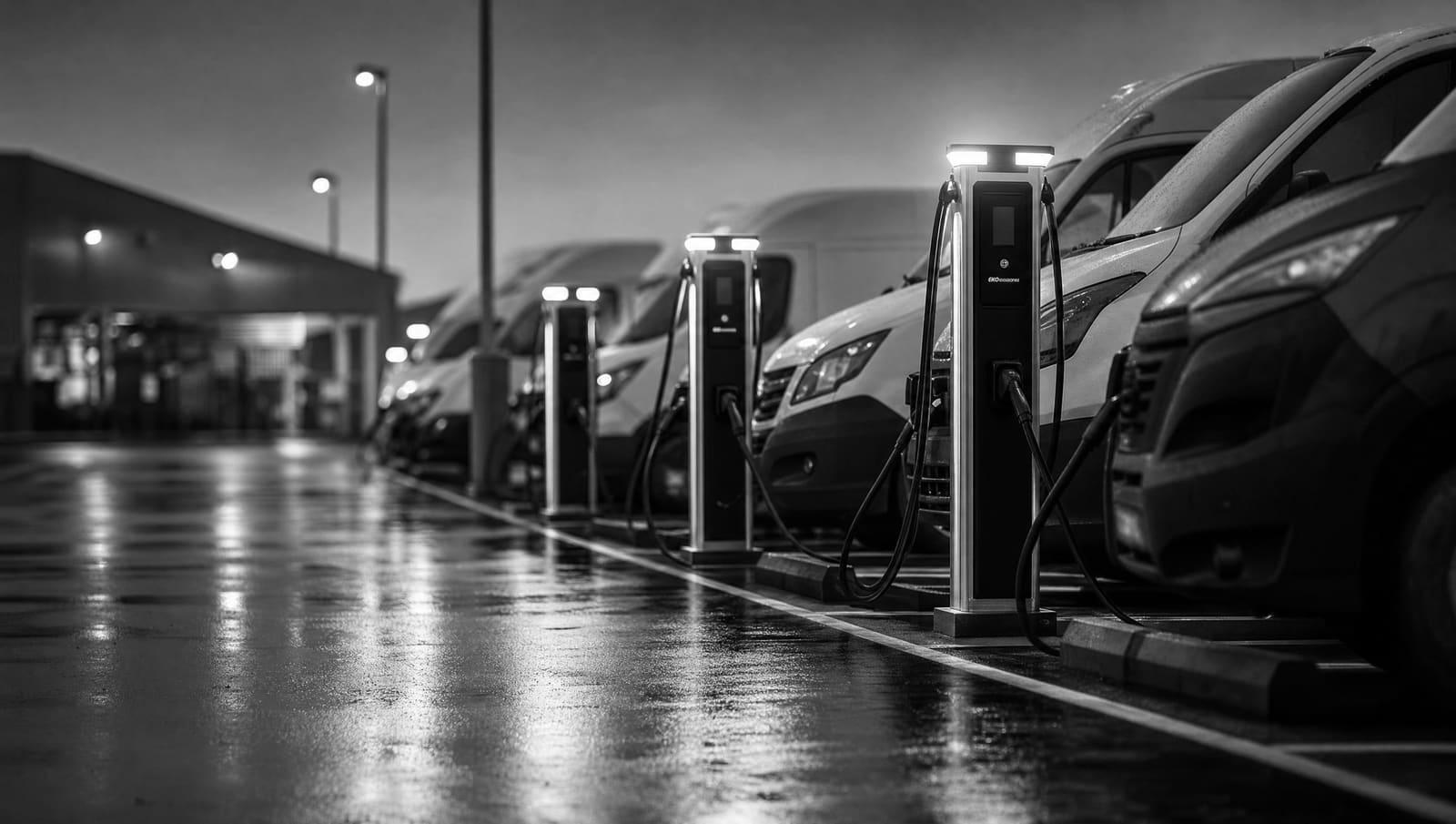
A complete commercial installation covers the site and electrical assessment, charger selection, utility coordination, design, permits, construction, network setup, testing, and owner turnover. Level 2 charging often fits long parking stays and moderate power. DC fast charging serves quick vehicle turnover but can require larger electrical equipment and deeper utility involvement.
The site review must verify electrical capacity, parking use, cable routes, accessibility, communications, drainage, security, and room for later expansion.
Start with operations
Choose charging around how vehicles use the property
The right commercial charger is the one that supplies enough energy during the time each vehicle is parked. Begin with vehicle arrival times, daily mileage, dwell time, and the number of vehicles that may charge together. Then compare that need with the building load and available service.
Level 2 equipment uses AC power and relies on the vehicle to convert that power for its battery. It is often suited to workplaces, overnight fleet parking, and other long stays. DC fast equipment performs the conversion outside the vehicle and can deliver energy faster. That speed changes the electrical design, equipment footprint, cooling needs, utility review, and operating plan.
Do not choose power from a product sheet alone. A higher rating may add construction cost without helping vehicles that remain parked for hours. A lower rating may fail a fleet that must return to service quickly.
Budget structure
The charger is only one line in the project
A useful budget separates equipment from the electrical, civil, utility, software, and operating work needed to place it in service. Review commercial EV charging costs as a complete installed system.
Equipment choice
Level 2 and DC fast charging create different projects
Level 2 is often the practical starting point when vehicles remain parked for several hours. The equipment connects to the commercial building’s AC distribution system. The design must still account for panel capacity, simultaneous charging, conductor routes, mounting, cable reach, and weather exposure. Networked units can control access, collect use data, support payment, and adjust charging demand.
DC fast charging is built for shorter stops or vehicles with demanding route schedules. Its external power-conversion equipment can require a larger service, dedicated transformer or switchgear, equipment pads, protective barriers, and closer utility coordination. The equipment also occupies more space and may change traffic flow around the charging stalls.
Select the lowest practical power that meets the operating need, then confirm that the chosen vehicles and connectors are compatible. Also decide whether one failed unit can interrupt operations. A fleet may need shared capacity or spare charging positions. A public site may place more value on payment, remote monitoring, clear signage, and dependable support.

Complexity check
What makes one installation easier than another?
Two properties using similar chargers can require very different work. The main dividing line is whether suitable power and a clear construction route already exist near the charging spaces.
Lower complexity
Capacity and parking already align
The site has usable panel capacity, a short route to parking, simple mounting, reliable communications, and no major utility work. Permitting and inspection still belong in the schedule.
Higher complexity
The site needs new infrastructure
Service upgrades, transformer work, long trenching, pavement cuts, constrained equipment space, phased operations, or DC fast charging add design decisions and coordination.
Site assessment
Build the scope before requesting equipment prices
A commercial site review should begin at the utility service and end at every proposed charging space. The reviewer should document the service, meter, switchgear, panels, existing loads, available breaker positions, equipment condition, and proposed feeder path. A load calculation helps determine whether charging can fit within the present distribution system or needs managed charging, new equipment, or a service change.
Outside, the review should measure conduit and trench routes, note pavement and landscaping, confirm drainage conditions, and identify places for chargers, pads, barriers, signs, and accessible circulation. Cable reach matters. Drivers should not need to stretch charging cables across walkways or rely on one parking direction.
The operating interview is just as important. Record vehicle types, daily energy needs, parking windows, peak building hours, access rules, payment needs, data needs, and expansion plans. These facts allow the designer to compare Level 2, DC fast charging, and mixed systems on the same operating basis.
Ask for a documented basis of design
It should state vehicle assumptions, proposed charging power, simultaneous load, available capacity, utility dependencies, communications needs, construction limits, and future-port provisions.
Arkansas planning point
Confirm utility rules before locking a public fast-charging design
Arkansas allows investor-owned utilities to install and own public DC fast-charging stations. State requirements also allow a site host to install metering for electricity sold at a station and choose equipment and network service from the utility’s pre-qualified list.
That rule matters when a Fort Smith project will offer public DC fast charging. Before selecting hardware, confirm the serving utility, the current ownership options, whether a pre-qualified list applies, the required meter arrangement, and who owns each part of the installation. These details can affect procurement and the boundary between customer and utility work. Because utility programs and requirements can change, verify the current terms for the exact service address in August 2026.
Do not release hardware too early
For public DC fast charging, obtain written utility confirmation of service needs, ownership boundaries, metering, approved equipment, and the expected review sequence.
Ownership and control
Decide who operates the charging system after turnover
Charging equipment can be owned by the property, provided through another ownership arrangement, or paired with a separate network provider. The best structure depends on control, accounting, maintenance duties, and the reason for offering charging.
Write the operating rules before installation. Decide who may charge, whether sessions are free or paid, how users are identified, who receives alerts, and who answers support calls. If the chargers support a fleet, define the charge schedule and response when a vehicle does not connect. If the public may use them, define pricing display, payment support, parking enforcement, and uptime responsibilities.
Property control
Own the equipment and operating decisions
This can provide direct control, but the owner must budget for networking, maintenance, repairs, software administration, and future replacement.
Service arrangement
Assign defined duties to providers
Compare contract length, data access, payment handling, response times, replacement terms, software portability, and what happens when service ends.
Procurement and phasing
Buy an expandable system without overbuilding today
A phased installation can prepare a site for growth while limiting the first equipment purchase. The initial phase may install the required chargers while adding conduit capacity, pull points, panel space, pad area, or spare communications pathways for later work. The value comes from avoiding repeated demolition and preserving a workable expansion route.
Do not assume that spare conduit alone makes a site ready. Future charging also needs a plan for electrical capacity, switchgear space, transformer limits, load controls, parking assignments, and network licenses. Show both the current connected load and the planned future load on the design basis.
Evaluate bids on lifetime responsibility as well as construction scope. Network fees, payment processing, cellular service, preventive maintenance, replacement parts, warranty administration, and software support can continue after commissioning. Confirm who owns usage data and whether equipment can move to another network. Treat incentives or tax credits as possible offsets only after current eligibility is verified for the property, project, equipment, and placed-in-service timing.
Quote checklist
Five things every comparable installation quote should show
A total price is not enough. Ask each bidder to state the same assumptions, inclusions, exclusions, and turnover duties so that hidden gaps become visible before award.
01
Charging basis
Port count, power, vehicle compatibility, dwell-time assumptions, and simultaneous charging load.
02
Electrical and civil scope
Panels, feeders, trenching, pads, pavement repair, barriers, signage, striping, and accessibility work.
03
Utility and permit duties
Responsible parties, required applications, design documents, inspections, fees, dependencies, and schedule allowances.
04
Equipment and software
Exact models, mounting, warranties, communications, payment features, network terms, data access, and recurring charges.
05
Commissioning and turnover
Testing, activation, training, closeout documents, support contacts, maintenance options, and acceptance criteria.
Keep planning locally
Related EV charging pages in Fort Smith
Get a defensible number
Price the equipment and the building together.
Send the address, operating target, and target opening date. Flux will identify what must be verified before the project can be priced.
Price my chargersQuestions
Straight answers.
What does a commercial EV charger installation include?
A complete project includes site assessment, load review, equipment selection, utility coordination, design, permits, electrical and civil construction, charger mounting, network setup, inspections, commissioning, training, and closeout documents. The quote should state which party owns every task.
Should our Fort Smith property use Level 2 or DC fast charging?
Choose from vehicle dwell time and required energy. Level 2 often fits vehicles parked for hours. DC fast charging fits shorter stops or demanding fleet schedules, but it can require larger electrical infrastructure and more utility coordination. Some properties benefit from a mixed system.
Can chargers use our existing electrical service?
Possibly, but the answer requires a load calculation and inspection of the service, switchgear, panels, and existing demand. Managed charging may limit simultaneous load. If capacity is still insufficient, the project may need distribution changes or a utility service upgrade.
When should the utility join the project?
Engage the serving utility during planning, especially for DC fast charging, new service, transformer work, metering changes, or major future expansion. Written utility requirements should be obtained before final equipment commitments when the utility could change the design.
Do commercial chargers need networking?
Not every charger does. Networking is useful for access control, payment, utilization data, alerts, remote support, and load management. Compare recurring fees, communications reliability, data ownership, contract terms, and whether the hardware can change networks later.
How should we evaluate incentives or tax credits?
Treat them as time-sensitive. Confirm current eligibility for the exact address, applicant, equipment, project cost, and completion date before including an incentive in the approved budget. Do not let an unverified credit hide the full installed cost.
What happens during commissioning?
The installer should energize and test every port, confirm vehicle communication, verify network and payment functions, check access settings, document the installation, train responsible staff, and provide warranty, maintenance, and support information.
Sources used for this guide
- [1]afdc.energy.gov — Alternative Fuels Data Center: Procurement and Installation for Electric Vehicle Charging Infrastructure
- [2]betterbuildingssolutioncenter.energy.gov — DOE Better Buildings Commercial EV Charging Infrastructure Guide
- [3]driveelectric.gov — Public electric vehicle charging infrastructure playbook · Joint Office of Energy and Transportation
- [4]energy.gov — DOE Federal Workplace Charging Program Guide
- [5]afdc.energy.gov — Utility Electric Vehicle (EV) Charging Station Deployment Authorization and Requirements