Start with the full project
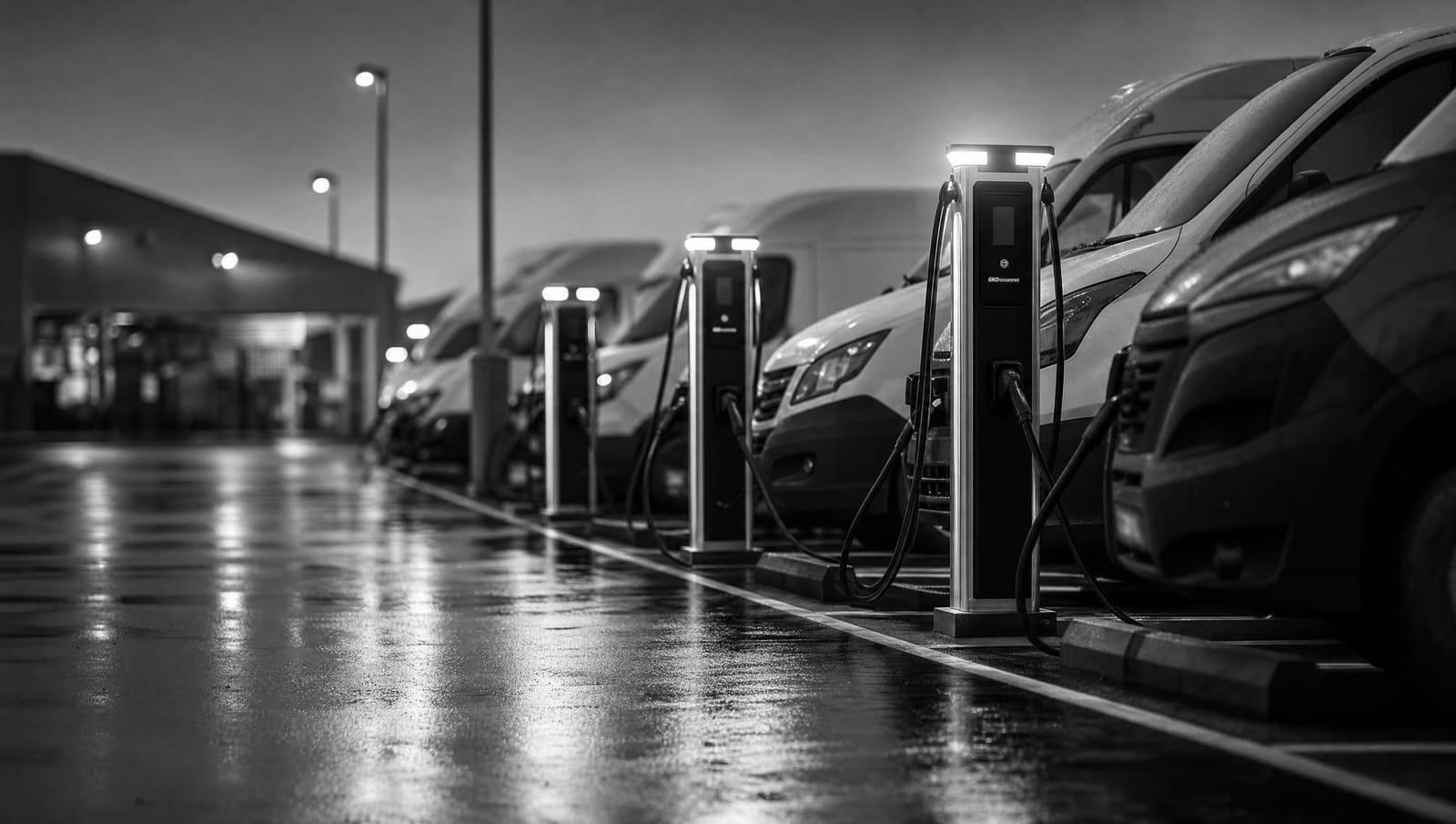
Commercial EV charger installation in Citrus Heights.
A commercial installation includes a site and electrical assessment, charger selection, utility coordination, design, permitting, construction, inspection, network setup, testing, and turnover. Level 2 charging often connects through commercial panels for vehicles parked for hours. DC fast charging may require much larger service equipment, utility work, protective gear, and dedicated space.
The site review must verify usable electrical capacity, charging demand, cable routes, parking access, communications, drainage, security, and room for future expansion.
Set the operating plan first
Three choices shape the installation
The right charger is the one that serves the vehicles without forcing the site to buy more power than it needs. Begin with who will charge, how long vehicles remain parked, and when they must leave. Workplace drivers and overnight fleets can often use Level 2 charging because time is available. Public charging or vehicles with tight turnaround times may support a case for DC fast charging.
Next, decide who may use the stations. Private fleet charging can rely on assigned vehicles and controlled schedules. Employee, tenant, or public charging may need user authentication, pricing, payment processing, reporting, and support.
Finally, set an expansion plan. Installing spare conduit, panel space, or communications pathways during the first construction phase may reduce disruption later. The design should separate what must be installed now from what can be prepared for a later phase.
Price the complete scope
What makes one installation quote different from another
Hardware is only one budget line. Compare the electrical, civil, utility, software, and closeout work behind each proposed charging port.
Select equipment by use
Level 2 and DC fast charging create different projects
Level 2 equipment supplies AC power to the vehicle, where onboard equipment converts it for the battery. Commercial units connect to the building’s electrical distribution system. They are often a practical fit when vehicles remain parked for several hours, such as during a work shift or an overnight fleet window. A site can also use networked Level 2 stations to control access, collect utilization data, manage payment, or share available electrical capacity.
DC fast equipment performs the conversion outside the vehicle and sends DC power to the battery. That higher-power design can change far more than the charger cabinet. It may affect service capacity, switchgear, protection, metering, transformer needs, equipment clearances, cooling, and the utility schedule. It also needs a parking flow that lets vehicles enter, charge, and leave without blocking other users.
Do not select DC fast charging only because it is faster. Compare the vehicle’s charging capability, daily energy need, dwell time, route schedule, and expected use. If Level 2 can restore the needed energy before departure, it may support more ports within the available electrical capacity.
Know the complexity signals
A simple charger count does not define the project
Two sites requesting the same number of ports can need very different designs. The dividing line is often the condition of the electrical system and the path from power to parking.
Lower complexity
Capacity and pathways already exist
Usable panel capacity, short conduit routes, accessible mounting areas, reliable communications, and limited surface repair can keep the project focused on branch circuits, equipment, inspection, setup, and testing.
Higher complexity
The site needs new supporting infrastructure
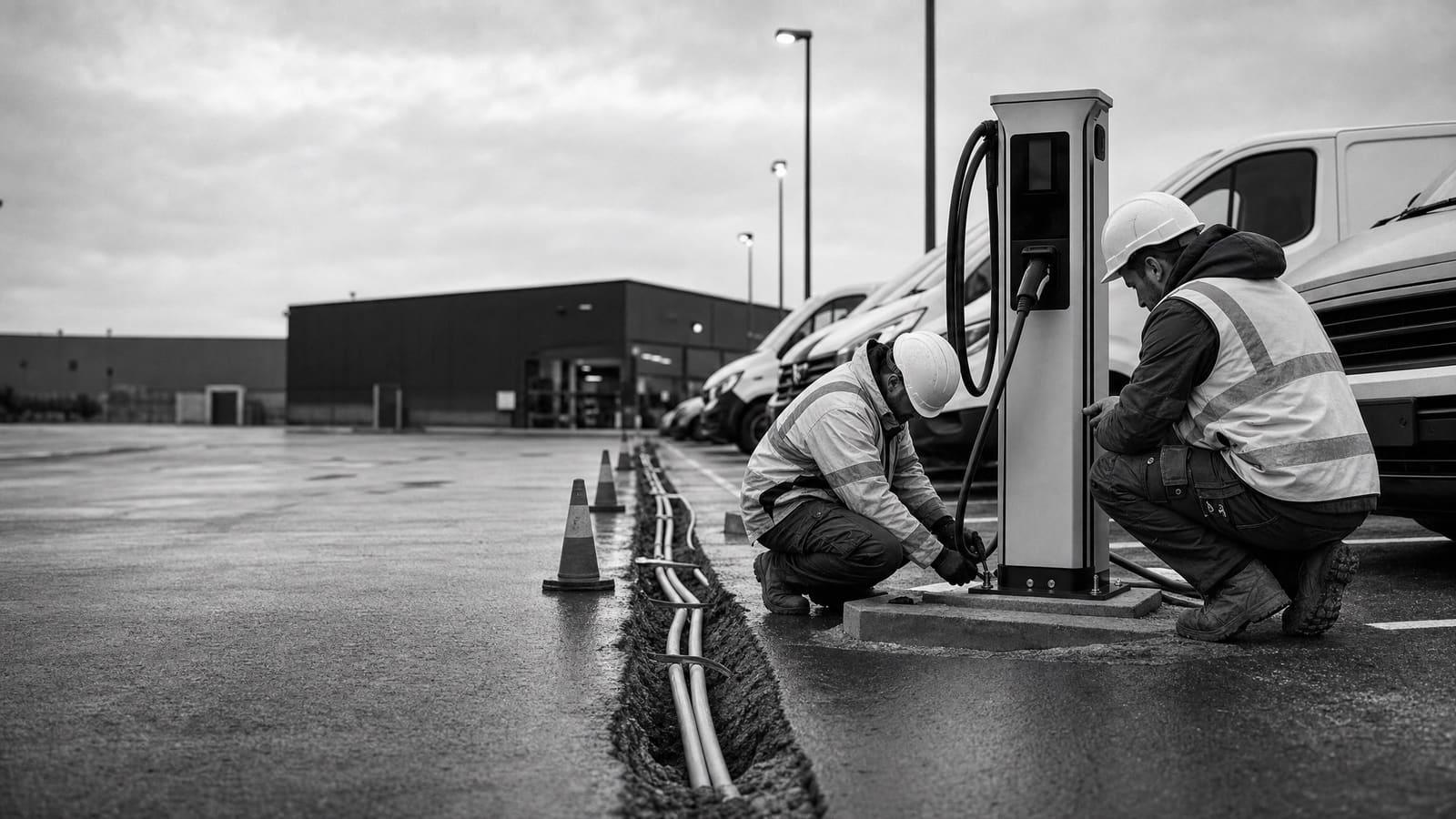
Service changes, long trench routes, new distribution gear, extensive pavement work, utility construction, or DC fast charging can add design stages, dependencies, lead times, and commissioning tasks.
Investigate before ordering
A useful site review turns goals into a buildable scope
The review should begin at the electrical service and continue all the way to the proposed charging spaces. The contractor should document service and panel information, nearby loads, potential feeder routes, mounting conditions, pavement crossings, equipment clearances, communications coverage, and obstacles that could affect construction. A formal load study or engineering review may be needed before the team can confirm how much charging the existing system can support.
The parking review matters just as much. Charger placement should account for connector reach, vehicle orientation, pedestrian paths, protection from impact, accessible use, snowballing traffic conflicts, and service access. The team should also identify where signs, markings, bollards, pads, and network equipment belong.
Bring an operating profile to the review. List the vehicles, battery or charging limits when known, arrival and departure times, daily travel, assigned parking, and expected growth. For shared charging, define who gets access and how long a vehicle may remain connected. These facts allow the designer to test a smaller Level 2 system, managed charging, phased construction, or a higher-power option against the same operating need.
Ask for documented assumptions
A proposal should say which loads, routes, utility conditions, parking changes, software features, and future ports were assumed. Unverified items should be labeled before contract signing.
Plan beyond energization
Ownership and daily operation belong in the design
Commercial charging equipment becomes an operating system after construction ends. Someone must control access, respond to driver problems, review station status, handle payment questions when applicable, and arrange repairs. The owner also needs to know who holds the network account, owns the usage data, manages pricing, and can change station settings.
Energy management can be equally important. Charging several vehicles at once may create a different building load than charging them in planned groups. Network controls may distribute available power among connected vehicles or schedule charging around operating needs. The project team should define what happens during peak building demand, after a communications failure, and when an urgent vehicle needs priority. These rules should be tested during commissioning instead of being left for staff to discover later.
Owner-operated
Keep direct control
The facility manages policies, accounts, pricing, data, maintenance vendors, and driver support. Confirm that staff receive the access and records needed to operate the stations.
Third-party service
Define service responsibilities
A provider may handle networking, payments, monitoring, or support. Review contract length, recurring charges, data access, response duties, and the process for changing providers.
Build in practical phases
Procure the system, not just the charger
A phased project can separate immediate demand from long-term capacity. The first phase might install active ports for current vehicles while adding conduit, pull boxes, panel space, or mounting provisions for later equipment. However, “future ready” needs a clear definition. A spare raceway does not guarantee that future electrical capacity, conductors, communications, protection, or utility equipment will be available.
Procurement should consider delivery dates, approved substitutions, connector compatibility, network requirements, warranty terms, replacement parts, and commissioning support. If a formal request for proposal is used, give every bidder the same vehicle schedule, site information, performance goals, and required scope. Otherwise, low bids may simply exclude work that another bidder included.
Review lifetime cost as well as construction cost. Include electricity, network subscriptions, payment processing, inspections, preventive care, repairs, support, and eventual equipment replacement. Available incentives and tax treatment can change, so verify current eligibility, location rules, deadlines, and application timing before relying on them. For a fuller breakdown of project cost categories, see commercial EV charging costs.
Compare equal scopes
Five things every installation quote should show
A comparable quote connects equipment, construction, approvals, and turnover. Ask bidders to state exclusions and allowances beside the included work.
01
Defined charging performance
Show port count, equipment, power, connectors, users, networking, and operating goals.
02
Electrical and civil scope
List panels, feeders, conduit, trenching, pads, protection, markings, and restoration.
03
Utility, design, and permit duties
Assign responsibility for applications, drawings, reviews, fees, inspections, and schedule dependencies.
04
Commissioning and turnover
Include energized testing, network activation, account access, training, warranties, and closeout records.
05
Assumptions, exclusions, and options
Identify unknown conditions, allowances, alternates, recurring fees, maintenance, and expansion provisions.
Keep planning locally
Related EV charging pages in Citrus Heights
Get a defensible number
Price the equipment and the building together.
Send the address, operating target, and target opening date. Flux will identify what must be verified before the project can be priced.
Price my chargersQuestions
Straight answers.
What is included in commercial EV charger installation?
A complete project normally includes site assessment, electrical review, charger and network selection, design, utility coordination, permits, equipment procurement, electrical and civil construction, inspections, activation, testing, training, and turnover documents. The proposal should clearly assign each responsibility.
Should our facility install Level 2 or DC fast chargers?
Choose based on the energy each vehicle needs and how long it remains parked. Level 2 often works for shifts, workplace parking, and overnight charging. DC fast charging is more suitable when vehicles need a shorter turnaround, but it can require much larger electrical and utility infrastructure.
Can chargers share the electrical capacity we already have?
They may be able to. A load review can determine how much capacity is available. Networked load management may divide power among connected vehicles or schedule charging, but it must still meet the vehicles’ departure needs and the electrical design requirements.
When should the utility become involved?
Engage the utility during planning when the project may change service capacity, metering, transformers, or other utility equipment. Early coordination helps identify studies, applications, construction duties, and schedule dependencies before equipment is ordered.
What should happen during commissioning?
Each port should be energized and tested with the required communications and user controls. The team should confirm charging, load controls, payment or access functions, fault reporting, account ownership, signage, and staff procedures. Turnover should include warranties, settings, records, and support contacts.
How should we compare commercial EV charging bids?
Compare the same port count, charging power, electrical work, trenching, surface restoration, utility responsibilities, permit work, networking, commissioning, warranties, and recurring fees. A lower total may reflect exclusions or allowances rather than a more efficient design.
Should we prepare for more chargers now?
Plan for likely growth before construction begins. Spare pathways, distribution space, communications provisions, and a documented expansion layout may reduce later disruption. Ask the designer to state which future components are truly supported and which will still require upgrades.
Are EV charging incentives available for a Citrus Heights project?
Programs, tax rules, eligible locations, funding levels, and deadlines can change. Verify current eligibility with the responsible program or tax professional before including any benefit in the project budget. Do not order equipment based only on an older program description.
Sources used for this guide
- [1]afdc.energy.gov — Alternative Fuels Data Center: Procurement and Installation for Electric Vehicle Charging Infrastructure
- [2]betterbuildingssolutioncenter.energy.gov — DOE Better Buildings Commercial EV Charging Infrastructure Guide
- [3]driveelectric.gov — Public electric vehicle charging infrastructure playbook · Joint Office of Energy and Transportation
- [4]energy.gov — DOE Federal Workplace Charging Program Guide