The direct answer
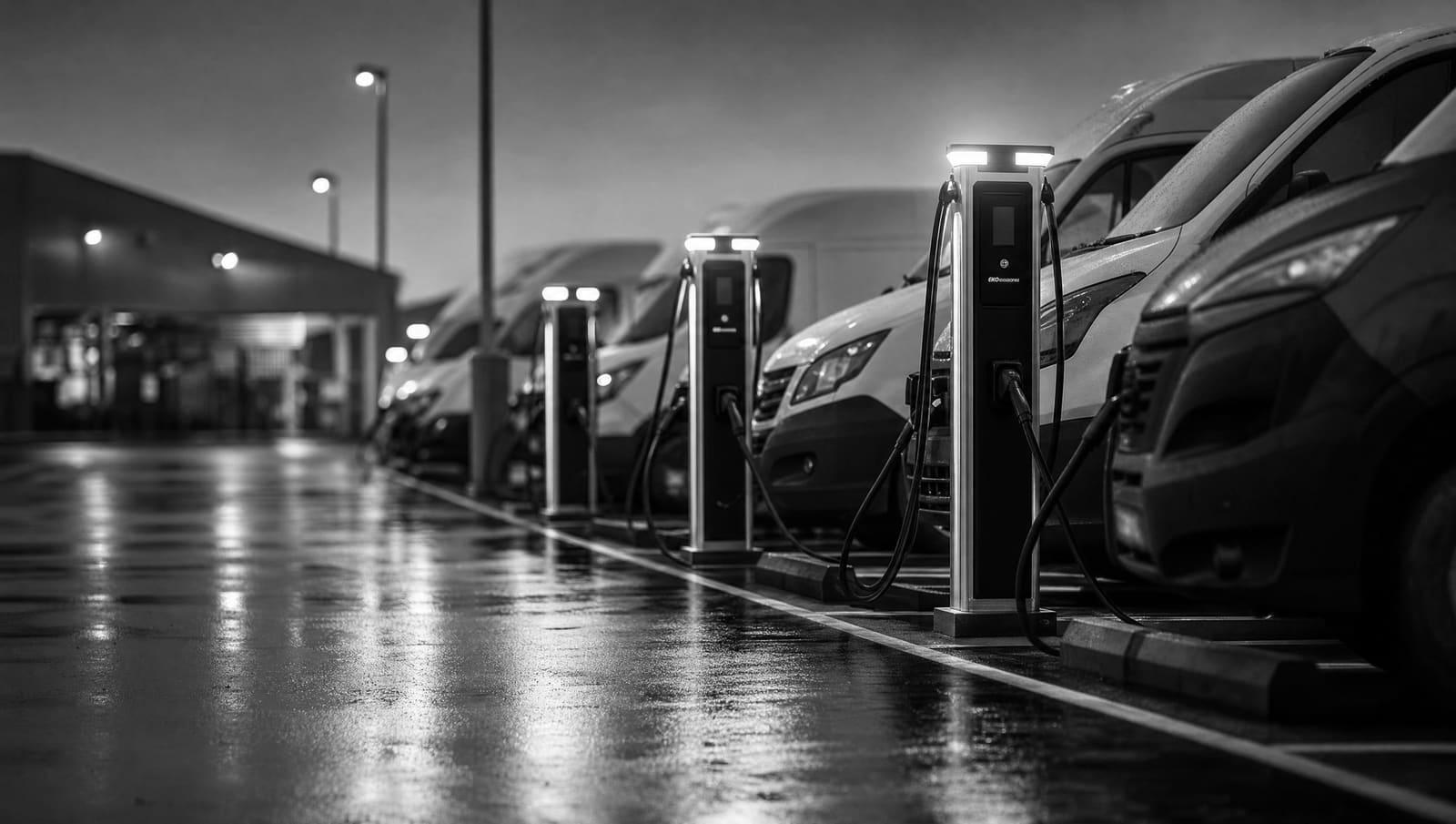
Commercial EV charger installation in Cedar Rapids.
A complete commercial installation covers site and electrical assessment, charger selection, design, utility coordination, permitting, construction, network setup, testing, commissioning, and turnover. Level 2 charging often suits vehicles parked for hours. DC fast charging serves shorter stops but can require a much larger electrical and utility scope.
The site review must verify available power, parking use, equipment locations, cable reach, construction routes, communications, accessibility needs, and room for expansion.
Choose the operating model
Make three choices before selecting equipment
The right charging system starts with how vehicles use the property. Estimate how many vehicles need energy, when they arrive, how long they stay, and how much charge they need before leaving. Then decide who may use the stations and who will manage them.
These choices affect charger quantity, power level, parking placement, networking, payment features, electrical demand, and future expansion. A workplace may value many moderate-power sessions over a full day. A fleet may need dependable charging within a fixed overnight window. Public charging may require payment, user support, clear signs, and faster turnover.
Write these operating rules before requesting equipment prices. Otherwise, vendors may quote different solutions that look comparable but solve different problems.
Build the scope
The main installation budget lines
A useful budget separates equipment from the work needed to serve it. Ask bidders to state quantities, assumptions, exclusions, allowances, and responsibilities for every major line.
Equipment selection
Level 2 and DC fast charging solve different jobs
Level 2 equipment sends AC power to the vehicle, where onboard hardware converts it for the battery. It is commonly considered for workplaces and other properties where vehicles remain parked long enough to charge over time. A project can use several ports, share available capacity, and schedule charging around building demand when compatible controls are selected.
DC fast equipment performs the conversion outside the vehicle and delivers DC power to the battery. It is worth evaluating when vehicles need a meaningful charge during a short stop. The higher power changes more than the charger. It can affect service capacity, utility coordination, switchgear, transformer needs, equipment pads, protective barriers, cooling, and the space required around electrical equipment.
Do not choose solely from the maximum output printed on a product sheet. The vehicle may accept less power, and charging rate can vary with the vehicle and battery condition. Select the system from required energy, dwell time, compatible vehicles, site capacity, and operating goals. A mixed design can also work when some vehicles stay for hours and others need quick turnaround.
Complexity check
What makes an installation simpler or harder?
Charger count alone does not reveal project difficulty. The electrical path, service capacity, civil work, communications, and operating model often matter more.
Lower complexity
Capacity and parking are already aligned
The project has verified electrical capacity, a short route to suitable spaces, limited surface restoration, reliable communications, and clear access rules.
Higher complexity
New infrastructure must reach the charging area
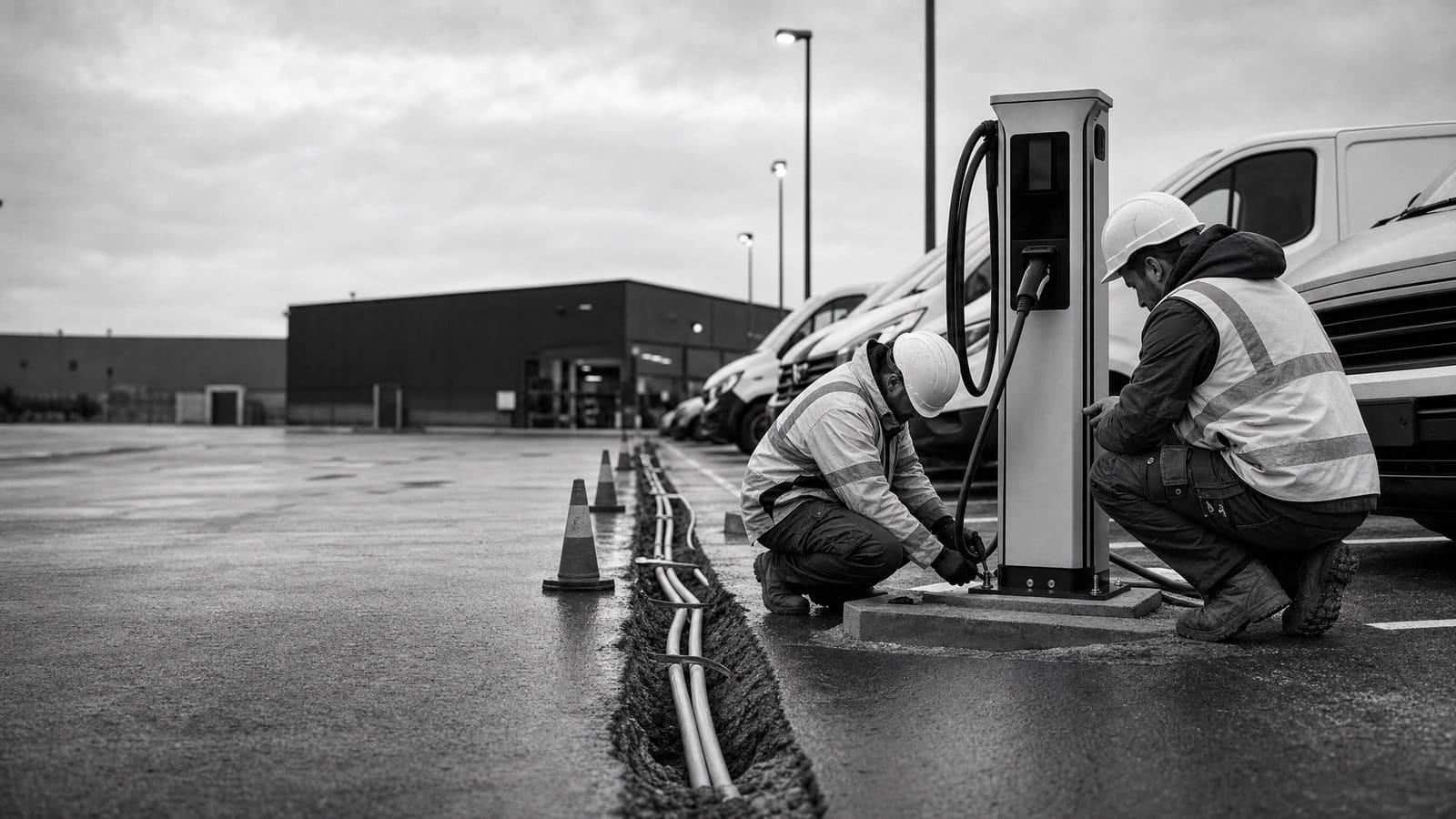
The design may involve service changes, utility work, long feeder routes, trenching, new distribution equipment, staged construction, payment systems, or high-power charging.
Site assessment
A site walk should turn goals into a buildable plan
Begin at the incoming electrical service and trace the real route to the proposed spaces. Record service and panel information, available breaker positions, major building loads, meter locations, equipment clearances, pavement conditions, and possible conduit paths. Note where construction could disrupt customers, tenants, deliveries, or fleet movement.
At the parking area, check stall dimensions, charger protection, cable reach, signs, lighting, drainage conditions, communications, and how drivers will enter and leave. Accessibility must be part of the layout process, not added after equipment locations are fixed. The review should also identify where future chargers could go and what infrastructure could reasonably be included in the first phase.
The electrical assessment should compare expected charging demand with the building system. If unrestricted charging does not fit, the design team can evaluate managed charging, lower output, scheduling, fewer active ports, phased deployment, or an electrical upgrade. Utility engagement becomes especially important when the plan may change service equipment, metering, or upstream infrastructure. That conversation should happen before equipment is ordered or the construction schedule is promised.
Ask for a written basis of design
It should state vehicle needs, dwell times, charger quantities, proposed output, demand-control assumptions, electrical source, routing concept, communications, access rules, and expansion plan.
Ownership and operations
Decide who owns the hardware and who runs the service
Commercial charging continues after construction. Someone must control access, answer driver questions, manage accounts, review station status, handle payment issues where applicable, and arrange repairs. Define those duties before procurement so software and service terms fit the organization.
Networked equipment can support functions such as access control, utilization data, payment, remote monitoring, and power management. Those benefits may come with communications needs and recurring fees. Simpler equipment may reduce software obligations but provide less operating visibility. Neither model is automatically right.
Review ownership of chargers, data, accounts, warranties, and replacement parts. Confirm what happens if a network agreement ends or a provider changes. The turnover package should give the facility team the documents and credentials needed to operate the installed system.
Host-operated
More direct control
The facility controls policies and vendor relationships but must assign staff or contractors to monitor performance, users, billing, and maintenance.
Managed service
More outside support
A provider may handle selected operating tasks, but the buyer should review fees, service levels, data access, contract terms, and exit conditions.
Procurement and phasing
Buy the complete system, not just the charging stations
Issue a scope that describes the operating goal and site conditions instead of asking only for a charger model. Require bidders to identify design, utility coordination, permits, equipment, construction, networking, testing, training, warranties, and maintenance. If a formal solicitation is required, give every bidder the same basis of design and response format.
Separate one-time construction from recurring expenses. The first group may include design, electrical distribution, feeders, trenching, concrete, chargers, signs, protection, and restoration. The second may include networking, communications, software, payment services, monitoring, maintenance, and support. For a deeper breakdown, review commercial EV charging cost factors.
Phasing can protect capital, but only when the first phase prepares intelligently for later work. Spare conduit, planned equipment space, and an expandable controls strategy may reduce disruption. Oversizing everything without a demand plan can also waste money. Tie each phase to a stated number of vehicles, required energy, parking window, and trigger for expansion. Recheck current incentive and tax-credit eligibility before financial approval because location rules, deadlines, and program terms can change.
Compare proposals
Five things every useful quote should show
Put competing proposals into the same structure. If one bidder omits a responsibility or hides an allowance, the apparent low price may not represent the same completed project.
01
A clear design basis
Vehicle use, dwell time, port count, charger output, access rules, and expansion assumptions.
02
Defined electrical and civil work
Power source, panels, conductors, conduit, trenching, pads, protection, signs, restoration, and stated exclusions.
03
Utility, permit, and inspection duties
Who prepares filings, pays listed fees, answers comments, schedules inspections, and closes approvals.
04
Equipment and software terms
Exact models, quantities, lead-time assumptions, communications, subscriptions, warranties, payment features, and data access.
05
Commissioning and turnover requirements
Port testing, network activation, training, manuals, drawings, credentials, warranty contacts, and maintenance options.
Keep planning locally
Related EV charging pages in Cedar Rapids
Get a defensible number
Price the equipment and the building together.
Send the address, operating target, and target opening date. Flux will identify what must be verified before the project can be priced.
Price my chargersQuestions
Straight answers.
What does commercial EV charger installation include?
A complete scope normally includes a site assessment, electrical review, equipment selection, design, utility coordination, permitting, procurement, electrical and civil construction, charger mounting, network activation, testing, inspections, commissioning, training, and turnover documents. Ask the installer to identify any excluded task, fee, or third-party responsibility.
Should our Cedar Rapids property use Level 2 or DC fast charging?
Choose from vehicle energy needs and parking time. Level 2 is often a practical fit when vehicles remain parked for hours. DC fast charging deserves review when short turnaround is essential. It can require a much larger electrical scope, so confirm service and utility needs before committing to hardware.
Can chargers share limited electrical capacity?
Compatible networked equipment may control or schedule charging so multiple ports operate within a defined power limit. Whether that approach fits depends on the building load, vehicle departure times, required energy, communications, and selected equipment. The design should state the assumed power limit and the performance users can expect.
When should the utility become involved?
Engage the utility during planning when the project may affect service capacity, metering, rates, transformers, or other utility-side equipment. Early coordination helps define responsibilities and schedule risks before equipment is purchased. The installer should state who manages applications and technical responses.
What should happen during commissioning?
The team should confirm that every port powers up, communicates as designed, recognizes authorized users, follows power-management settings, and completes a test charging session. Turnover should include training, equipment records, manuals, network credentials, warranty information, final documentation, and service contacts.
How should we plan for future chargers?
Estimate likely growth, identify possible future spaces, preserve electrical-equipment room, and plan practical conduit routes. Define what triggers the next phase. Future readiness should be explicit in the drawings and quote, including which infrastructure is installed now and which work remains for later.
Are incentives or tax credits available for a Cedar Rapids project?
Eligibility cannot be assumed from the project type alone. Federal infrastructure tax-credit eligibility can depend on the installation location, and other programs may change or close. Verify the address, current rules, deadlines, eligible expenses, and application timing with the responsible program before approving the financial plan.
How do we compare installation bids fairly?
Give bidders the same operating requirements and request the same cost structure. Compare charger specifications, electrical and civil work, design, utility and permit duties, allowances, exclusions, software fees, warranty coverage, commissioning, training, maintenance, schedule assumptions, and responsibility for final approvals.
Sources used for this guide
- [1]afdc.energy.gov — Alternative Fuels Data Center: Procurement and Installation for Electric Vehicle Charging Infrastructure
- [2]betterbuildingssolutioncenter.energy.gov — DOE Better Buildings Commercial EV Charging Infrastructure Guide
- [3]driveelectric.gov — Public electric vehicle charging infrastructure playbook · Joint Office of Energy and Transportation
- [4]energy.gov — DOE Federal Workplace Charging Program Guide