Complete project delivery
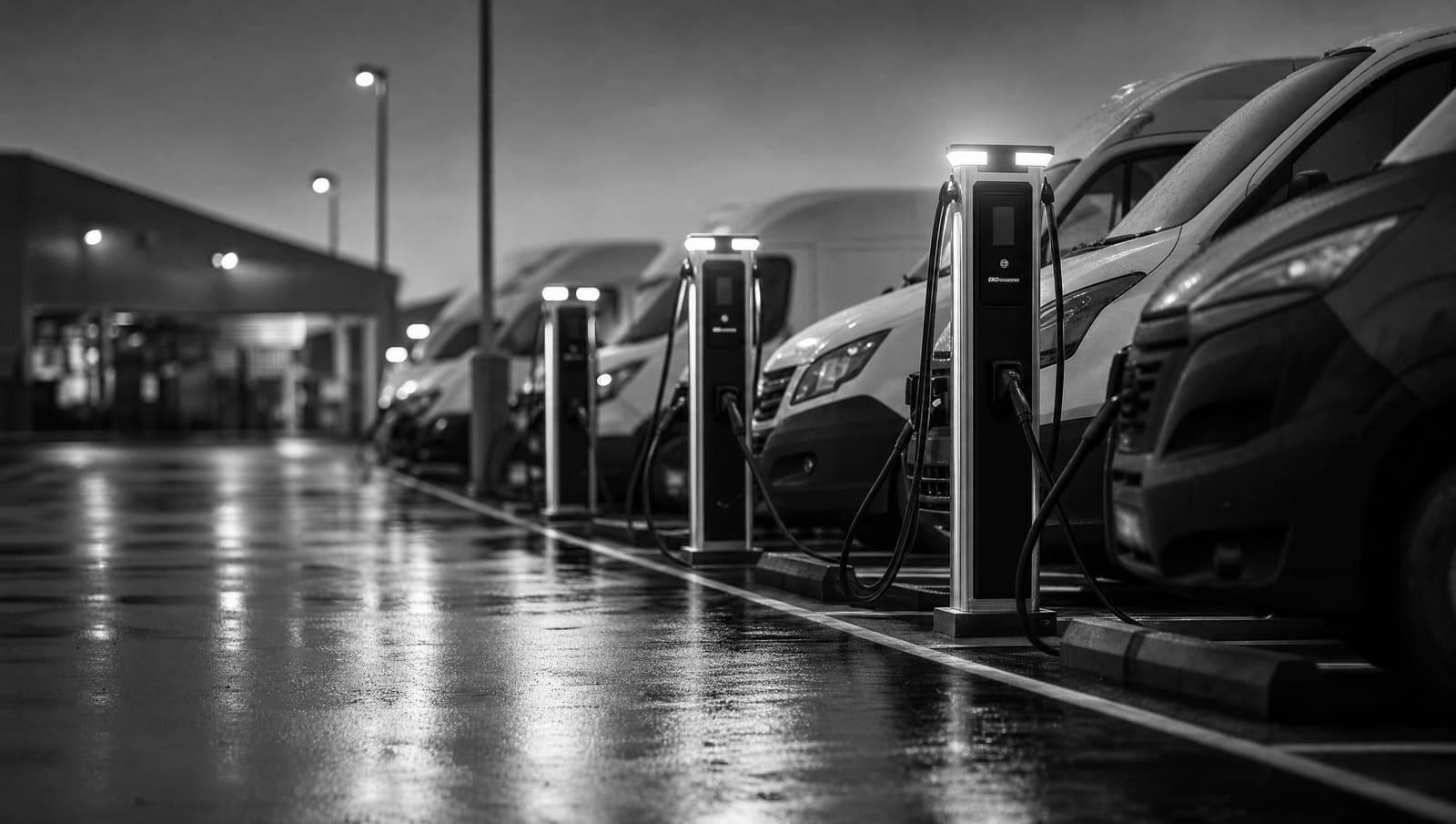
Commercial EV charger installation in Cedar Park.
A commercial EV charger installation starts with vehicle and site needs, then moves through electrical assessment, design, utility coordination, permitting, construction, charger setup, inspection, commissioning, and turnover. Level 2 charging often fits long parking stays. DC fast charging serves short turnaround needs but can require larger electrical equipment and closer utility planning.
A site review must verify electrical capacity, charging demand, parking use, cable routes, communications, accessibility needs, and room for later expansion.
Choose the operating model first
Three choices shape the installation
Do not begin with a charger catalog. Begin with the vehicles, parking schedule, and business rules. A workplace where cars remain parked for hours has a different need than a fleet that must leave at set times. Public charging adds another layer because drivers may need payment, instructions, reliable communications, and clear access rules.
These choices affect charger power, port count, panel capacity, network service, signage, and the route from the electrical system to each stall. They also affect future operating costs. Decide who may charge, how long vehicles stay, how much energy each vehicle needs, and whether the site will collect fees or usage data. Then the equipment can be selected against a real operating plan.
Scope before price
The installation lines that change the budget
A useful proposal separates the charger purchase from the electrical, civil, communications, and operating work. Review these lines before comparing totals.
Equipment fit
Level 2 and DC fast charging solve different problems
Level 2 equipment supplies AC power to the vehicle. It is often a practical choice when employees, residents, guests, customers, or fleet vehicles remain parked for a meaningful part of the day. A project may support more ports by sharing available power across connected stations. That can reduce the need to give every port its maximum output at the same time.
DC fast charging converts power before it reaches the vehicle. It is designed for faster turnover, but the installation is usually more demanding. The design may involve larger conductors, switchgear, dedicated equipment, cooling needs, protective barriers, and utility coordination. The charging cabinet and dispenser layout may also need more space than a Level 2 station.
Neither type is automatically better. A fast charger can be unnecessary when vehicles sit for hours. Level 2 can be too slow when fleet routes allow only a short charging window. Compare equipment by the energy vehicles need during the available dwell time, not by the largest power number on a product sheet. Connector support, network features, warranty terms, service access, and parts availability also belong in the decision.

Project complexity
What makes one installation simpler than another?
The number of chargers tells only part of the story. Existing electrical capacity, distance to parking, construction surfaces, communications, and charging speed can change the work behind each port.
Lower complexity
Capacity and parking are close together
A project is easier to scope when usable electrical capacity exists, stalls sit near distribution equipment, routing is open, communications are reliable, and standard mounting works.
Higher complexity
Power or construction needs major changes
Complexity rises with service upgrades, long feeders, pavement cuts, new switchgear, DC fast charging, difficult equipment access, several construction phases, or extensive utility coordination.
Site assessment
What the field review should settle
The assessment should connect the charging goal to conditions that can be measured. The contractor should document the service, meter, transformers, panels, breakers, distribution paths, and other major electrical equipment involved. A load review should test the proposed charging demand against building use instead of relying only on an unused breaker position.
The parking review should confirm stall locations, cable reach, equipment mounting, vehicle movement, pedestrian routes, accessibility considerations, signage, lighting, security, and protection from vehicle impact. The team should trace conduit or trench routes and note where work crosses pavement, landscaping, walls, occupied space, or other utilities.
Networked equipment also needs a communications plan. A strong signal at the building does not prove that every charger will connect reliably. The review should identify how stations will communicate and who will test that connection. It should also record future expansion goals. Empty conduit, reserved equipment space, or planned electrical capacity may be easier to include during the first construction phase than after surfaces are restored.
Ask for a written basis of design
It should state the vehicles, dwell times, energy need, assumed building load, charger output, port count, network functions, construction route, and planned expansion.
Ownership and operation
The project continues after energization
Commercial charging equipment becomes an operating asset. Someone must manage users, pricing, software, alerts, repairs, warranties, and data. These duties may stay with the property owner or be divided among a charging provider, network company, electrical contractor, and maintenance team.
Define that structure before purchase. Equipment cost alone does not show subscription charges, payment processing, cellular service, warranty limits, replacement parts, or response time. The proposal should also explain who owns usage data and what happens if the network agreement ends. Simple hardware may reduce recurring services, while connected stations can provide access controls, energy management, payment tools, and remote status information.
Owner-controlled
Keep direct control of the asset
The owner selects equipment and service vendors, then carries responsibility for software agreements, maintenance planning, user policy, and replacement decisions.
Managed arrangement
Assign defined operating duties
A provider may handle selected network or support tasks, but the contract should state fees, service levels, data rights, hardware obligations, and exit terms.
Procurement and phasing
Buy the installation as a working system
Compare proposals against the same written scope. One bid may include design, permits, trench restoration, network activation, testing, and training while another leaves those items as allowances or exclusions. A low total is not comparable if important work will appear later as a change order. For more detail on project allowances and scope, review the commercial EV charging cost guide.
Procurement should confirm equipment lead times, approved substitutions, delivery handling, storage, warranty start dates, and the party responsible for damaged or missing components. Construction sequencing matters when parking must remain open. The plan should show work zones, shutdown needs, temporary access, inspection points, and the conditions required before equipment can be energized.
For a phased project, design backward from the intended buildout. The first phase may include only the ports needed now, while panels, raceways, communications, or equipment space support later additions. This does not mean every future component must be purchased today. It means the team should avoid placing new work where it blocks the next phase. Review lifetime costs as well as construction cost, including software, electricity-rate effects, maintenance, payment services, warranties, and expected equipment replacement.
Proposal checklist
Five things every comparable quote should show
Use one scope checklist for every bidder. Each proposal should identify what is included, excluded, assumed, or carried as an allowance.
01
Design basis and equipment schedule
List charger type, output, quantity, mounting, connectors, network functions, and the operating assumptions behind the selection.
02
Electrical and civil construction
Show panels, switchgear, conductors, conduit, trenching, pads, protection, restoration, and any assumed service work.
03
Approvals and coordination
Assign responsibility for design documents, permits, inspections, utility contact, equipment submittals, and required revisions.
04
Activation and turnover
Include configuration, network activation, test charging, staff training, warranties, manuals, records, and final project documents.
05
Schedule, exclusions, and ongoing fees
State milestones, dependencies, allowances, change-order rules, software fees, maintenance options, and responsibilities after acceptance.
Keep planning locally
Related EV charging pages in Cedar Park
Get a defensible number
Price the equipment and the building together.
Send the address, operating target, and target opening date. Flux will identify what must be verified before the project can be priced.
Price my chargersQuestions
Straight answers.
What is included in commercial EV charger installation?
A complete scope can include site assessment, load review, charger selection, design, utility coordination, permitting, electrical and civil construction, equipment mounting, network setup, inspection, commissioning, training, and turnover documents. The proposal should clearly mark every inclusion, exclusion, and allowance.
Should our property install Level 2 or DC fast chargers?
Choose from the vehicle schedule. Level 2 often fits vehicles parked for hours. DC fast charging fits shorter turnaround needs but can require more substantial electrical equipment and utility planning. Some properties may use both when they serve different drivers.
Can we add EV chargers without upgrading electrical service?
Possibly, but a load review must verify it. Power sharing or managed charging can control when and how much power connected stations use. That may help a project work within existing capacity, but it does not replace an engineering review of the building load and electrical system.
When should the electric utility become involved?
Utility contact should begin early when the project may affect service capacity, metering, transformers, or rate planning. Equipment should not be ordered on the assumption that needed utility work, timing, or cost has already been confirmed.
Do commercial chargers need a network connection?
Not every charger must be networked. Connected stations can support access control, payment, usage data, remote monitoring, and load management. They may also add software and communications fees. The right choice depends on who will use the chargers and how the property will operate them.
How should we plan for more chargers later?
Define the likely buildout during the first design. Review panel space, service capacity, conduit routes, equipment areas, communications, and parking layout. The first phase can reserve practical expansion paths without purchasing every future charger immediately.
What should happen before the installation is accepted?
Every port should complete a test session. Network, access, payment, and load-management features should be checked where applicable. The owner should receive training, warranties, equipment records, operating contacts, and clear responsibility for alerts, maintenance, and repairs.
Are tax credits or incentives available for a Cedar Park project?
Eligibility must be checked for the property and current project date. Programs, qualifying locations, technical rules, deadlines, and tax treatment can change. Treat any credit or incentive as unconfirmed until the responsible program administrator and the owner’s tax adviser verify it.
Sources used for this guide
- [1]afdc.energy.gov — Alternative Fuels Data Center: Procurement and Installation for Electric Vehicle Charging Infrastructure
- [2]betterbuildingssolutioncenter.energy.gov — DOE Better Buildings Commercial EV Charging Infrastructure Guide
- [3]driveelectric.gov — Public electric vehicle charging infrastructure playbook · Joint Office of Energy and Transportation
- [4]energy.gov — DOE Federal Workplace Charging Program Guide