The direct answer
What commercial installation includes
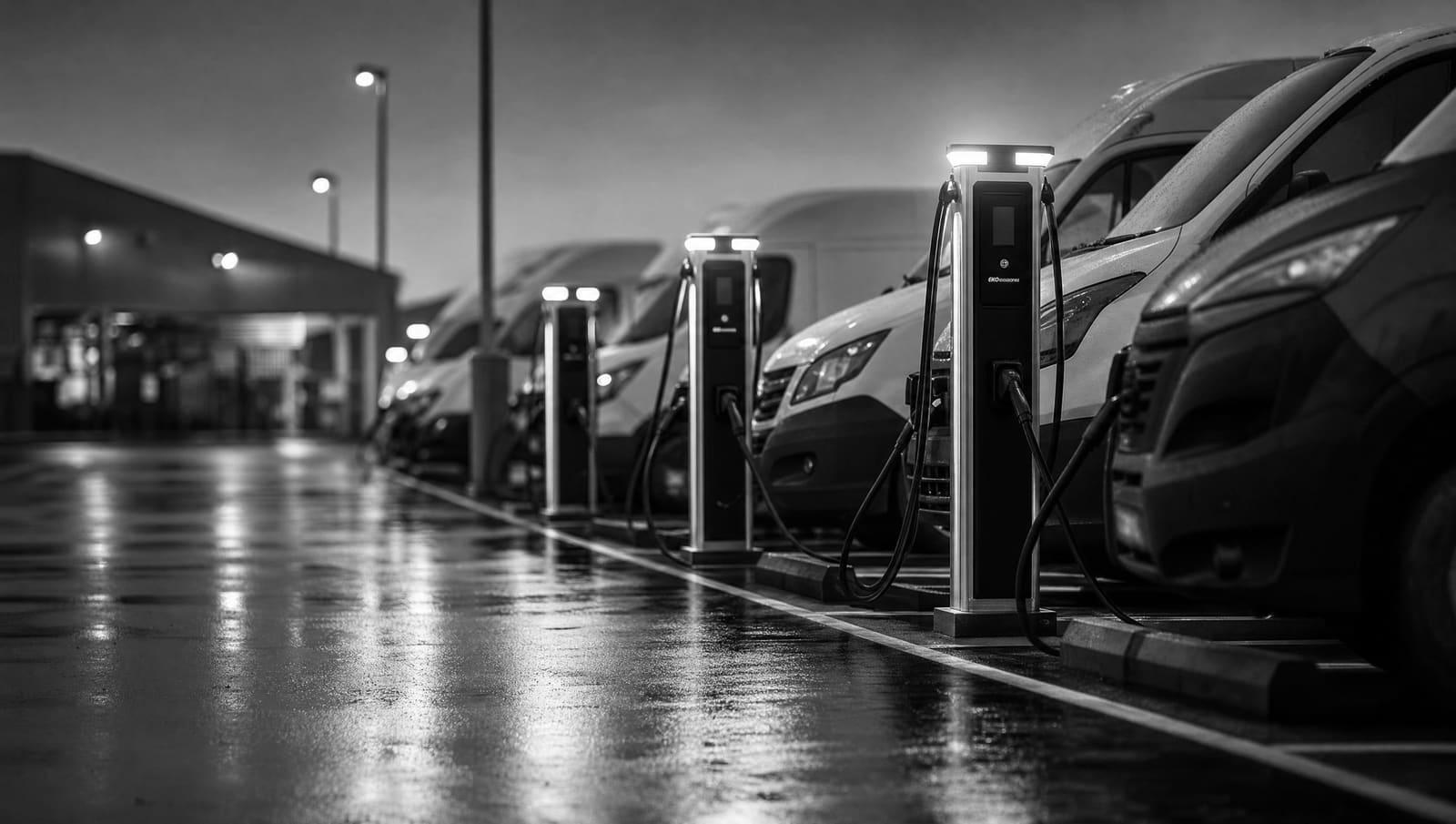
Commercial EV charger installation takes a project from site and electrical assessment through design, utility coordination, permitting, construction, commissioning, and turnover. Level 2 charging often serves vehicles parked for hours. DC fast charging supports shorter stops but can require a larger electrical and utility scope. The right plan starts with vehicles and parking behavior, not a charger catalog.
A site review must confirm electrical capacity, equipment location, cable reach, construction routes, communications, accessibility needs, and future expansion space.
Operating plan
Make three choices before selecting hardware
A charger is only one part of the system. First decide who will charge, how long vehicles will stay, and what must happen during that parking window. Workplace drivers may have hours available. Fleet vehicles may return in groups and need enough energy before the next route. Visitors may expect simple access, clear instructions, and reliable payment if charging is not free.
Next decide who can use each station. Access can be open, limited to employees or tenants, assigned to fleet vehicles, or controlled by an account. This choice affects networking, software, signs, support, and daily management.
Finally, choose how charging should respond when several vehicles connect at once. A design may provide full power to every port, share available power, or schedule charging around building demand and vehicle departure times. These choices shape the electrical design and should be settled before equipment is ordered.
Quote structure
The charger is not the whole budget
Installation cost depends on the path between electrical service and parking. Review commercial EV charging cost as a complete project budget, not an equipment price.
Equipment choice
Choose Level 2 or DC fast charging by use case
Level 2 charging uses AC power, while the vehicle converts that power for its battery. It is often a practical fit when cars remain parked for a meaningful part of the day or night. A commercial Level 2 project may still need new circuits, panels, conduit, networking, signs, protective equipment, and parking changes. Multiple ports can also create a large combined load, so port count matters as much as the rating of one charger.
DC fast equipment performs power conversion outside the vehicle. It is intended for cases where shorter charging time has real operating value. The installation may involve dedicated distribution equipment, larger conductors, cooling systems, substantial site work, and closer utility coordination. Vehicle compatibility also matters because the useful charging rate depends on both the station and the vehicle.
Do not specify the fastest equipment by default. Start with daily energy need, arrival pattern, departure deadline, parking duration, and expected growth. A mixed site may use Level 2 for long stays and reserve faster charging for vehicles with tight turnaround needs.

Project complexity
What makes one installation simpler than another
Two projects with the same number of ports can require very different work. Existing electrical capacity and the physical route to parking usually explain much of that difference.
Lower complexity
Capacity and a clear route already exist
The service can support the planned load, equipment has a workable location, conduit can reach nearby spaces, communications are available, and construction causes limited disruption.
Higher complexity
Power or site conditions need major work
The project needs a service change, new distribution equipment, long trenching, pavement restoration, phased parking closures, or utility work before chargers can be energized.
Site assessment
Turn the parking plan into an electrical scope
A useful site review begins at the electrical service and ends at each proposed charging space. The reviewer should document service and distribution equipment, available records, panel locations, possible feeder routes, charger mounting areas, communication coverage, and physical barriers. The review should also note where construction may cross pavement, landscaping, walls, or active work areas.
The operating facts are just as important. Record the vehicles that will use the stations, their usual arrival and departure times, expected energy need, and whether several vehicles return together. For public or shared charging, define access, payment, idle-time rules, customer support, and who will respond when a port is unavailable.
Use these findings to create a concept plan before final equipment selection. The plan should show current ports, future ports, power assumptions, equipment locations, routing, and any work that depends on the utility or permitting authority. That gives the buyer a clear basis for design and pricing. It also reduces the chance that a charger is purchased before the site can support it.
Ask for assumptions in writing
The proposal should state the assumed electrical capacity, route, restoration limits, network needs, utility responsibilities, and exclusions. Hidden assumptions are a common source of change orders.
Ownership and operations
Plan for the years after construction
Commercial charging creates ongoing responsibilities. Hardware must stay available, software accounts must be managed, and drivers need a clear way to report problems. Network services can provide access control, payment, status, and usage data, but they may also create continuing fees and vendor dependence. A non-networked station can be simpler, yet it offers fewer tools for managing shared use.
Ownership structure matters too. A facility may buy and operate the equipment, use a third party for selected services, or place more responsibility with a charging provider. Compare control, data access, maintenance duties, software terms, and replacement options. The lowest construction price may not produce the lowest lifetime burden.
Facility-owned
More control, more direct responsibility
The owner controls equipment and policy but must arrange software administration, maintenance, support, repairs, and future replacement.
Provider-supported
More service, more contract terms
A provider may handle selected operating tasks, but the buyer should review fees, data rights, response duties, and exit terms.
Phasing and procurement
Build the first phase without blocking the next one
A phased project can control near-term spending while preserving room to grow. The first design should identify the likely final port count, even if only part of it is installed now. Future-ready work may include space in electrical equipment, routing capacity, spare pathways, mounting areas, and a power-management plan. These items should be evaluated during design because reopening finished pavement or replacing undersized distribution equipment later can create avoidable disruption.
Procure equipment only after confirming electrical and operating requirements. The charger specification should cover output, connector needs, mounting type, cable reach, communications, access control, payment features, warranties, support, and network terms. It should also define who activates accounts and tests every port.
Treat incentives and tax benefits as separate, time-sensitive checks. Eligibility can depend on location, project details, equipment, labor rules, deadlines, and current program funding. Do not reduce the committed project budget until the relevant administrator or tax professional has confirmed the benefit. The installation should still make operating sense if an expected benefit changes or is delayed.
Bid comparison
Five things every comparable quote should show
Require the same scope structure from each bidder. A low total is not useful when major electrical, civil, software, or closeout work is missing.
01
A defined design basis
List port count, charging output, vehicles, parking schedule, load assumptions, and expansion plan.
02
Complete electrical and civil work
Show panels, feeders, conduit, trenching, pads, protection, restoration, and installation labor.
03
Approvals and utility responsibilities
Assign design documents, submittals, fees, inspections, utility coordination, and work by others.
04
Equipment and operating services
Name chargers, warranties, networking, payment features, software fees, activation, and support duties.
05
Commissioning and turnover
Require port testing, settings, training, manuals, warranties, records, and an unresolved-item process.
Keep planning locally
Related EV charging pages in Burbank
Get a defensible number
Price the equipment and the building together.
Send the address, operating target, and target opening date. Flux will identify what must be verified before the project can be priced.
Price my chargersQuestions
Straight answers.
What happens first in a commercial EV charger installation?
The project should begin with operating goals and a site assessment. The team reviews who will charge, parking duration, vehicle schedules, expected growth, electrical equipment, possible cable routes, communications, and construction limits. Those facts support a concept design, utility discussion, approval plan, and detailed quote.
Should a commercial property install Level 2 or DC fast chargers?
Choose based on how much energy vehicles need and how long they remain parked. Level 2 often fits employees, tenants, visitors, or fleet vehicles parked for hours. DC fast charging is more suitable when short turnaround has real value and the site can support a larger electrical scope. Some facilities benefit from both.
Can the existing electrical service support multiple chargers?
A load assessment must answer that question. It should review the existing service and distribution system, other building loads, charger output, simultaneous use, and future plans. Power sharing or scheduled charging may help fit more ports within available capacity, but the design must confirm whether that approach meets vehicle departure needs.
What should be included in a commercial installation proposal?
The proposal should define design, electrical work, civil work, chargers, networking, permits, inspections, utility coordination, commissioning, training, warranties, exclusions, schedule assumptions, and ongoing fees. It should also separate optional upgrades and future-phase work so bids can be compared on the same basis.
When should the utility become involved?
Utility coordination should begin during planning when the project may affect service capacity, metering, rates, or utility-owned equipment. Early contact helps identify information the utility needs and work that may influence design or schedule. The quote should clearly state who prepares applications, supplies documents, and tracks utility actions.
Do commercial chargers need networking?
Not every charger needs a network. Networking is useful when the owner needs access control, payment, station status, usage data, remote settings, or power management. Buyers should compare those benefits with recurring fees, communications requirements, support quality, data access, and the process for changing providers.
How should a facility plan for future EV charging demand?
Estimate the likely long-term port count during the first design. Then evaluate electrical space, pathways, distribution capacity, charger locations, and load management for that future condition. The first phase can install fewer chargers while preserving practical expansion options. Future-ready items and their limits should appear in the drawings and quote.
How is an installation commissioned before turnover?
Commissioning should confirm that every port is energized, communicates as intended, starts and completes a charging session, follows access and power settings, and reports status correctly. Turnover should include training, equipment records, warranties, software credentials, operating instructions, and a clear process for correcting open items.
Are incentives available for a Burbank commercial charging project?
Incentives and tax benefits are time-sensitive and may depend on the exact address, equipment, labor requirements, deadlines, and available funding. Check current eligibility before relying on any benefit. Keep unconfirmed funding separate from the base project budget, and have a qualified tax professional review any tax-credit claim.
Sources used for this guide
- [1]afdc.energy.gov — Alternative Fuels Data Center: Procurement and Installation for Electric Vehicle Charging Infrastructure
- [2]betterbuildingssolutioncenter.energy.gov — DOE Better Buildings Commercial EV Charging Infrastructure Guide
- [3]driveelectric.gov — Public electric vehicle charging infrastructure playbook · Joint Office of Energy and Transportation
- [4]energy.gov — DOE Federal Workplace Charging Program Guide