The direct answer
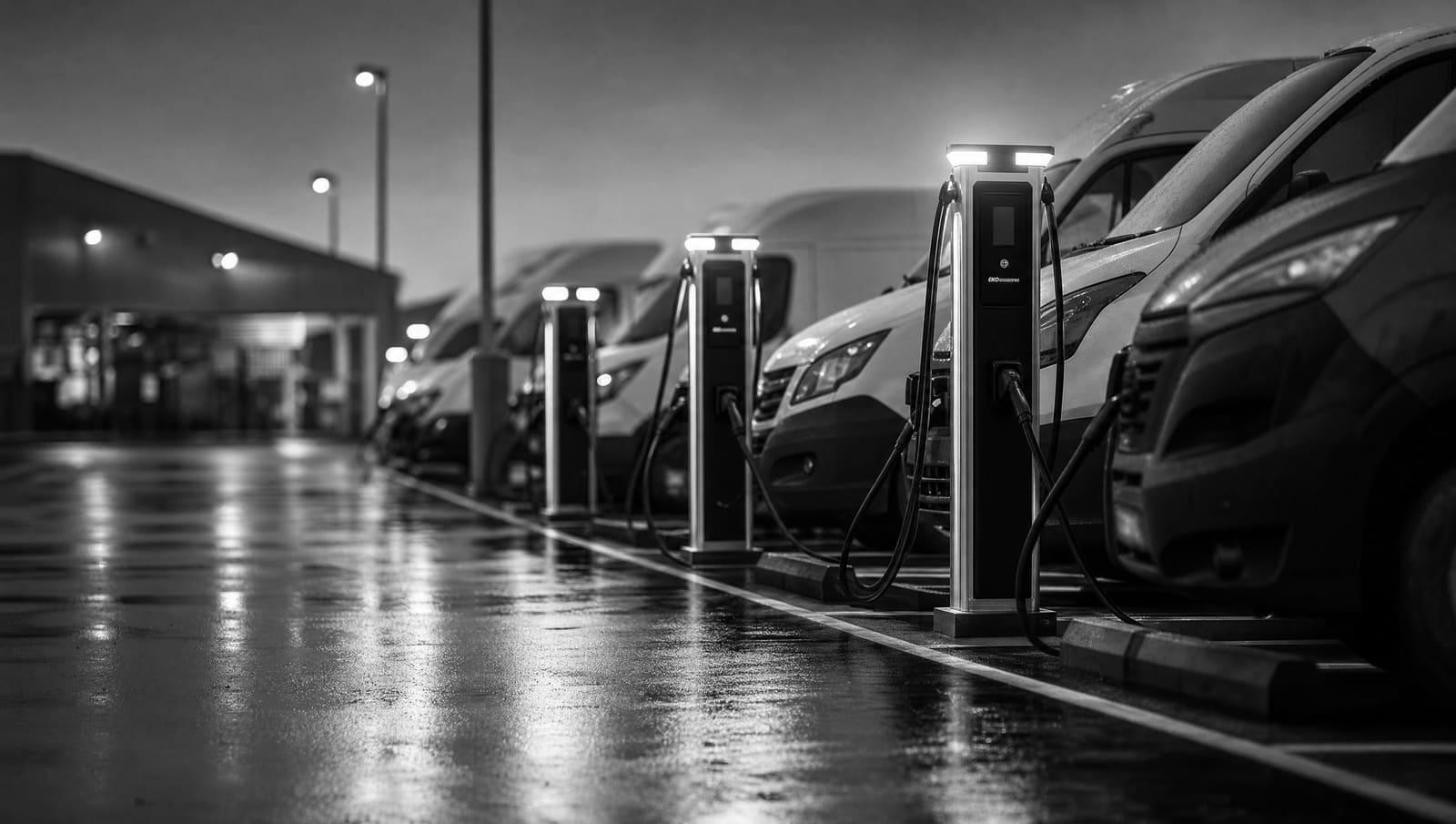
Commercial EV charger installation in Bowling Green.
A complete installation covers the site and electrical assessment, charger selection, utility coordination, design, permits, construction, inspection, network setup, testing, and turnover. Level 2 charging often connects through commercial panels. DC fast charging places much larger demands on the service, utility equipment, switchgear, cooling, and project schedule.
The site review must verify available power, parking dwell time, cable routes, accessibility, communications, drainage, security, and space for later expansion.
Start with operations
Choose charging around the vehicles
The right charger is the one that gives each vehicle enough energy before it must leave. Begin with arrival time, departure time, daily travel, battery size, and the number of vehicles that may charge together. Then decide who can use the stations and whether drivers will pay.
Level 2 is often a practical fit when cars remain parked for hours. It can serve employees, tenants, guests, visitors, or fleet vehicles that return for long stops. DC fast charging is designed for shorter turnaround, but its higher power can change the electrical design and utility work. A mixed site may use both.
Do not select charging power from a product page alone. A station can advertise a high output while the vehicle, shared circuit, load controls, or building service limits what it delivers. Design the whole system around the operating goal.
Scope the full project
What belongs in the installation budget
The charger is only one budget line. Review commercial EV charging costs as a complete site project, including work before energization and expenses after opening.
Equipment selection
Level 2 and DC fast charging create different projects
Level 2 equipment supplies AC power, and the vehicle converts that power for its battery. Commercial Level 2 equipment commonly connects to a building panel. It may be wall-mounted or placed on pedestals. It can also be networked for access control, payment, status monitoring, and reports. This approach often suits vehicles that remain parked long enough to charge over several hours.
DC fast equipment converts power outside the vehicle. It can deliver energy more quickly, but speed carries a larger site burden. The design may need substantial service capacity, dedicated distribution equipment, utility upgrades, equipment pads, protective barriers, and more room around the charger. Thermal management and communications also matter. The utility should be involved early because its work can control the schedule.
Connector support, cable reach, rated output, warranty, software terms, payment options, and replacement support all belong in equipment review. Confirm that the selected vehicles can use the proposed connectors and power. Also ask whether one failed component disables a single port or the whole charging group. Brand selection comes after these requirements are defined.
Project complexity
What makes installation simpler or harder
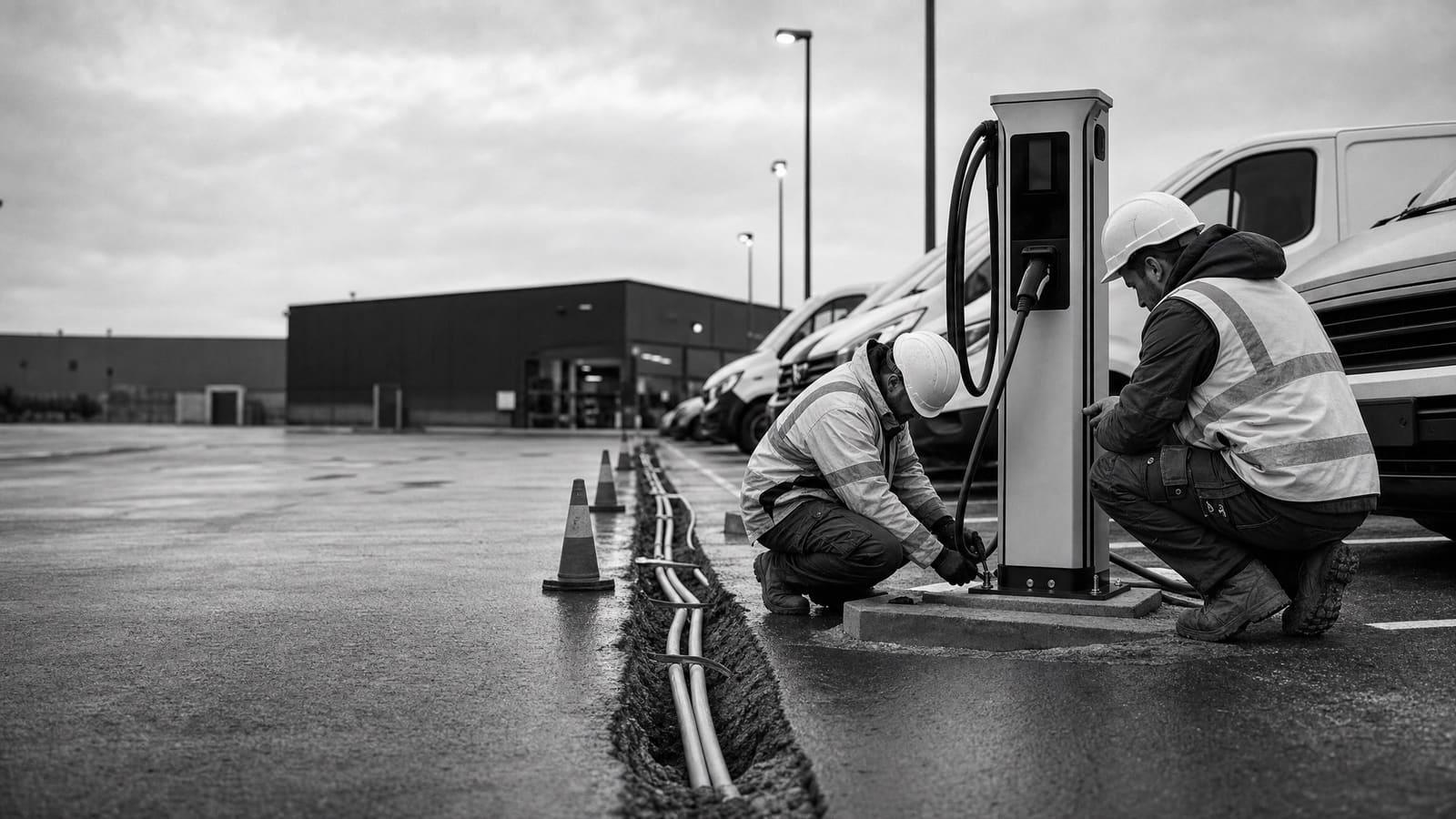
Two projects with the same number of ports can require very different work. Electrical capacity, distance to parking, surface conditions, utility involvement, and operating requirements drive that difference.
Lower complexity
Power and parking already align
Available panel capacity, a short wiring route, workable mounting locations, reliable communications, and limited civil restoration can reduce construction scope.
Higher complexity
The site needs new infrastructure
Service upgrades, transformers, long trench routes, pavement work, DC equipment, payment systems, or phased construction add coordination and schedule risk.
Site assessment
Verify the path from utility power to each parking space
A useful assessment begins at the utility service and follows the electrical path to the proposed chargers. The team should document service ratings, meter arrangement, panels, breakers, spare spaces, connected loads, and major equipment condition. A load study then tests whether the proposed charging can fit the existing system or needs controls or upgrades.
The parking review is just as important. Charger positions must work with traffic, snow or rain exposure, cable reach, pedestrian routes, accessible use, lighting, signs, and protection from vehicles. The route between the electrical room and parking should identify trenching, boring, wall penetrations, landscaping, drainage, concrete, and pavement restoration.
Networked chargers also need a dependable communication plan. A nearby building does not guarantee a stable wireless connection at the parking space. Confirm signal coverage or provide another connection method. Record future charger locations now so conduit, pull boxes, panel space, and controls can support the next phase without reopening finished surfaces.
Ask for evidence, not assumptions
The assessment should produce a marked site plan, electrical findings, proposed charger locations, routing assumptions, utility questions, and a clear list of items that still need verification.
Operating model
Decide who owns the work after energization
Commercial charging becomes an operating system once drivers begin using it. Someone must manage access, pricing, driver support, software accounts, station alerts, repairs, warranty claims, and electrical expenses. Put those duties in writing before selecting hardware.
Networked charging can support payment, user groups, remote status, utilization reports, and managed charging. Those features may bring software fees and vendor dependencies. Simpler equipment can reduce those dependencies, but it may provide less control and less operating data.
Ownership also affects procurement. The site may buy and operate the equipment, use a service provider, or divide responsibility among the property owner, tenant, fleet operator, and network company. Compare control, recurring expense, data access, maintenance responsibility, and contract exit terms.
Site-controlled
Own the equipment and operating choices
The owner keeps control but must assign staff or contractors to monitor, maintain, support, and administer the stations.
Service-supported
Shift defined duties to a provider
Support can reduce internal work, but contracts should state fees, response expectations, data rights, warranties, and exit options.
Procurement and phasing
Buy a system that can grow without waste
A first phase should solve a measured need and create a practical path for expansion. That does not mean installing every charger now. It may mean sizing selected infrastructure for later loads, reserving panel space, placing spare conduit, planning pull boxes, and protecting future parking positions. Each choice should be backed by a realistic growth case because oversized infrastructure also carries cost.
Load management may allow several ports to share available capacity. The controls can reduce or shift charging when building demand rises, then restore power when capacity becomes available. This can be useful when vehicles have enough dwell time. It is less suitable when every vehicle requires maximum output at the same moment. The proposal should explain the control logic and the minimum service each vehicle can expect.
Procurement should compare lifetime obligations as well as initial price. Review warranties, software fees, cellular charges, payment processing, replacement parts, service labor, network migration, and charger availability. Confirm who handles failures and how drivers report problems. A low equipment price can lose its advantage if support is weak or the network contract does not fit the business.
Compare proposals
Five items every comparable quote should show
A clear quote separates confirmed scope from allowances and exclusions. Use the same operating plan when comparing bidders, then review these five items line by line.
01
Charging basis
Port count, power, users, dwell time, vehicle needs, access rules, and expansion assumptions.
02
Electrical scope
Service findings, panels, protection, conduit, wiring, controls, metering, and utility responsibilities.
03
Civil and parking work
Trenching, boring, pads, barriers, signs, accessibility work, paving, landscaping, and restoration.
04
Approvals and schedule
Design, permits, inspections, utility steps, equipment lead times, milestones, and stated dependencies.
05
Turnover and ongoing support
Testing, network activation, training, documents, warranties, maintenance, fees, and response responsibilities.
Keep planning locally
Related EV charging pages in Bowling Green
Get a defensible number
Price the equipment and the building together.
Send the address, operating target, and target opening date. Flux will identify what must be verified before the project can be priced.
Price my chargersQuestions
Straight answers.
What does commercial EV charger installation include?
It should include assessment, load analysis, charger selection, utility coordination, design, permits, electrical and civil construction, mounting, networking, inspection, commissioning, training, and turnover documents. The quote should identify any excluded work.
Should a commercial property choose Level 2 or DC fast charging?
Choose from the energy each vehicle needs and the time it remains parked. Level 2 often fits longer stays. DC fast charging fits faster turnover but can require much more electrical and utility infrastructure. Some sites benefit from a mix.
Can chargers work without an electrical service upgrade?
Sometimes. A load study may find enough existing capacity, or managed charging may keep demand within a set limit. Other sites need panel, switchgear, transformer, meter, or service changes. The assessment must confirm the answer.
How long does a commercial installation take?
The supplied sources do not support one fixed timeline. Design, permitting, inspection, utility work, equipment delivery, and civil construction all affect the schedule. DC fast projects usually require earlier utility coordination because their power needs are greater.
What should we know about installation cost?
Price depends on more than charger hardware. Electrical capacity, power level, distance to parking, trenching, surface restoration, utility upgrades, networking, and future expansion all matter. Compare the complete scope on the [commercial EV charging cost page](/bowling-green-ky/ev-charging/cost/).
Do commercial chargers need networking?
Not always. Networking is useful for payment, access control, utilization reports, alerts, and remote management. It can also add recurring fees and vendor dependence. Decide which operating features are required before choosing equipment.
What happens during commissioning?
The installer should energize and test every port, verify communications and access settings, confirm charging sessions, close inspection items, train responsible staff, and deliver drawings, warranties, account details, and maintenance information.
Are incentives available in Bowling Green in August 2026?
No current local incentive was established by the supplied research. Federal, state, local, and utility programs are time-sensitive. Verify the project address, eligibility rules, deadlines, tax treatment, and application timing before relying on funding.
Sources used for this guide
- [1]afdc.energy.gov — Alternative Fuels Data Center: Procurement and Installation for Electric Vehicle Charging Infrastructure
- [2]betterbuildingssolutioncenter.energy.gov — DOE Better Buildings Commercial EV Charging Infrastructure Guide
- [3]driveelectric.gov — Public electric vehicle charging infrastructure playbook · Joint Office of Energy and Transportation
- [4]energy.gov — DOE Federal Workplace Charging Program Guide