THE SHORT ANSWER
What commercial HVAC replacement in Augusta includes
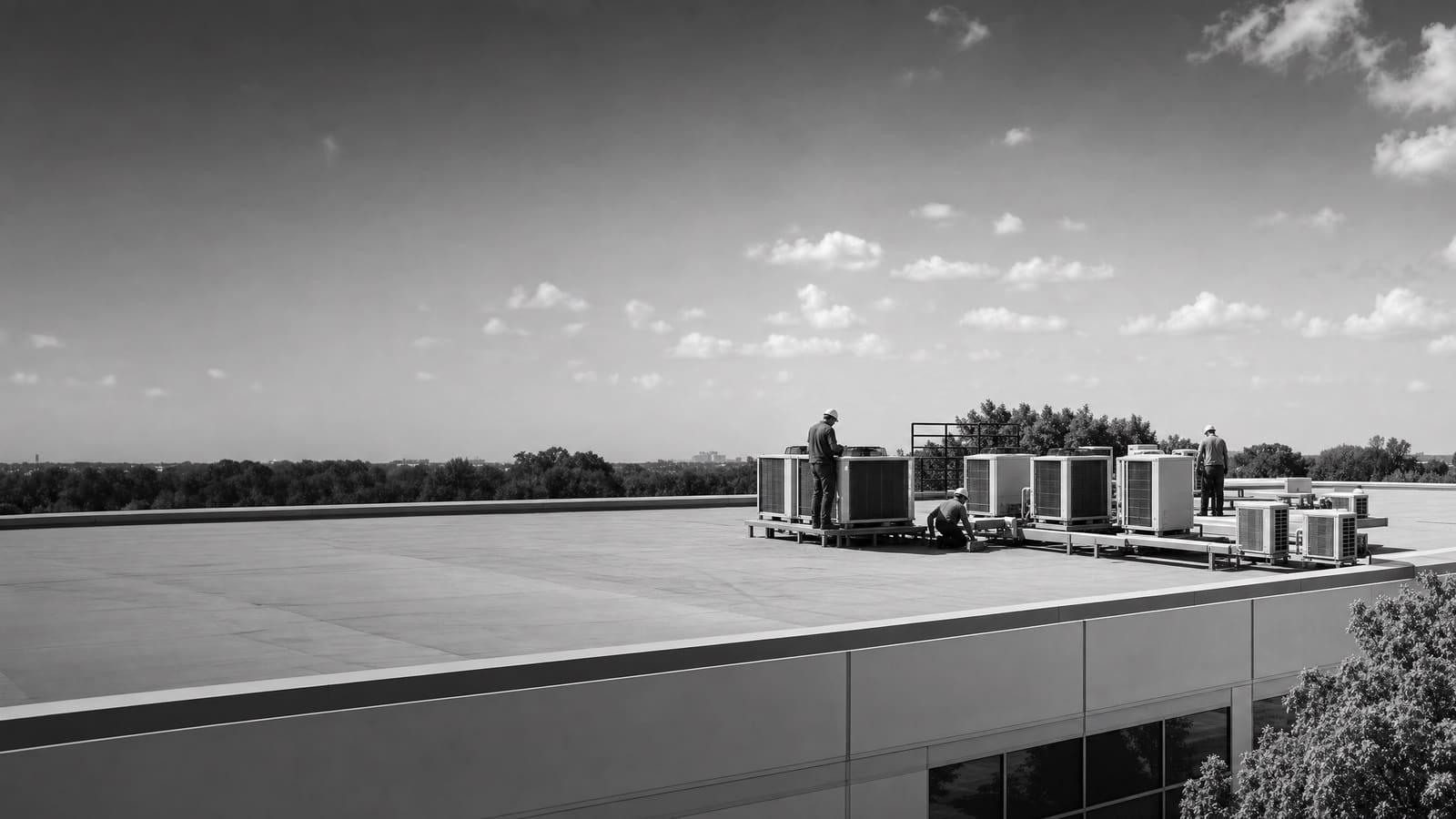
A commercial HVAC replacement is a scoped project, not a swap. It covers a fresh load check, equipment picked against real lead times, certified refrigerant recovery, curb and structural work, power, gas and controls connections, permits, and commissioning. Repair stops being the cheaper answer once a rooftop unit passes about fifteen years. DOE puts the annual waste from old, inefficient commercial rooftop units at $900 to $3,700 per unit — often more than the repair you are weighing.
A site review still has to confirm tonnage against how the space is used now, the curb and roof structure, available electrical capacity, crane access, and which code items a replacement triggers.
THREE PATHS
The choice most Augusta owners are actually making
Rooftop units cool nearly half of all commercial floor space in the country, so this is the decision most facility owners face. The right path depends on how much the building has changed since the last unit went in.
Like-for-like keeps the curb, the fuel, and the connections you already have. A high-efficiency replacement keeps the same shape but buys down the operating bill for the life of the unit. A heat pump rooftop unit brings reverse-cycle electric heating in place of gas, which DOE treats as a strong fit across most of the South because winter heating loads stay mild to moderate.
The tiebreaker is rarely the sticker price. It is whether your electrical service, roof structure, and heating expectations can support the better option without a second project attached to it.
WHAT MOVES THE NUMBER
Where a commercial HVAC quote actually varies
Commercial HVAC quotes vary less on the equipment than on everything around it. These are the lines that separate two buildings on the same street.
THE BUYING DECISION
Replace on your schedule, not the equipment's
The first honest question is whether you are replacing a unit or replacing a decision. Facility managers often wait until a rooftop unit stops holding the space, needs constant service, or fails outright. DOE is direct about this: proactively replacing an inefficient unit is usually the better business move than replacement-on-failure, and often better than a like-for-like swap at the end of service life. A unit that dies in July gets replaced with whatever is available, at whatever it costs that week.
Sizing deserves the same scrutiny. The old nameplate reflects the building as it was when the unit went in, not as it runs now. Occupancy, plug loads, hours, and lighting all change over fifteen or twenty years, and carrying the old tonnage forward carries the old mistake forward with it.
Efficiency is where the math gets easy to check. Old, inefficient rooftop units waste $900 to $3,700 per unit each year. Multiply that by the number of units on your roof and the payback conversation stops being abstract. DOE's high-efficiency specification targeted units that use up to half the energy of the old standard, and more than 20 models on the market exceed it.
SCOPE CHECK
Routine replacement versus an engineered one
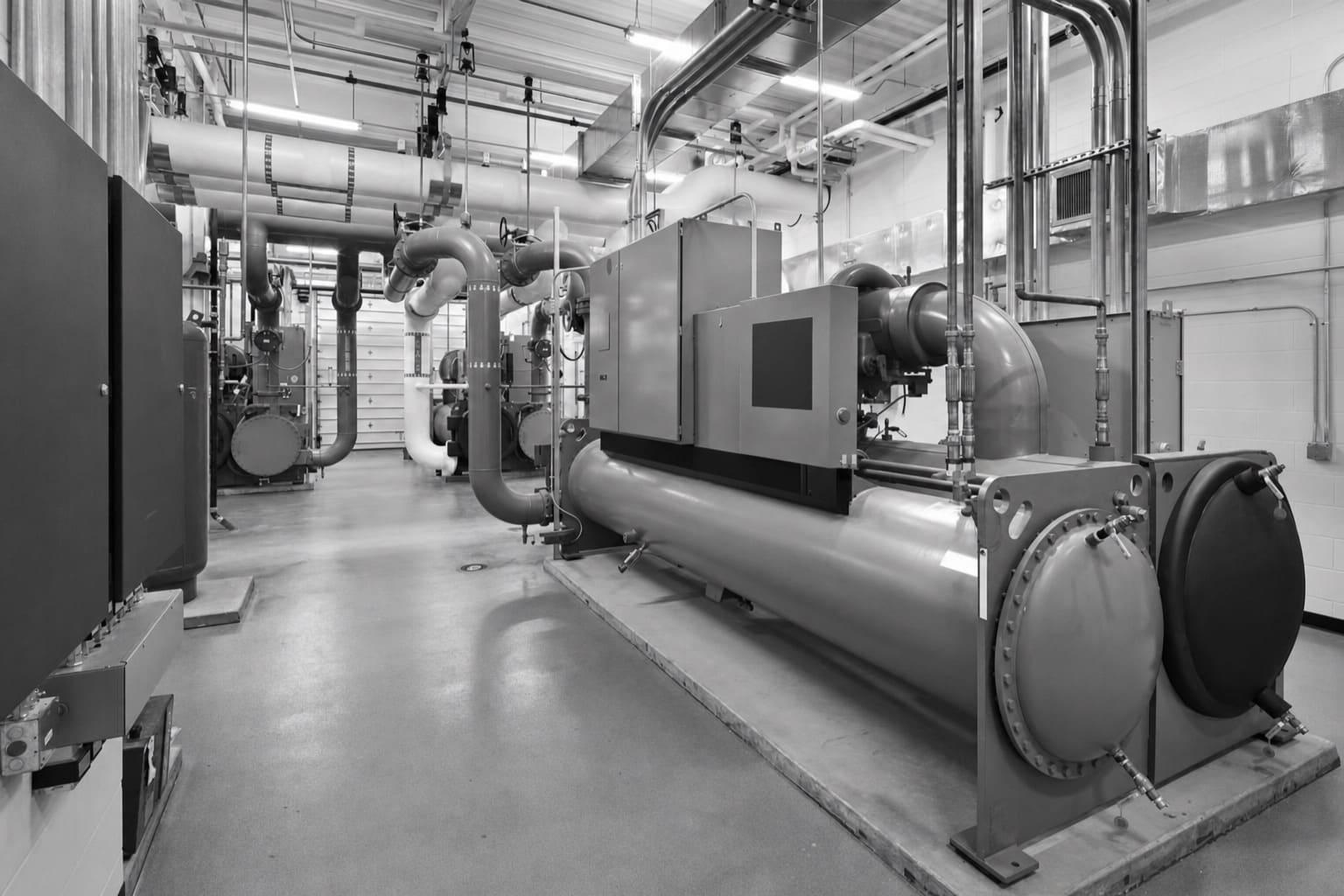
Two buildings on the same block can get very different quotes, and the gap is almost always scope rather than markup. Here is what pushes a replacement from routine into engineered territory.
LOWER COMPLEXITY
Straight swap, same envelope
Same tonnage, same fuel, same curb footprint, and clear crane access from the lot. Use has not changed and the panel has room. These jobs get scheduled around weather and equipment availability, not around engineering.
HIGHER COMPLEXITY
New footprint or new fuel
Tonnage or footprint grows, the roof needs structural review, or an all-electric unit needs more panel capacity than the building has. Add gas line changes, controls integration, and a longer permit and inspection path.
SCOPING IT RIGHT
What a real site review has to answer
A good site review is short and specific. The contractor should get on the roof, photograph the nameplate, measure the curb, and look at what holds it up. From there the questions get practical: does the existing electrical service have capacity and breaker space for the unit you want, is there gas at the curb and does it stay or get abandoned, and where does the crane actually sit on the day.
DOE lists the same items as the deciding factors on rooftop projects — electrical capacity, physical constraints, gas lines, equipment availability, and whether contractors nearby know the platform you are buying. That last one matters more than owners expect. A unit nobody in the area wants to service is a five-year problem, not a purchase decision.
Two more things belong on the walk. Ask the contractor to confirm with the building official which code items a replacement triggers, since that answer changes both the equipment and the price. And confirm access hours, because a lot that has to stay open until six moves the crane day and the labor rate with it.
Bring these four things to the walk
The nameplate photo, the panel schedule, your real operating hours, and the last two years of service history. Together they tell a contractor more about tonnage, capacity, and timing than a floor plan does.
AUGUSTA SPECIFICS
Permits, emergencies, and the six-month window
Augusta requires a permit for commercial mechanical work, and the rule is broad. Any contractor who wants to alter, repair, replace, or install a mechanical, electrical, or gas system on a commercial building has to pull a permit before work starts, and permits obtained late carry penalties. A rooftop replacement usually means mechanical plus electrical, and gas if the unit burns it.
Two details matter for scheduling. When equipment has to be replaced in a genuine emergency, the permit application is submitted the next working business day rather than before the crew arrives — that is what keeps an August failure from waiting on paperwork. And a permit application is treated as abandoned if work does not begin within six months of filing, so pulling permits far ahead of a long equipment lead time can quietly backfire.
Ask who pulls the permit
The installing contractor should hold the mechanical, electrical, and gas permits and carry the inspections as part of the installed price. Get that in writing before the crane day is scheduled.
AFTER THE CRANE LEAVES
Two things that decide how the unit lives with you
Two questions decide how a new unit behaves for the next fifteen years: how it makes heat in January, and what its refrigerant means for your service plan. Neither one shows up in a cooling-season complaint, and both show up in the budget eventually.
DOE flags heating performance and refrigerant handling as scoping items for good reason. They are cheap to plan for before the purchase order and expensive to discover afterward. Ask about both while you still have two quotes side by side and the answer can still change what you buy.
WINTER PERFORMANCE
How the unit makes heat
Heat pump efficiency falls as outdoor temperature drops, trending toward parity with electric resistance. All-electric units lean on resistance backup on the coldest mornings. Dual-fuel keeps a gas stage for those hours. In a mild Southern winter that gap is small, but price it before you commit.
SERVICE PLANNING
Refrigerant and the fleet you keep
EPA Section 608 governs how refrigerant is handled and recycled in stationary cooling and heat pump equipment, so recovery from the old unit is a compliance step with paperwork behind it. If your roof ends up mixed, make the service contract track unit by unit.
PROCUREMENT AND PHASING
Sequencing the order, the crane, and the permit
Procurement is where a replacement plan earns its money. Equipment availability is one of DOE's own considerations for rooftop projects, and it belongs in the schedule from day one rather than as a surprise after the purchase order. If a unit is on a long lead, the sequence runs backward from the ship date: order first, then set the crane day, then file the permit inside the window that keeps it active.
Buildings with several units on the roof should think in phases rather than in single failures. Replacing the worst performer each budget year spreads the capital, keeps crane mobilization efficient when two units sit close together, and gives you real operating data before committing the rest of the fleet to a platform. It also lets you standardize on one manufacturer and one control system, which quietly cuts service cost later.
The lifetime number is the one worth arguing about. Through DOE's Advanced RTU Campaign, more than 200 organizations upgraded over 43,000 rooftop units and cut a combined $37 million a year from their energy bills. Ask any contractor to show the operating case next to the installed price, not instead of it.
QUOTE CHECKLIST
Five things a comparable quote should show
If two quotes cannot be compared line by line, they are not really competing. These five items make them comparable.
01
Equipment, tonnage, and efficiency tier
Model number, capacity, and efficiency level, so two bids are priced on the same spec instead of two different units.
02
Lead time and availability
The real ship date for that model, written next to the price rather than promised on the phone.
03
Curb, structural, and rigging scope
Curb adapter, any roof work, crane size, staging area, and how many hours the lot is closed.
04
Permits and inspections
Which permits the contractor pulls, who schedules inspections, and whether both are inside the installed price.
05
Recovery, startup, and commissioning
Certified recovery of the old charge, plus verified airflow, charge, and control settings documented at handoff.
Get a defensible number
Price the equipment and the building together.
Send the address, operating target, and target opening date. Flux will identify what must be verified before the project can be priced.
Get a free estimateQuestions
Straight answers.
When does replacement beat another repair?
Once a rooftop unit is past about fifteen years, the math usually flips. DOE notes that units over fifteen years old waste substantial energy and money, and old inefficient rooftop units waste $900 to $3,700 per unit each year. Waiting for failure also means taking whatever equipment happens to be available that week.
Do I need a permit to replace a rooftop unit in Augusta?
Yes. Augusta requires permits for commercial mechanical, electrical, and gas work, including replacing equipment, and they must be obtained before work begins to avoid penalties. In a true emergency replacement, the application is submitted the next working business day.
Should we switch to a heat pump rooftop unit?
It is usually worth pricing here. DOE treats heat pump rooftop units as an appropriate solution across most of the South, where winter heating stays mild to moderate. The scoping questions are electrical capacity, physical constraints on the roof, and what happens to the existing gas line.
Why is one quote so much higher than another?
Usually scope, not markup. Curb adapters, structural work, added electrical capacity, crane access and lot closure hours, and controls integration all sit outside the equipment price. Compare the model number, the lead time, and the scope list before comparing totals.
What happens to the refrigerant in the old unit?
It has to be recovered. EPA Section 608 regulates the handling and recycling of refrigerant in stationary refrigeration, air-conditioning, and heat pump equipment, so recovery happens before the old unit leaves the roof. That line should be visible in the quote.
Sources used for this guide
- [1]betterbuildingssolutioncenter.energy.gov — DOE Advanced Rooftop Unit Replacement Guidance
- [2]betterbuildingssolutioncenter.energy.gov — DOE Commercial Heat Pump Rooftop Unit Replacement Guidance
- [3]betterbuildingssolutioncenter.energy.gov — DOE High-Efficiency Commercial Rooftop Unit Toolkit
- [4]energy.gov — DOE Efficient Commercial Rooftop Air Conditioner Program
- [5]epa.gov — EPA Stationary HVAC Refrigerant Management
- [6]augustaga.gov — FAQs - CivicPlus.CMS.FAQ