TAMPA, FL · SOLAR
Commercial solar installation in Tampa.
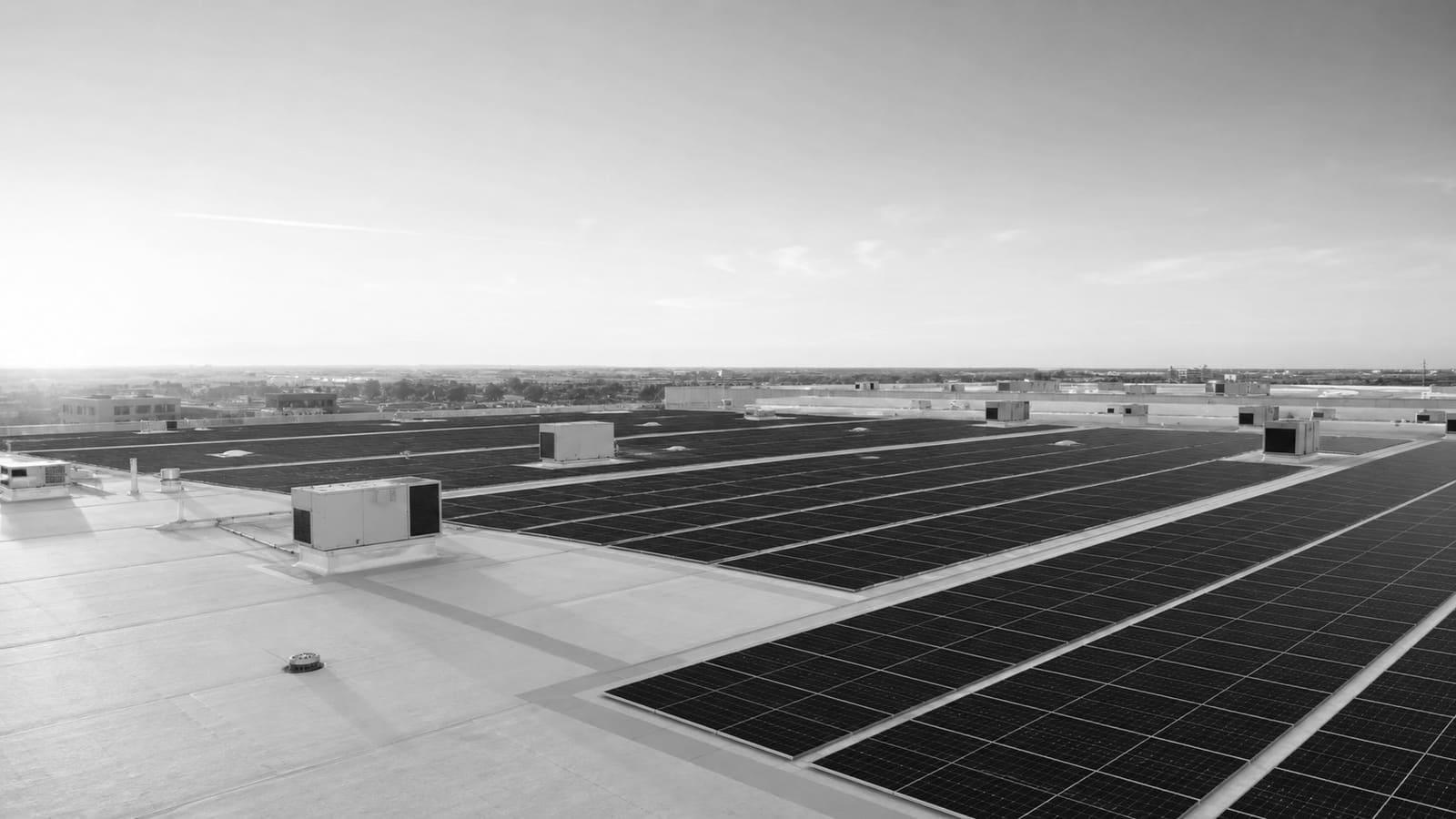
We plan and install solar arrays for Tampa offices, warehouses, plants, and other commercial buildings.
Start with the building, not the panels.
A commercial solar project has to fit the site, the roof, the electrical system, and the utility rules. We start with a solar feasibility study, then compare rooftop solar with solar carports where parking offers the stronger site.
One team carries design, permits, utility interconnection, construction, commissioning, and solar maintenance. We also compare direct ownership with solar financing and PPAs, and add battery storage only when it has a clear job.
START HERE
What should Tampa businesses plan before installing solar?
For Tampa commercial buildings, we match the solar array to power use, available space, roof limits, and wind exposure. Rooftop, carport, and ground-mount systems fit different sites. Panels make direct current, and an inverter changes it to the alternating current the building uses. We compare array type, panel angle, roof attachment, and permit needs before installation. A lower tilt can reduce wind load, but panel direction and angle also affect power output. The right choice must balance production with the building and site.
Wind load changes the array design
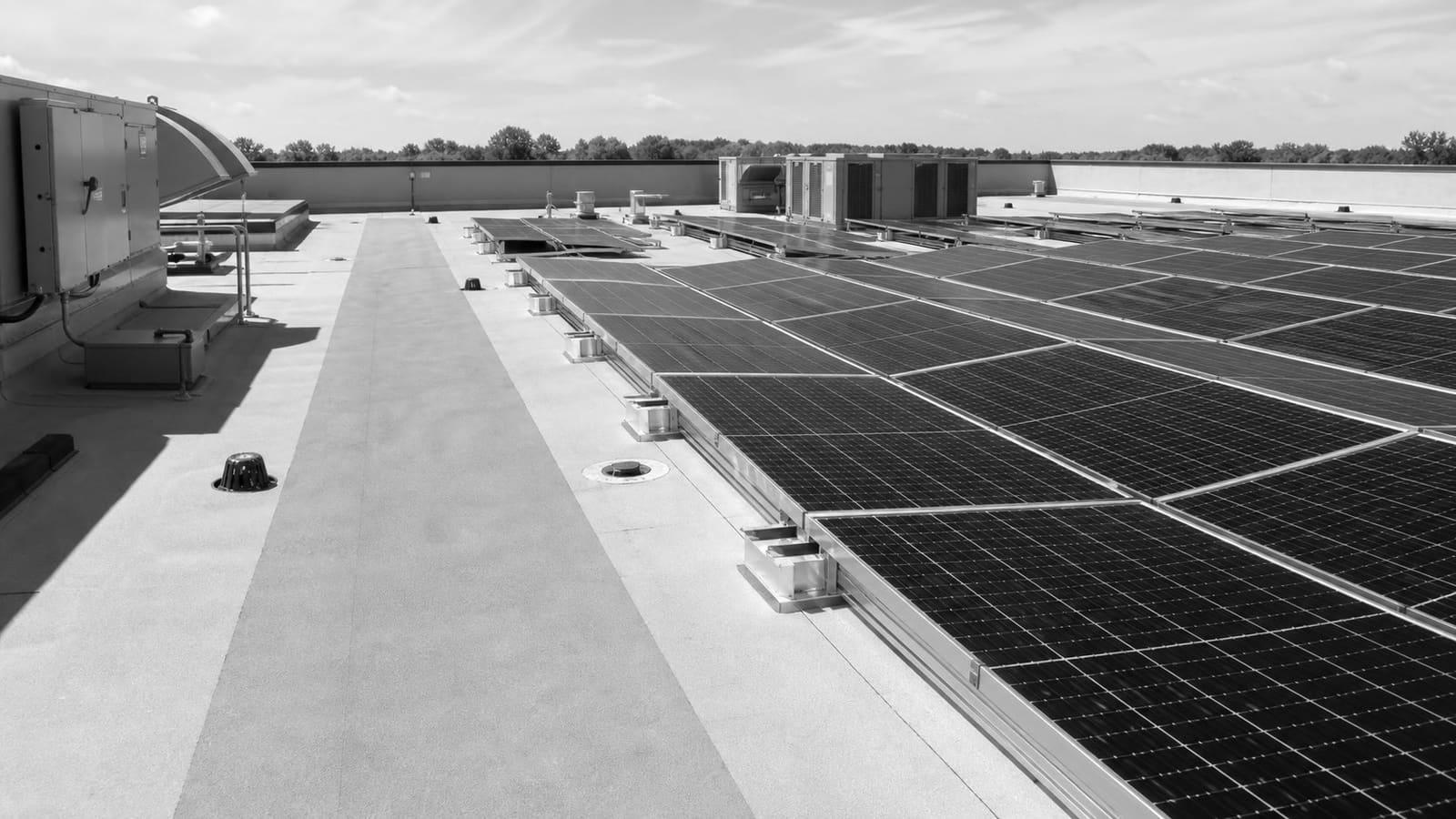
Tampa solar panels face direct wind and rain exposure. Panel angle matters because steeper panels create more wind load. Flush or lower-angle panels may reduce that load, though they may not provide the best solar angle. We use the roof condition, attachment plan, panel layout, and local exposure to choose a sound design. A roof that cannot support the planned attachments or loads is a poor fit for rooftop solar until that condition is resolved.
Site fit checks
Which commercial solar installation fits a Tampa property?
Rooftop array
ROOF
We check usable roof space, roof condition, attachment points, and wind exposure. These findings change the panel count, layout, tilt, or whether the roof can carry an array.
Solar carport
CARPORT
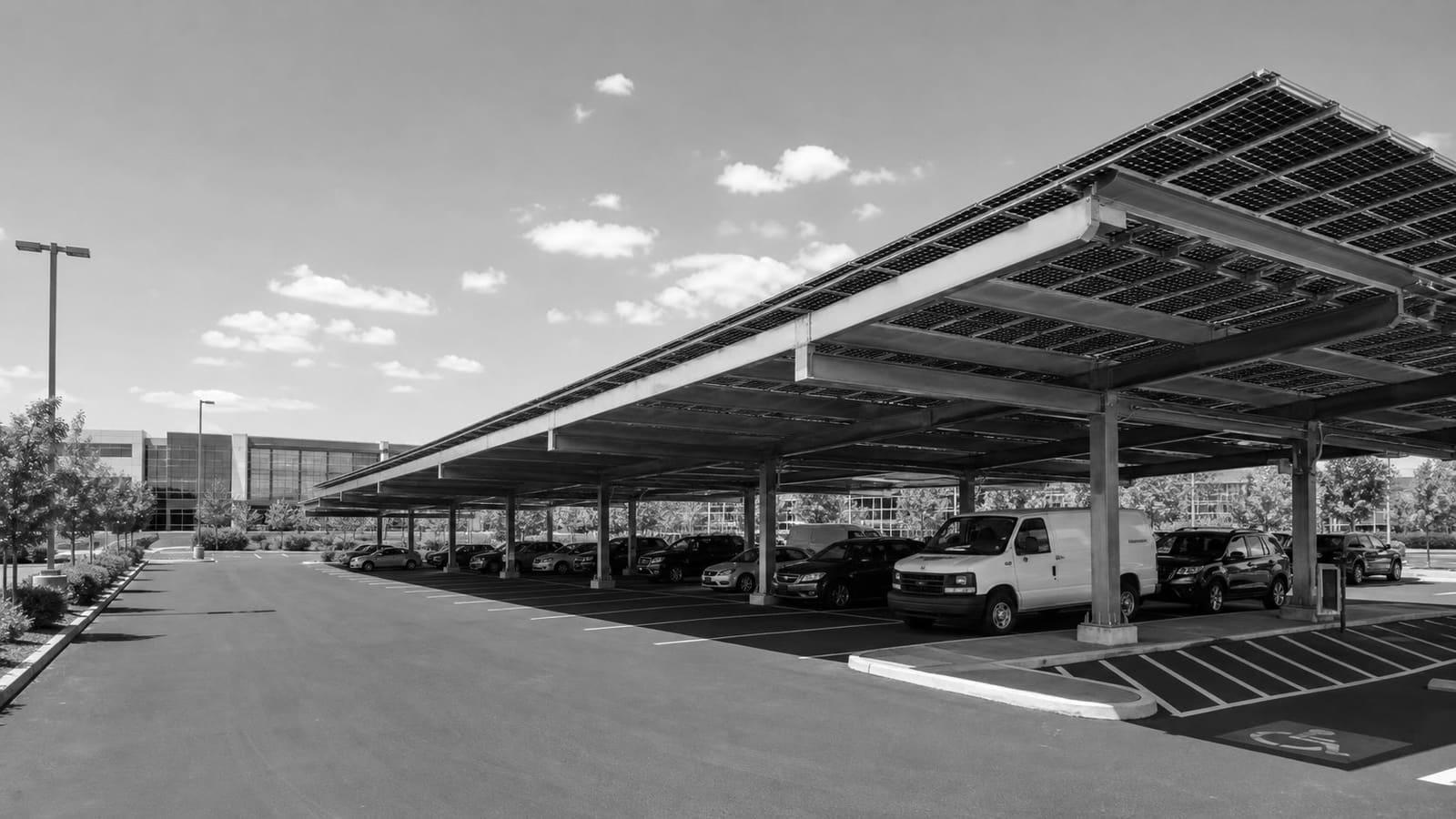
We check parking layout and clear travel paths. Those conditions change the canopy position and whether a carport array fits normal building operations.
Ground-mount array
GROUND
We check open land near the commercial building. Available area and placement change the array size and whether ground mounting is a practical choice.
Power-use match
LOAD
We review the building’s energy consumption record. That record changes system size and helps avoid a design that does not match actual commercial demand.
WHAT WE HANDLE
Everything under the solar door.
PROJECT PLANNING
How do we choose a solar panel angle in Tampa?
Production angle
OUTPUT
A south-facing tilt from 15° to 40° can provide strong production in the continental United States. The chosen angle changes expected solar exposure.
Wind tradeoff
WIND
A lower tilt reduces wind load and can improve production in some designs. We weigh that benefit against roof space, direction, and attachment needs.
Flush mounting
FLUSH
Panels set close to the roof may be chosen for appearance and lower wind load. That choice can reduce production when tilt or direction is less favorable.
Steep tilt
TRADEOFF
A steeper tilt raises wind load. In Tampa, that added load must be weighed before choosing it for a commercial roof.
Permit path
What must Tampa solar installation planning confirm?
- Confirm whether the planned solar installation falls outside general building maintenance; Tampa requires a separate permit for work outside that scope.
- Identify the correct permit path before work begins; the annual facility permit applies to ongoing alterations of a general maintenance nature.
- For a building constructed before 1985, check whether an Asbestos Certification is needed with an Annual Facility Permit application.
- Keep the permit decision tied to the exact solar scope, since roof attachments, electrical equipment, and array type can change the filing needs.

BEFORE YOU BUY
What should Tampa businesses receive after solar installation?
- A record of the installed rooftop, carport, or ground-mount system type.
- The final panel layout, tilt, direction, and roof attachment plan.
- The inverter information showing the equipment that changes panel direct current into building-ready alternating current.
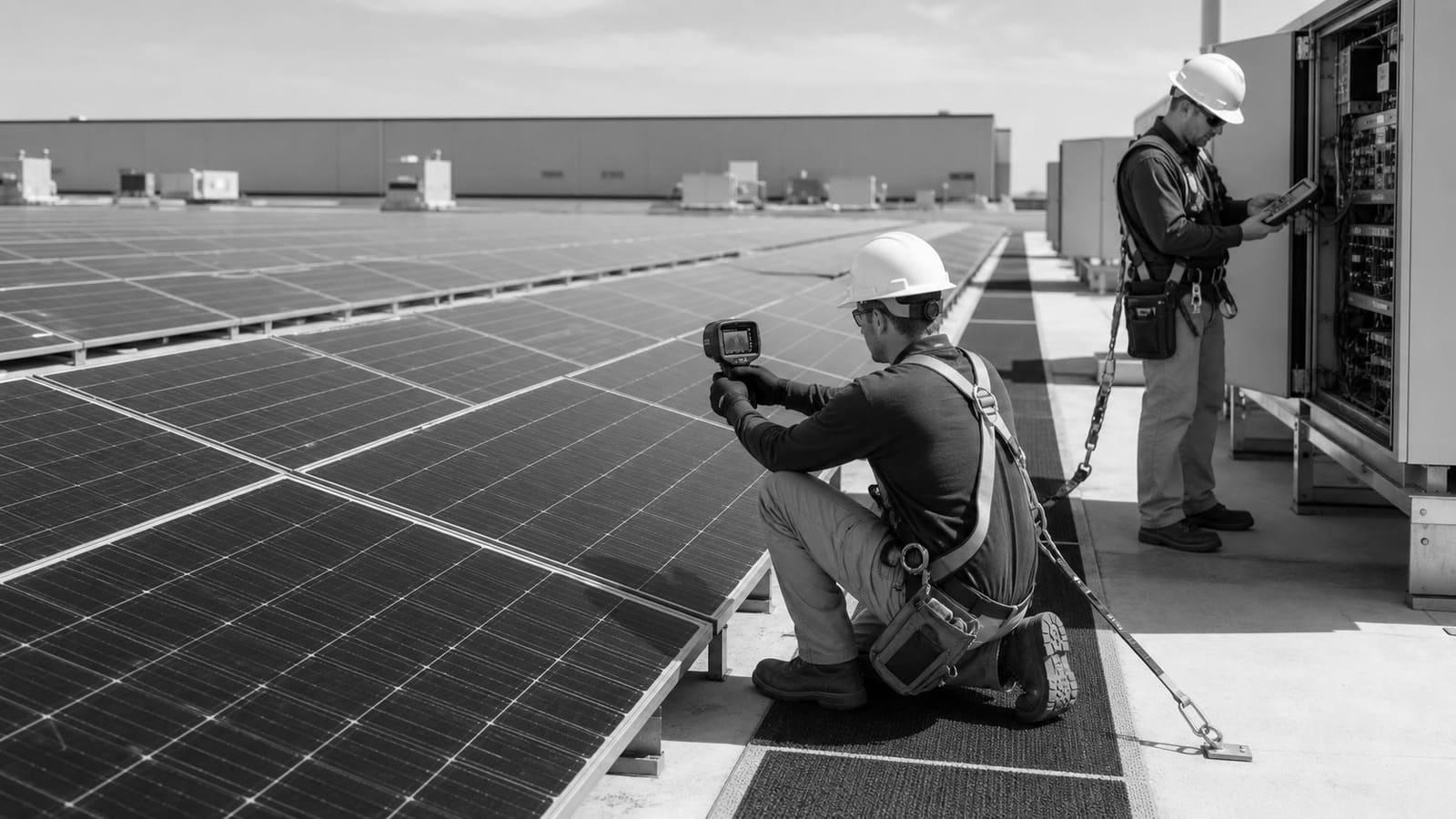
- The commissioning record for the completed photovoltaic system.
- The permit records required for the approved project scope.
QUESTIONS
Straight answers.
Can Flux install solar on a Tampa commercial roof?
Yes, when the roof, usable area, attachment plan, and wind-load design support the array. A roof that fails those checks needs another solar layout or corrective action first.
Does a Tampa commercial property need rooftop solar?
Not always. We compare rooftop, carport, and ground-mount options. Available roof area, parking use, open land, and building power use change the best fit.
Why does panel tilt matter in Tampa?
Tilt changes solar exposure and wind load. Lower angles can reduce wind load, while a poor angle or direction can reduce power production.
Can an annual facility permit cover a Tampa solar project?
Tampa limits that permit to ongoing alterations of a general maintenance nature. Work outside general maintenance requires a separate permit, so the exact solar scope must be checked.
GET STARTED
Tell us about the building.
Whatever the trade, we scope it, price it, and put the right crew on it. Site visits are free, always.
MORE SERVICE AREAS