
COMMERCIAL ENERGY · AUTOMATION · FACILITY SERVICES
Commercial contractors in Charlotte.
Flux Facility runs commercial construction and build-out projects in Charlotte, from permits and licensed trades to final inspection and certificate of occupancy.
WHAT WE DO
From energy audits to robot repair.
Energy
Find the waste, fund the fix.
Energy audits
Audit cost & pricing
Efficiency consultants
ALL ENERGY →
Battery
Storage that pays for itself.
BESS installation
Battery backup
Containerized BESS
ALL BATTERY →
EV
Charging that shows up on time.
EV charging installation
Fleet charging
Workplace charging
ALL EV →
Robots
Automation that earns its floor space.
Cleaning robots
Autonomous floor scrubbers
Security robots
ALL ROBOTS →
Mechanical
The big installs, built right.
HVAC installation & replacement
Ductwork installation
Sheet metal & pipe fabrication
ALL MECHANICAL →
Maintenance
The trades that keep buildings alive.
HVAC service
Electricians
Roofing
ALL MAINTENANCE →
Not sure where it fits?
Reach out. We scope it and put the right team on it, whatever the trade.
CHARLOTTE BY THE NUMBERS
What Charlotte does to buildings.
45"
RAIN A YEAR
Storm season is the real maintenance calendar here.
SUMMER
IS THE STRESS TEST
Cooling season is when undersized equipment shows itself.
965K
PEOPLE STRONG
Charlotte commercial buildings keep a growing market running.
START HERE
How do you hire a commercial contractor in Charlotte, NC?
A commercial contractor runs the whole job on your Charlotte building. That means reading the plans, pulling permits, hiring licensed subs, sequencing trades, and calling in municipal inspections. You get one number to call and one company on the hook. At the end you get the documents, the warranties, and the certificate of occupancy. Plan review is the part most owners miss. In North Carolina, review times swing hard by jurisdiction. A rural county might turn plans in two weeks. A Charlotte review can take two months. Build that into your lease dates and your opening day, not into a hope. Zoning approval, fire marshal review, health department sign-off, stormwater, and DOT driveway permits can each add another step.
Bid math
What do commercial contractors charge in Charlotte, NC?
Lump-sum contract
Fixed price
Most commercial general contractor work in Charlotte is priced as one fixed number. Labor, materials, permits, supervision, and overhead are all inside it.
Cost-plus fee
10-20% fee
The other common setup is cost of the work plus a defined fee. That fee typically runs 10 to 20 percent of project cost.
Hourly billing
$75-$150/hr
Hourly is for small handyman-style repair calls, not full builds. Charlotte rates run $75 to $150 per hour for a licensed contractor, and $40 to $80 for unlicensed handyman labor.
Managing subs yourself
Usually costs more
Skipping the fee looks cheaper on paper.
License and bid checks
How do you vet a Charlotte contractor before you sign?
- Ask for the license number and check it at nclbgc.org. North Carolina law requires an active NCLBGC license on any project valued at $30,000 or more.
- Working across the South Carolina line?
- Get a written, line-item proposal. Vague or verbal-only estimates are a red flag, and so is pressure to sign the same day.
- Confirm general liability and workers' compensation insurance before anyone sets foot on the property.
- Look twice at a bid far below the rest, and at a contractor with no physical address. Both point to cut corners or change orders later.

POWER & AUTOMATION
Battery storage, EV charging, and robots that work.
Commercial buildings are adding batteries, chargers, and floor robots faster than most contractors can keep up. We design and install battery energy storage systems, handle utility interconnection, and build EV charging from a pair of stalls to a full fleet depot.
On the automation side, we deploy cleaning and security robots that pay for themselves in labor, then keep every piece of it running. Planning any of this? Get in touch and get a real number for your building.
Get in touchHOW IT WORKS
From first call to finished work.
01
Get in touch
Tell us the building and the problem. Two minutes, no phone tag.

02
Get a scoped proposal
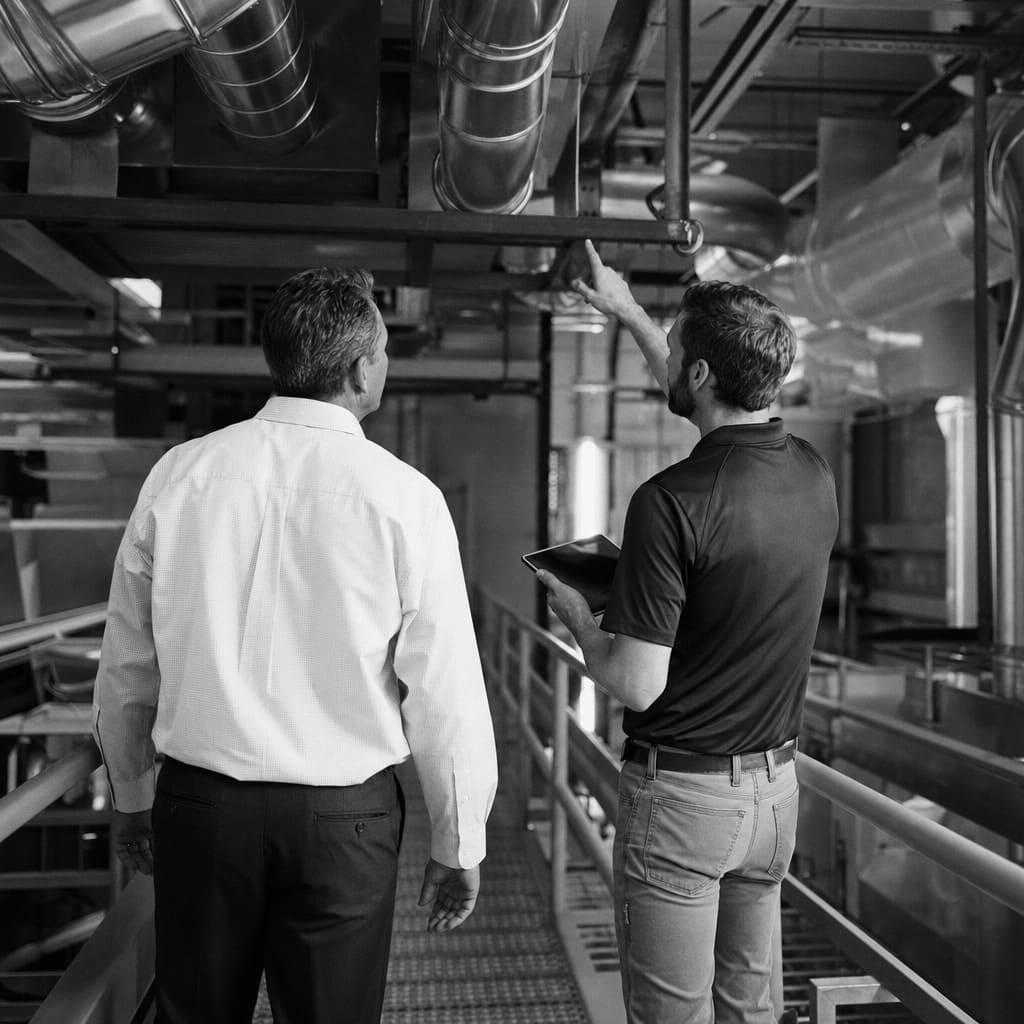
We assess the site, engineer the fix, and put a real price on it.
03
The work gets done
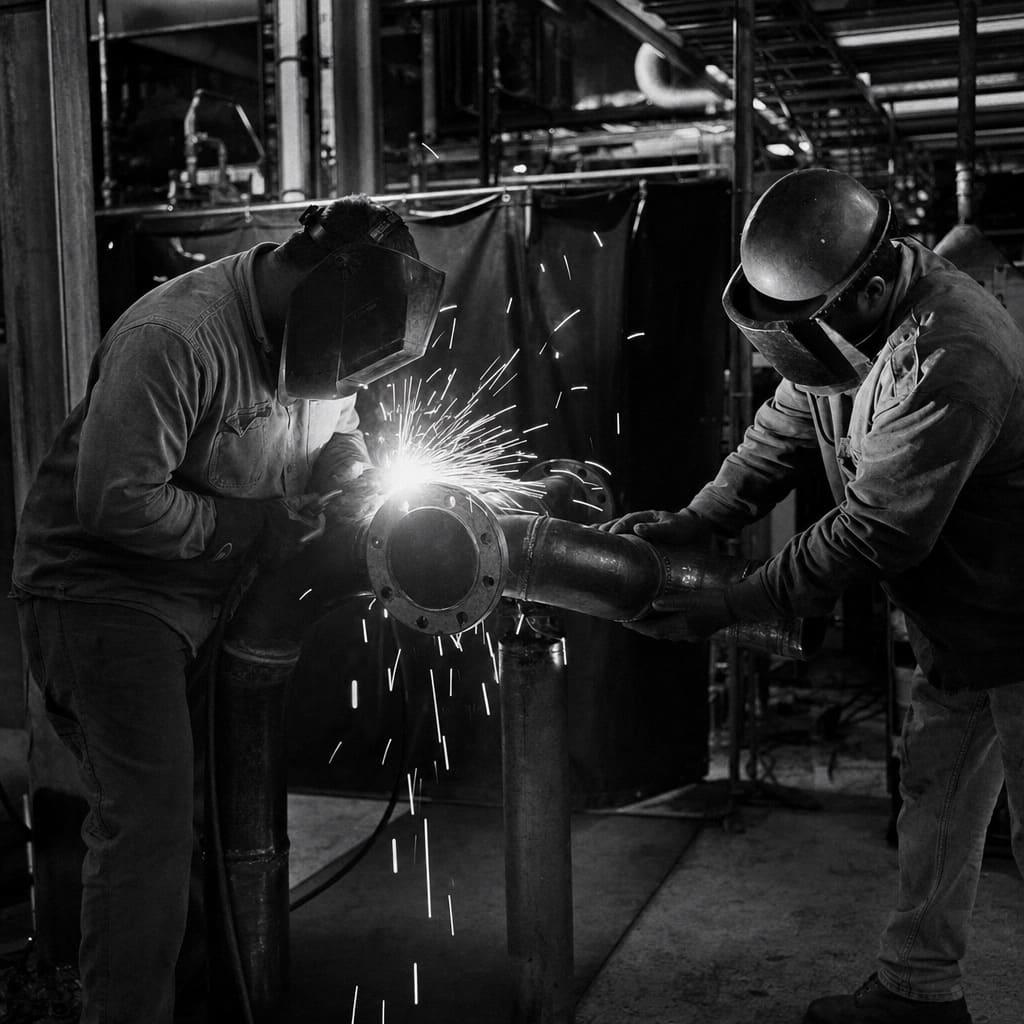
Vetted, insured local crews, with one point of contact from scope to done.
WHY FLUX
One call covers the whole building.
Every trade, one contact
Mechanical, electrical, energy, robots. You deal with one person from scope to done.
Licensed local crews
Insured crews from your market, vetted before they walk your site.
A real price, fast
Free site visit, scoped proposal, and a number you can take to your board.
Built for what's next
Battery storage, EV charging, and facility robots alongside the trades you already buy.

THE CORE TRADES
The trades that keep a building running.
HVAC, plumbing, electrical, roofing. The unglamorous work is most of the job, and slow contractors are where it costs you. Our mechanical crews handle installs and replacements, from rooftop units to boilers, chillers, and process piping.
Maintenance covers the rest: service calls, electricians, roofing, fire and life safety, landscaping, and snow. Not sure where to start? An energy audit finds the waste and funds the fix.
Get in touchWHO WE SERVE
Every kind of commercial building.
Office & corporate
Tenant comfort, uptime, and energy costs under control.
Industrial & manufacturing
Process piping, automation, and the power to run it.
Warehouse & logistics
Docks, floors, charging, and robots that earn their space.
Retail & hospitality
Fast fixes and clean installs that never touch open hours.
Healthcare & medical
Code-first work in buildings that can't go down.
Multifamily & HOA
One contact for the whole property, every trade.
POPULAR PROJECTS
What we get asked for most.
QUESTIONS
Straight answers.
What permits does a commercial project in Charlotte need?
Every commercial project needs a building permit. Depending on the use, you may also need zoning approvals, health department sign-off, fire marshal review, stormwater permits, and DOT driveway permits. Your contractor should handle the submittals and the back-and-forth with the jurisdiction, not hand you a list.
Can a Charlotte retail store or office stay open during a build-out?
Often yes, if the trades are sequenced. Electricians, plumbers, and municipal inspectors have to hit the job in a logical order so nobody waits on anybody. On a retail build-out or office renovation, every closed day hits your revenue, so the schedule matters as much as the price.
Is a Charlotte warehouse or industrial project different from an office job?
Yes. Industrial, manufacturing, and warehouse work gets designed around your machinery, your storage needs, and your loading zones. When storage spills into walkways or loading areas get chaotic, safety risk goes up and throughput goes down. The layout is the job, not a detail.
What do we get when a Charlotte commercial job is finished?
A completed project handed over with documentation, warranties, and the certificate of occupancy. Getting there means passing every required inspection under current building codes, including the International Building Code. Hiring unlicensed help puts that at risk: you can face a stop-work order, fines, or a denied insurance claim.
GET STARTED
One call away.
Tell us the building and the problem. We bring the plan, the price, and the crew. Site visits are free, always.
MORE SERVICE AREAS