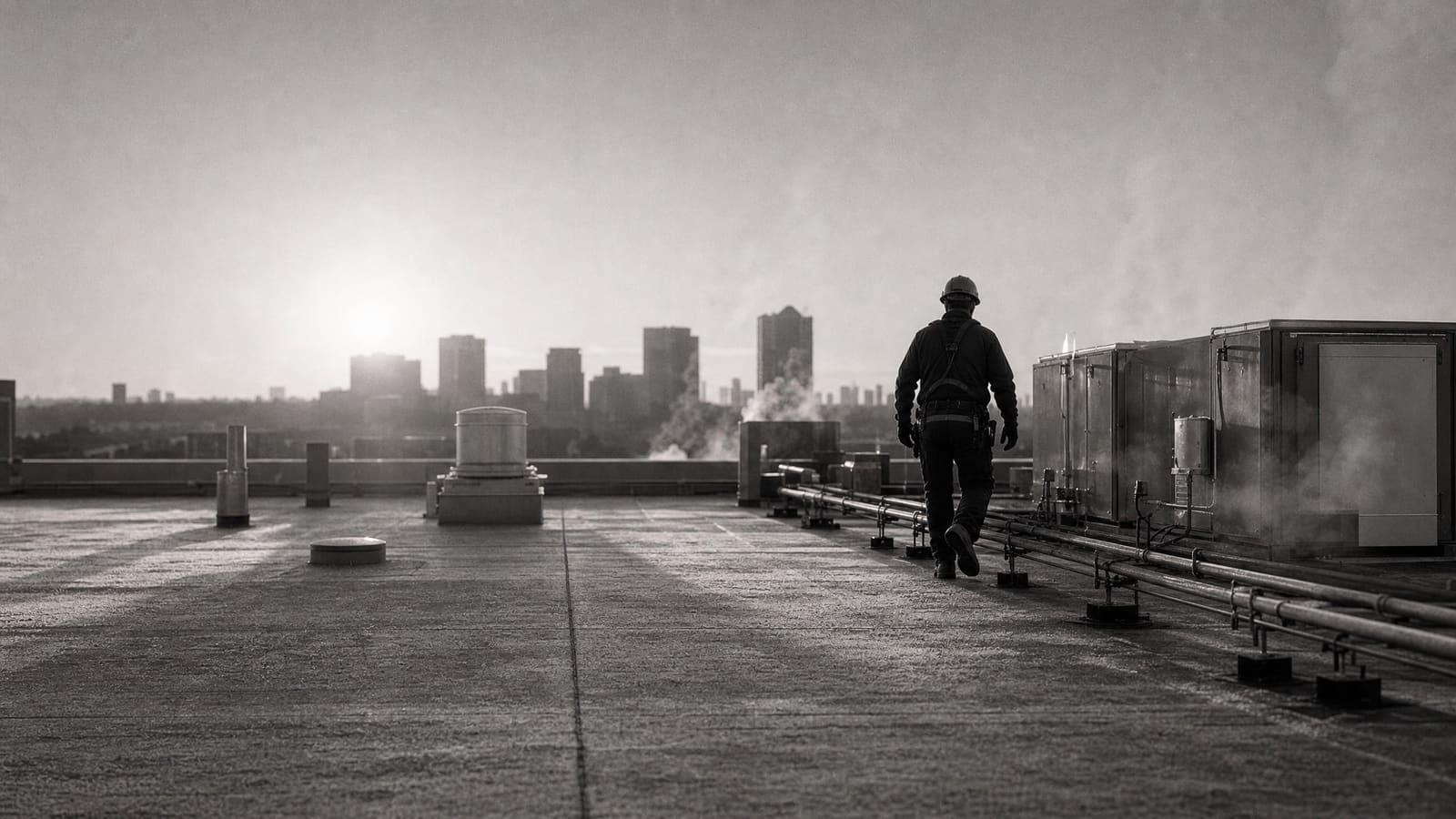
BALTIMORE, MD · MECHANICAL
Commercial mechanical contractors in Baltimore.
We plan, install, repair, and coordinate mechanical systems for commercial buildings in Baltimore.
Mechanical work that hits the date.
Whether a build-out needs mechanical from scratch or one system reached its end, the schedule is the job. One request covers plumbing, HVAC, boilers and chillers, and ductwork with the coordination that keeps other trades moving.
Industrial work is its own discipline: process piping, sheet metal and pipe fabrication, and design-build engineering when the drawings don't exist yet. One point of contact from scope to commissioning, and a number that doesn't move after signing.
START HERE
What do Baltimore mechanical contractors handle?
Commercial mechanical contractors keep Baltimore commercial HVAC, plumbing, piping, and control systems working as one system. We match the scope to the building, its use, and the work planned. We check equipment nameplates, duct layout, thermostat locations, and electrical capacity before we propose changes. We also test airflow and static pressure when duct limits may affect equipment choice. Flux uses this to buyers compare a repair, a system change, or a larger mechanical project with clear facts.
Confirm the Baltimore permit path first
Baltimore City lists permit applications, ePlans review, special referrals, and inspections in its building permit process. Its adopted standards include the 2021 International Mechanical Code. We confirm the property address, planned mechanical scope, and needed plan documents before work is scheduled. A Baltimore County permit path is not a fit for a property inside Baltimore City. The correct location changes the filing office, review path, and project schedule.
Scope checks
Commercial mechanical contractor checks for Baltimore buildings
PROJECT PLANNING
How to compare commercial mechanical contractors in Baltimore
WHAT WE HANDLE
Everything under the mechanical door.
CONSTRUCTION & INSTALLATION
DESIGN & PRECONSTRUCTION
Permit records
Baltimore commercial mechanical permit planning
BEFORE YOU BUY
Baltimore mechanical project records to request
- An equipment list with model and nameplate data, so proposed units can be checked against existing conditions.
- An airflow and static pressure record, so duct restrictions are separated from equipment faults.
- A marked duct and thermostat layout, so zone problems can be tied to real locations.
- An electrical capacity record, so added mechanical loads are checked before equipment is ordered.
- A permit and plan-document list for the Baltimore City review path, so filing tasks are assigned before the schedule is set.
ASKED IN BALTIMORE
Common questions about commercial mechanical contractors in Baltimore
Who are some mechanical contractors in Baltimore, MD?
BALTIMORE
Flux serves commercial buildings in Baltimore. We handle coordinated HVAC, plumbing, piping, controls, repair, and mechanical project needs.
What is the difference between a mechanical contractor and an HVAC contractor?
SCOPE
An HVAC contractor focuses on heating, cooling, and air movement. A mechanical contractor may also coordinate plumbing, piping, controls, and mechanical construction.
What is a mechanical contractor?
DEFINITION
A mechanical contractor installs, repairs, and coordinates building systems such as commercial HVAC, plumbing, piping, and controls.
Project in Baltimore?
Tell us the building, exact scope, and target date. Flux will review the request and send the next step.
QUESTIONS
Straight answers.
Which Baltimore code affects commercial mechanical planning?
Baltimore City’s 2024 code article includes the 2021 International Mechanical Code, as amended or modified by the city.
Does a Baltimore City project use the Baltimore County mechanical permit process?
No. The property location sets the filing authority. A building inside Baltimore City follows the city permit and review path.
What should Flux check before replacing commercial HVAC equipment in Baltimore?
We check nameplate data, duct routing, thermostat locations, airflow, static pressure, and electrical capacity before selecting equipment.
When is a unit-only replacement a poor fit?
It is a poor fit when duct size, leakage, pressure loss, or damper balance keeps the planned unit from moving air through the building.
GET STARTED
Plan it once. Build it right.
Send the plans or the nameplate and get a complete installed price: real scope, real lead times, no surprises on the back end.
MORE SERVICE AREAS