TULSA, OK · SOLAR
Commercial solar installation in Tulsa.
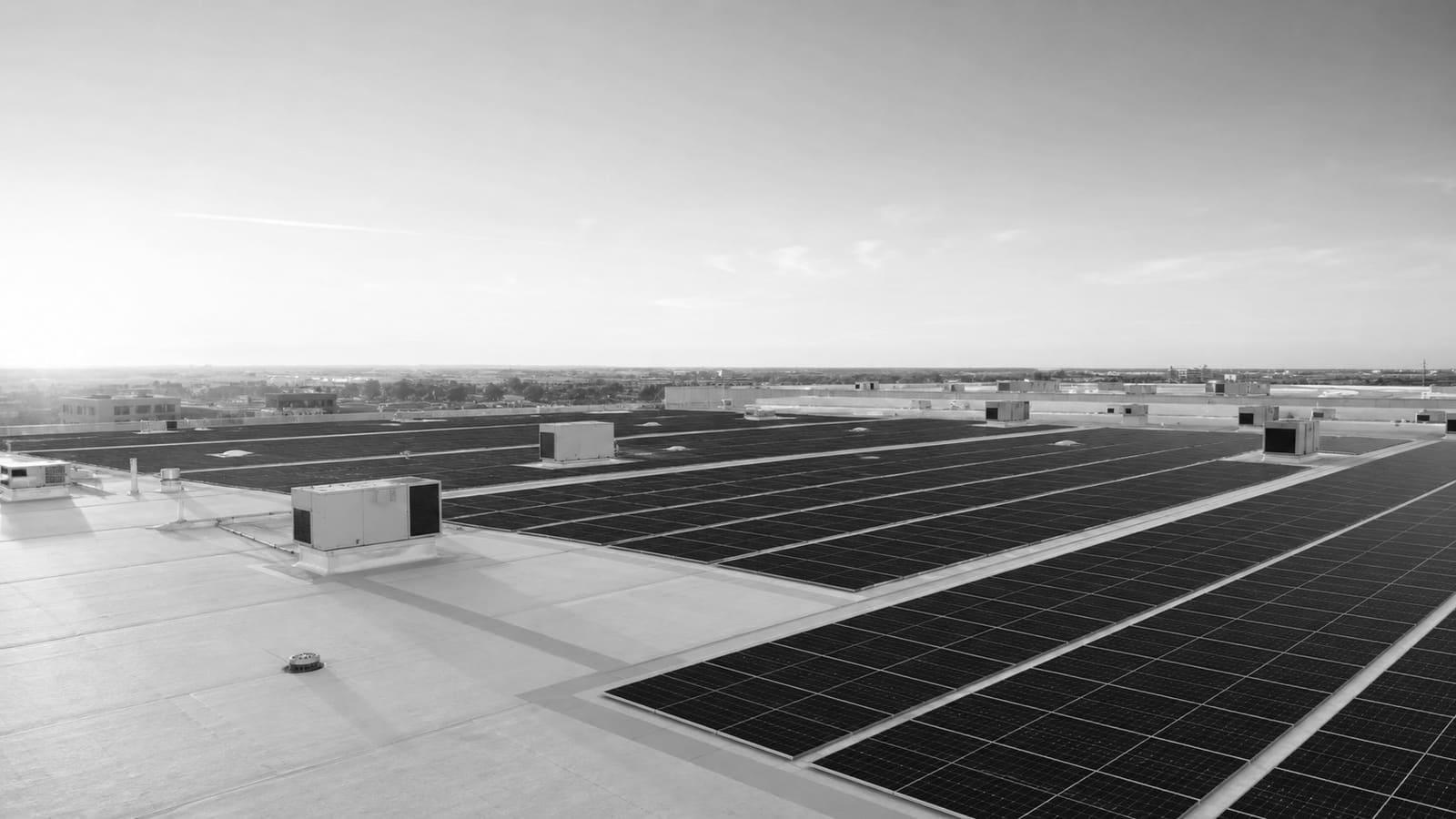
Commercial solar installation for Tulsa offices, warehouses, and industrial facilities, from system design through permits and final installation.
Start with the building, not the panels.
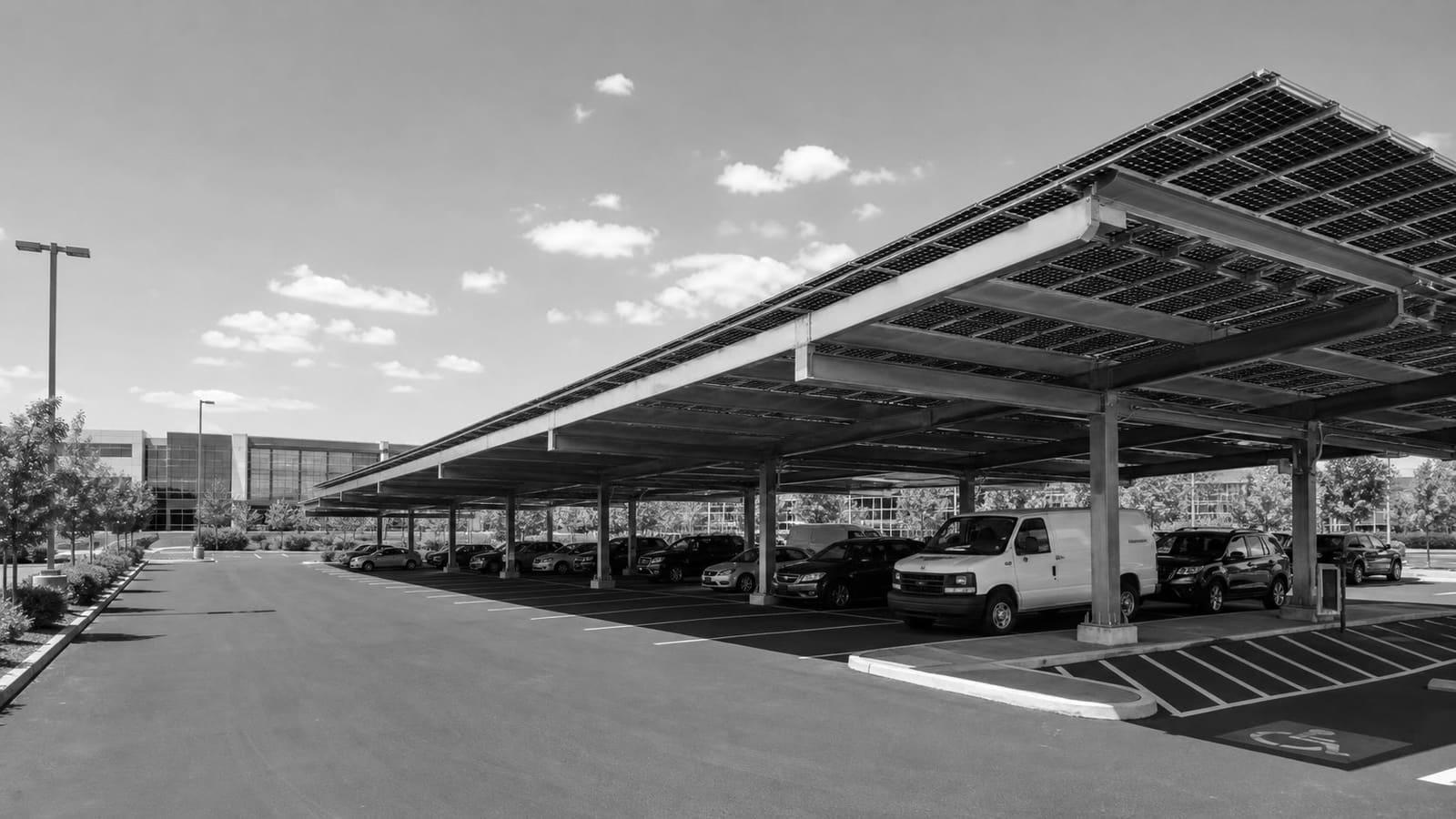
A commercial solar project has to fit the site, the roof, the electrical system, and the utility rules. We start with a solar feasibility study, then compare rooftop solar with solar carports where parking offers the stronger site.
One team carries design, permits, utility interconnection, construction, commissioning, and solar maintenance. We also compare direct ownership with solar financing and PPAs, and add battery storage only when it has a clear job.
START HERE
What should Tulsa businesses expect from a solar installer?
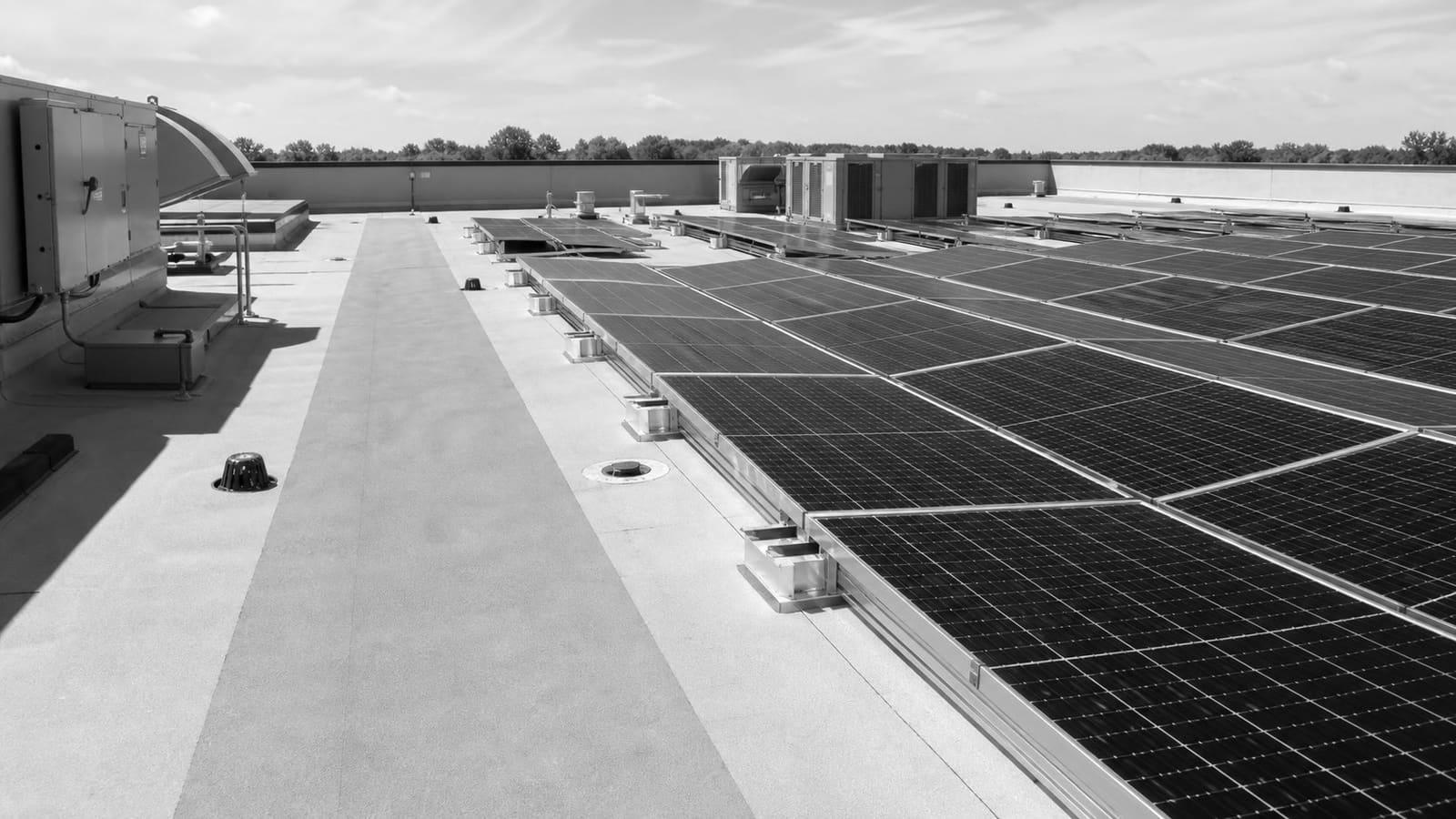
Commercial solar installation in Tulsa should match the building, roof, energy needs, and exposure to wind and winter weather. We design the array, prepare permit documents, install the equipment, and commission the system for offices, warehouses, and industrial sites. The right layout is not always the one with the steepest tilt. A lower angle can reduce wind load. A steeper angle can shed more snow and hail, but it also raises wind load. We weigh those effects against solar exposure, roof limits, and the way your facility operates.
Tilt affects more than output
Tulsa averages about 8 inches of snow and 41 inches of rain each year. That exposure makes panel angle a real design choice. A steeper tilt can shed snow and hail more effectively, but it adds wind load. A lower tilt may reduce wind load and can support production. We compare those effects with the roof structure and array layout. A roof that cannot support the selected array and mounting loads is a poor fit until the design or roof plan changes.
Roof Fit Checks
Commercial solar installation checks for Tulsa buildings
- Confirm whether the array will be rooftop or another system type; that choice changes the mounting plan and site layout.
- Check roof condition and structural limits; a failed roof-load review changes the array size, mounting method, or project fit.
- Compare flush mounting with tilted racks; flush panels may reduce wind load, while tilted panels may improve solar exposure.
- Check panel direction and tilt; south-facing panels set between 15° and 40° generally provide the best production in the continental United States.
WHAT WE HANDLE
Everything under the solar door.
PROJECT PLANNING
How Tulsa facility teams can compare solar designs
Tilt tradeoff
DESIGN
Compare expected solar exposure with wind, snow, and hail effects. The chosen balance changes rack angle and mounting loads.
Roof appearance
LAYOUT
Decide whether a flush array is preferred for appearance. That choice may trade some ideal tilt or direction for a lower profile.
Expansion plan
SCOPE
Record whether the facility may expand an existing array. That decision changes the design scope and how new equipment is placed.
Guide commitment
STANDARD
Ask whether the project will follow the NREL commercial and industrial installation guide. It is voluntary, so the contract must name any adopted practices.
Permit Path
Commercial solar installation permits in Tulsa
Project jurisdiction
VERIFY
Confirm whether the site falls under Tulsa County Development Services. The jurisdiction changes where the commercial permit package is filed.
Commercial permit form
PERMIT
Use the commercial building permit application for a covered commercial project. The selected form changes the documents sent for review.
Floodplain condition
SITE
Check whether the project needs a floodplain development permit. A positive finding adds a separate permit step before field work.
Inspection record
RECORD
Keep permit and inspection records with the system file. Missing approval records can stop the project from moving to final closeout.
BEFORE YOU BUY
Commercial solar installation closeout for Tulsa facilities
- Record the final array type, panel direction, tilt, and mounting layout so the facility team knows what was installed.
- Confirm that the installed tilt and mounting match the approved design; a mismatch changes wind load and weather-shedding performance.
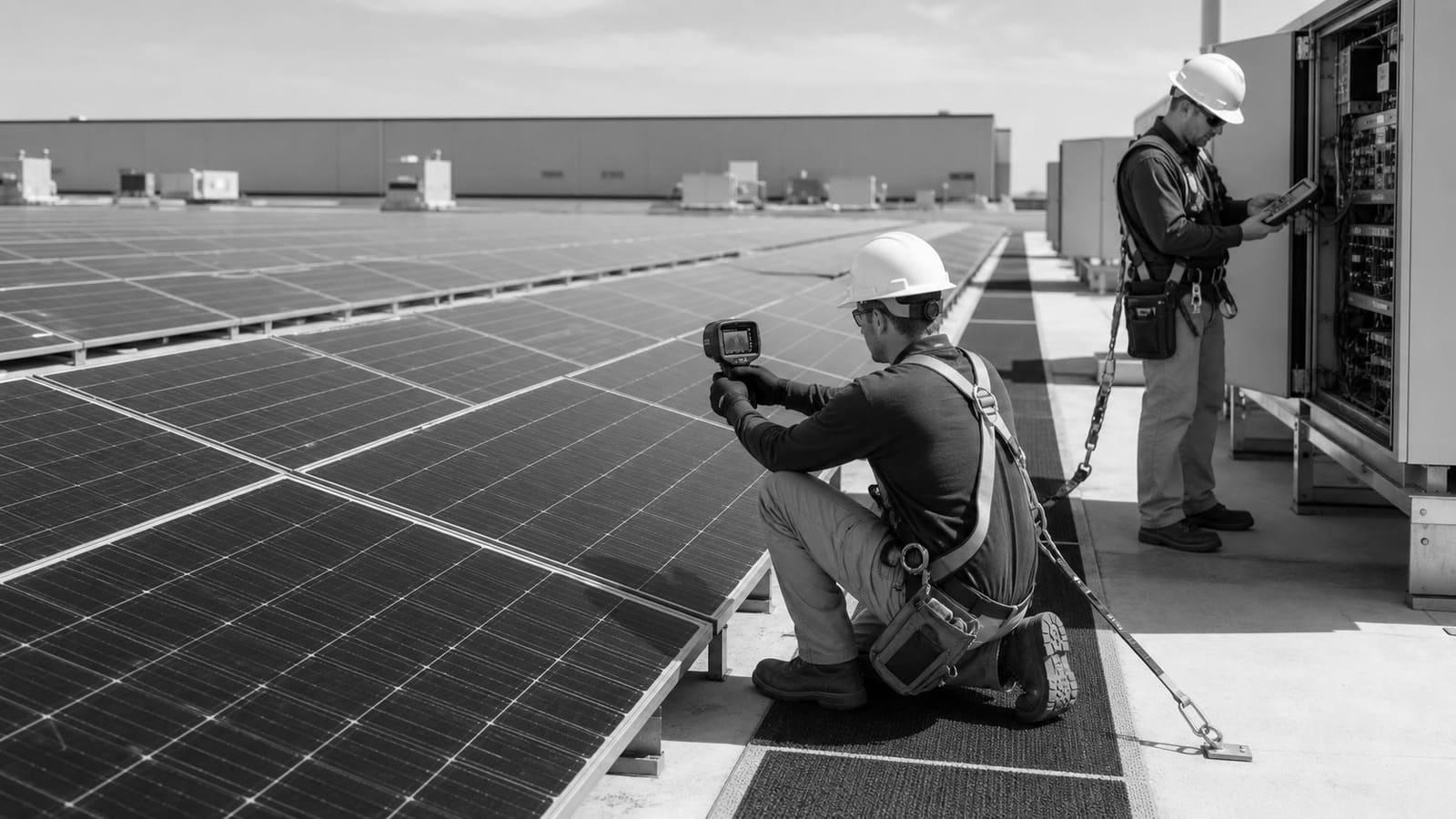
- Commission the photovoltaic system after installation; failed commissioning checks must be corrected before acceptance.
- Collect final permit and inspection records so the owner has a clear approval file for the commercial building.
QUESTIONS
Straight answers.
What panel angle works best for a Tulsa commercial building?
A 15° to 40° south-facing tilt generally gives the best production in the continental United States. Roof limits, wind load, snow, hail, and appearance can change the final angle.
Should our Tulsa facility use flush or tilted panels?
Flush panels may be preferred for appearance and lower wind load. Tilted panels can improve solar exposure and shed snow or hail, but steeper racks add wind load.
Does a Tulsa County commercial solar project need a permit?
Tulsa County lists a commercial building permit application. We first confirm the project jurisdiction and whether another site permit, such as a floodplain permit, applies.
When is a commercial roof a poor fit for solar panels?
A roof is a poor fit when it cannot support the selected array and mounting loads. The array, mounting plan, roof plan, or project location must then change.
GET STARTED
Tell us about the building.
Whatever the trade, we scope it, price it, and put the right crew on it. Site visits are free, always.
MORE SERVICE AREAS