THE DIRECT ANSWER
What a commercial HVAC replacement includes
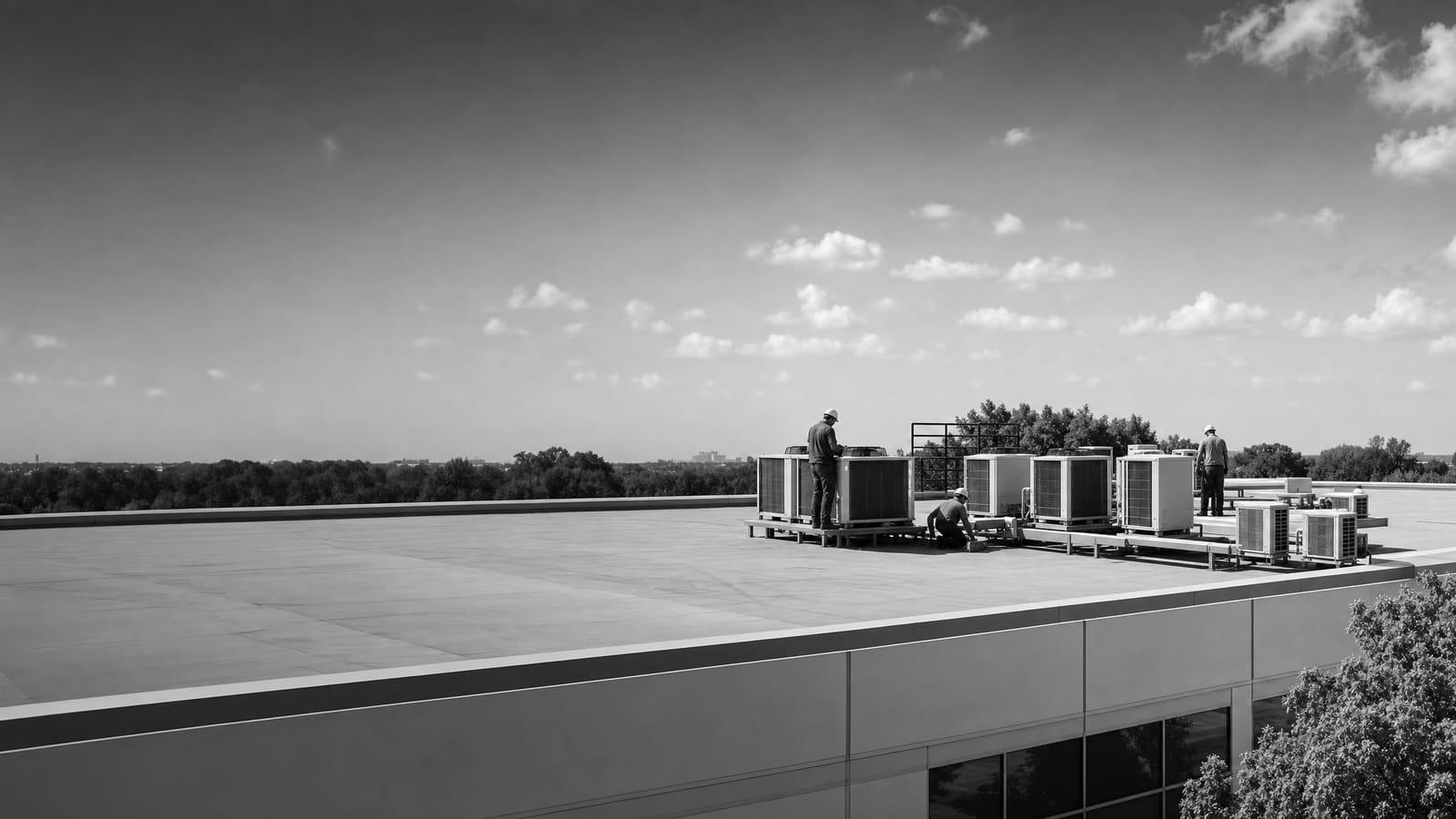
A commercial HVAC replacement covers load verification, equipment selection, refrigerant recovery and removal of the old unit, curb or structural work, gas and electrical connections, controls, permits, and commissioning. Replacement usually beats another repair once a rooftop unit passes 15 years and starts losing capacity. An old, inefficient rooftop unit wastes roughly $900 to $3,700 a year in energy, which often exceeds what you spend keeping it running.
A site review still has to confirm tonnage against current occupancy, the curb and roof structure, electrical capacity at the panel, and what the mechanical inspector will require on the way in.
THREE PATHS
The choice is narrower than it looks
Most commercial buildings run packaged rooftop units, which cool close to half of all U.S. commercial floor space. That keeps the replacement decision down to three real paths. You can put back the same kind of unit — gas heat, electric cooling — on the existing curb. You can move to a heat pump rooftop, which in a cold-winter market means a dual-fuel or cold-climate model rather than a straight all-electric swap. Or, if the box still has honest life left, you can retrofit advanced controls and keep the unit. Age is the tiebreaker. Units past 15 years waste real money every season, and replacing proactively costs less than replacing the morning a compressor quits in July. Decide before the equipment decides for you.
WHAT MOVES THE NUMBER
The lines that actually change the price
These are the items that separate two bids on the same tonnage. Ask for each one priced on its own line so you can tell equipment cost from site cost, and so you know what a low bid left out.
BUYING GUIDANCE
How to choose between equipment options
Start with the load, not the nameplate. A unit installed twenty years ago was sized for whoever occupied the building then. Lighting, plug loads, insulation, and headcount have all changed since. Carrying the old tonnage forward carries the old mistake forward, and an oversized unit short-cycles, dehumidifies poorly, and wears itself out early.
Then decide how hard to push on efficiency. High-efficiency rooftop equipment was developed to cut energy use by up to half against the older baseline, and the savings on a tired unit are not small — an inefficient rooftop can waste $900 to $3,700 a year on its own. The higher tier costs more up front, so the real question is how long you plan to hold the building and how many hours the unit runs.
If the heat pump question is on the table, be honest about winter. Heat pump heating efficiency falls as the outdoor temperature drops and eventually meets electric resistance, which is why cold-weather buildings usually land on dual-fuel or a cold-climate model instead of a straight all-electric unit. Gas line, electrical capacity, and physical space all need checking before that choice is final.
COMPLEXITY
What makes a replacement simple or hard
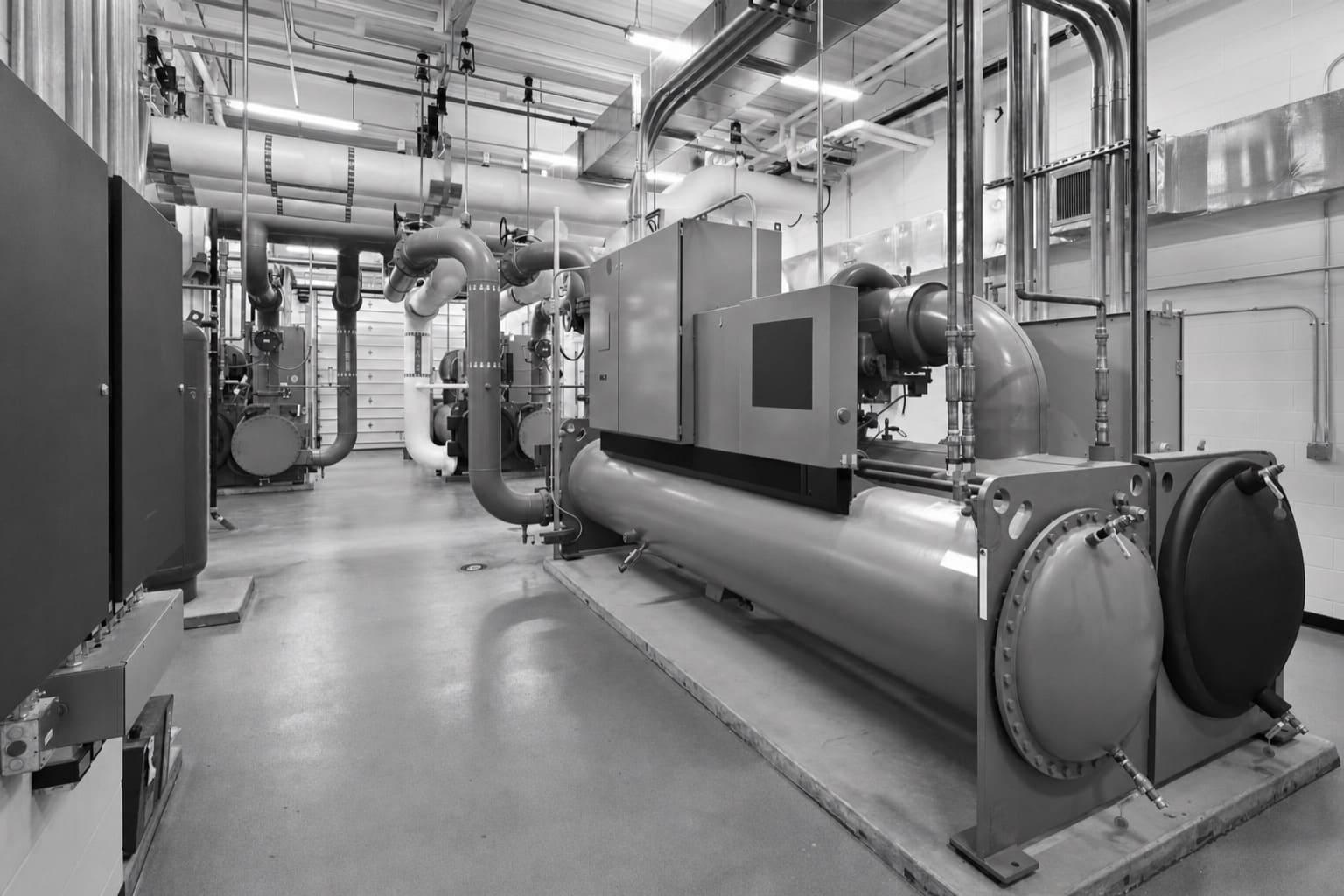
Two buildings can buy the same tonnage and get very different prices. The difference is almost never the equipment. It is what the roof, the panel, and the parking lot make the crew do to get it up there.
LOWER COMPLEXITY
Straight swap conditions
Same tonnage and footprint, an existing curb that takes an adapter, clear crane setup off the lot, gas and electrical service already adequate at the unit, and a schedule that tolerates a weekday morning outage.
HIGHER COMPLEXITY
What adds scope
Growing tonnage or footprint, structural review, tight or shared parking with no crane setback, panel capacity that will not carry an all-electric unit, occupied tenant space below, or a facility that cannot lose conditioning during business hours.
SCOPING
What a site review has to confirm
A useful site visit is short but specific. Someone gets on the roof, reads the nameplate, measures the curb, and looks at what is actually feeding the unit. The short list is the same on almost every rooftop replacement: physical constraints, electrical capacity, gas lines, and whether the equipment you want is available in the window you need it.
Physical constraints mean curb dimensions, roof structure, clearances, and how a crane can reach the unit. Electrical capacity means the panel, the feeder, and the breaker that will serve the new equipment — this is the item that quietly kills all-electric conversions in older buildings. Gas lines matter in the other direction: if you keep gas heat or go dual-fuel, the line and meter have to support the burner you selected.
Availability is the one owners forget. A better unit that arrives in March does not help a building that lost cooling in July. Get lead time in writing next to the price, and ask what the fallback unit is if the first choice slips.
Four answers to get before the quote
Curb dimensions and roof structure. Panel and feeder capacity at the unit. Gas line size if heat stays on gas. A confirmed lead time for the exact model quoted. Anything a bidder skips here tends to come back as a change order.
SIOUX FALLS
Licensing the city checks before work starts
Any mechanical work in Sioux Falls has to be performed by a contractor holding a City of Sioux Falls Mechanical Contractor's license, and that includes a plain air conditioner replacement. There is no narrower license for unit swaps alone. Earning it means passing the Master Mechanic examination, which requires four years of documented experience and is built on the International Mechanical Code, the International Fuel Gas Code, SMACNA HVAC standards, and ACCA manuals, then posting a $10,000 compliance bond. The exam is offered once a month. The city licenses each field separately — building, electrical, plumbing, and mechanical — so the disconnect, feeder, and panel work on your rooftop swap belong to a licensed electrical contractor, not the mechanical crew. City mechanical inspectors verify the finished install.
Ask for two things before you award
The bidder's Sioux Falls mechanical license number, and the name of the electrical contractor handling the power side. A firm that is not already licensed here cannot get licensed inside most project schedules.
OWNERSHIP
How long you hold the building changes the answer
Efficiency tier is a holding-period question. The unit stays on the roof long after the invoice is paid, and most of what it costs you shows up on utility bills rather than on the quote. An owner planning to hold for a decade is buying operating cost. An owner planning to sell in two years is buying a working system and a clean inspection.
The second question is how many units you have. Once a building carries three or four rooftops of similar age, replacement becomes a schedule instead of an event, and standardizing on one model line pays back every time a technician arrives with the right filter, board, or contactor.
HOLD
You plan to keep the building
Buy the higher efficiency tier and the controls. Operating cost is the bigger number over the life of the unit, and an inefficient rooftop can waste $900 to $3,700 a year on its own.
SELL OR LEASE
You plan to sell, or you lease the space
The recovery window is short and the savings may land on a tenant's bill. Buy reliable, code-clean, and well documented, then put the efficiency upgrade in front of whoever actually pays the utility.
PLANNING
Phasing, procurement, and the cost of waiting
Replacement-on-failure is the most expensive way to buy HVAC. When a unit dies in season, you take whatever is available, at whatever it costs, on whatever day the crane can get there. Planned replacement lets you choose the equipment, negotiate the price, and pick a week the building can tolerate an outage.
If you have more than one aging rooftop, rank them. Age, service history, capacity complaints, and utility spend sort the list quickly. Replace the worst one first, standardize the model line, and put the rest on a two- or three-year schedule tied to your budget cycle. Organizations that ran this play at scale upgraded more than 43,000 rooftop units and cut a combined $37 million a year off their energy bills. The mechanics are the same on four units as on four hundred.
Two procurement details are worth an extra week. Settle any incentive question before the order goes in, because eligibility usually attaches to the specific equipment you buy. And confirm how the old unit's refrigerant will be recovered and documented — federal rules govern refrigerant handling when stationary cooling equipment is serviced or removed, so that work belongs on the quote instead of in the assumptions.
QUOTE CHECKLIST
Five things a comparable quote shows
When two bids are far apart, one of these is usually missing from the cheaper one. Ask every bidder to show all five so you are comparing the same job instead of the same tonnage.
01
The equipment, spelled out
Manufacturer, model, tonnage, efficiency tier, refrigerant, and heat type — not just "replace RTU."
02
Lead time next to price
A confirmed availability date for that exact model, and the fallback if it slips.
03
Curb, structure, and roof
Adapter or new curb, any structural review, and who patches and warranties the penetrations.
04
Crane day logistics
Rigging plan, lot closure hours, tenant notice, and the weather-delay policy.
05
Licenses, permits, and closeout
City mechanical license number, electrical contractor, permits, inspections, commissioning report, warranty registration.
Keep planning locally
Related mechanical pages in Sioux Falls
Get a defensible number
Price the equipment and the building together.
Send the address, operating target, and target opening date. Flux will identify what must be verified before the project can be priced.
Get a free estimateQuestions
Straight answers.
When does replacing beat repairing again?
Once a rooftop unit is past 15 years, losing capacity, or taking repeated in-season repairs. Old, inefficient units waste roughly $900 to $3,700 a year in energy, which often exceeds the repair you keep deferring. Replacing on your schedule also costs less than replacing on the unit's.
Does a heat pump rooftop unit make sense here?
It can, but rarely as a straight all-electric swap. Heat pump heating efficiency falls as outdoor temperatures drop and trends toward electric resistance, so cold-winter buildings usually land on a dual-fuel or cold-climate model. Panel capacity, the gas line, and the winter heating load decide it.
Who is allowed to do the work in Sioux Falls?
A contractor holding a City of Sioux Falls Mechanical Contractor's license, which requires passing the Master Mechanic exam and posting a $10,000 compliance bond. There is no license limited to air conditioner replacement. Electrical work is a separate license, so confirm who is doing the power side.
What drives the price of a rooftop replacement?
Tonnage and efficiency tier set the base. Curb and structural work, crane access and lot closure, electrical capacity, controls integration, and commissioning move it from there. Ask for those as separate lines so competing bids can be compared on the same scope.
What happens to the refrigerant in the old unit?
Federal rules cover how refrigerant is handled and recovered when stationary air conditioning equipment is serviced or taken out, so recovery is done by certified technicians and documented. It should appear as a line item on the quote rather than an assumption.
Sources used for this guide
- [1]betterbuildingssolutioncenter.energy.gov — DOE Advanced Rooftop Unit Replacement Guidance
- [2]betterbuildingssolutioncenter.energy.gov — DOE Commercial Heat Pump Rooftop Unit Replacement Guidance
- [3]betterbuildingssolutioncenter.energy.gov — DOE High-Efficiency Commercial Rooftop Unit Toolkit
- [4]energy.gov — DOE Efficient Commercial Rooftop Air Conditioner Program
- [5]epa.gov — EPA Stationary HVAC Refrigerant Management
- [6]siouxfalls.gov — Mechanical Contractor - City of Sioux Falls