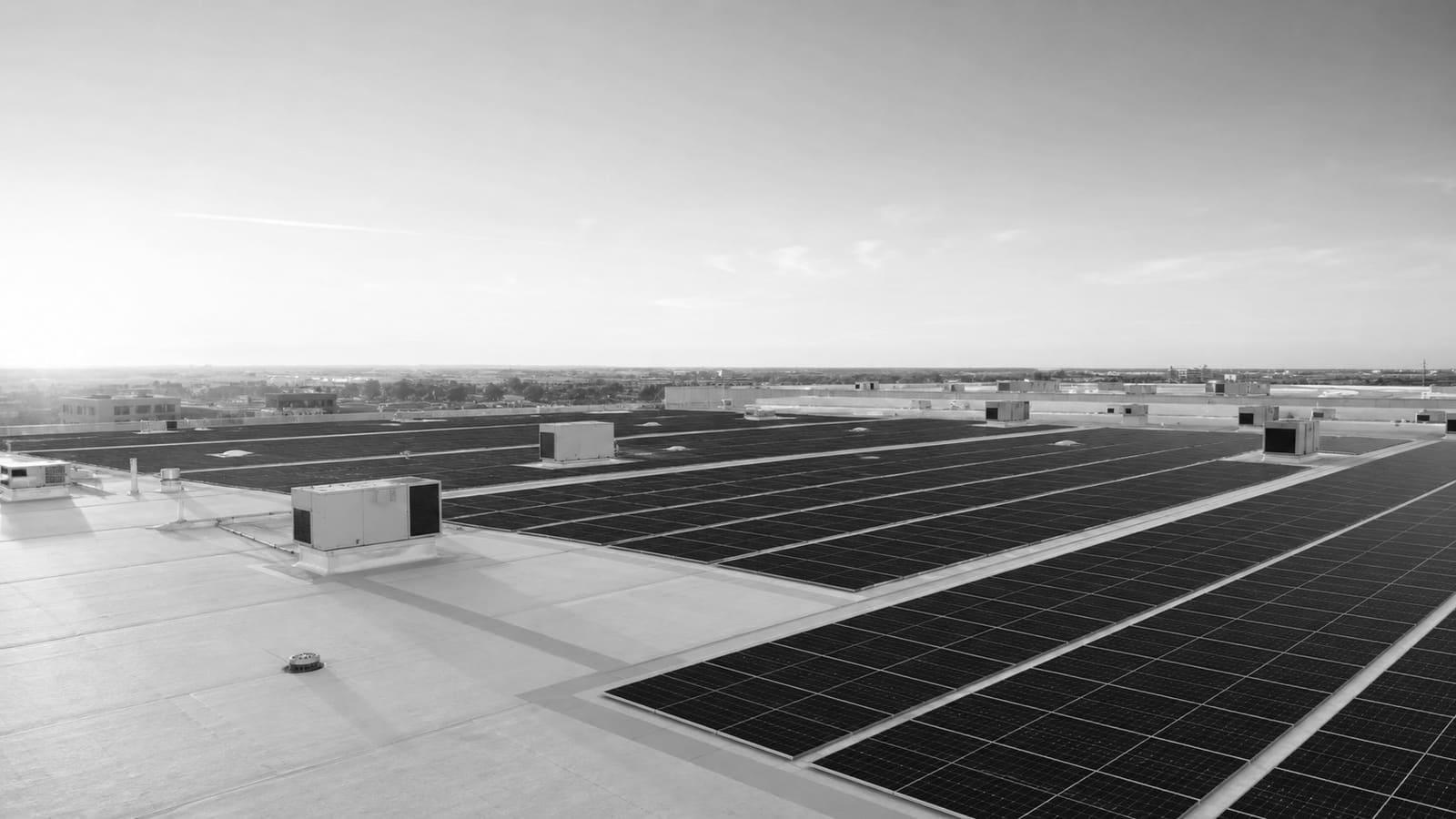
SALT LAKE CITY, UT · SOLAR
Commercial solar installation in Salt Lake City.
We plan commercial solar installation in Salt Lake City around roof fit, array design, permit documents, and final system checks.
Start with the building, not the panels.
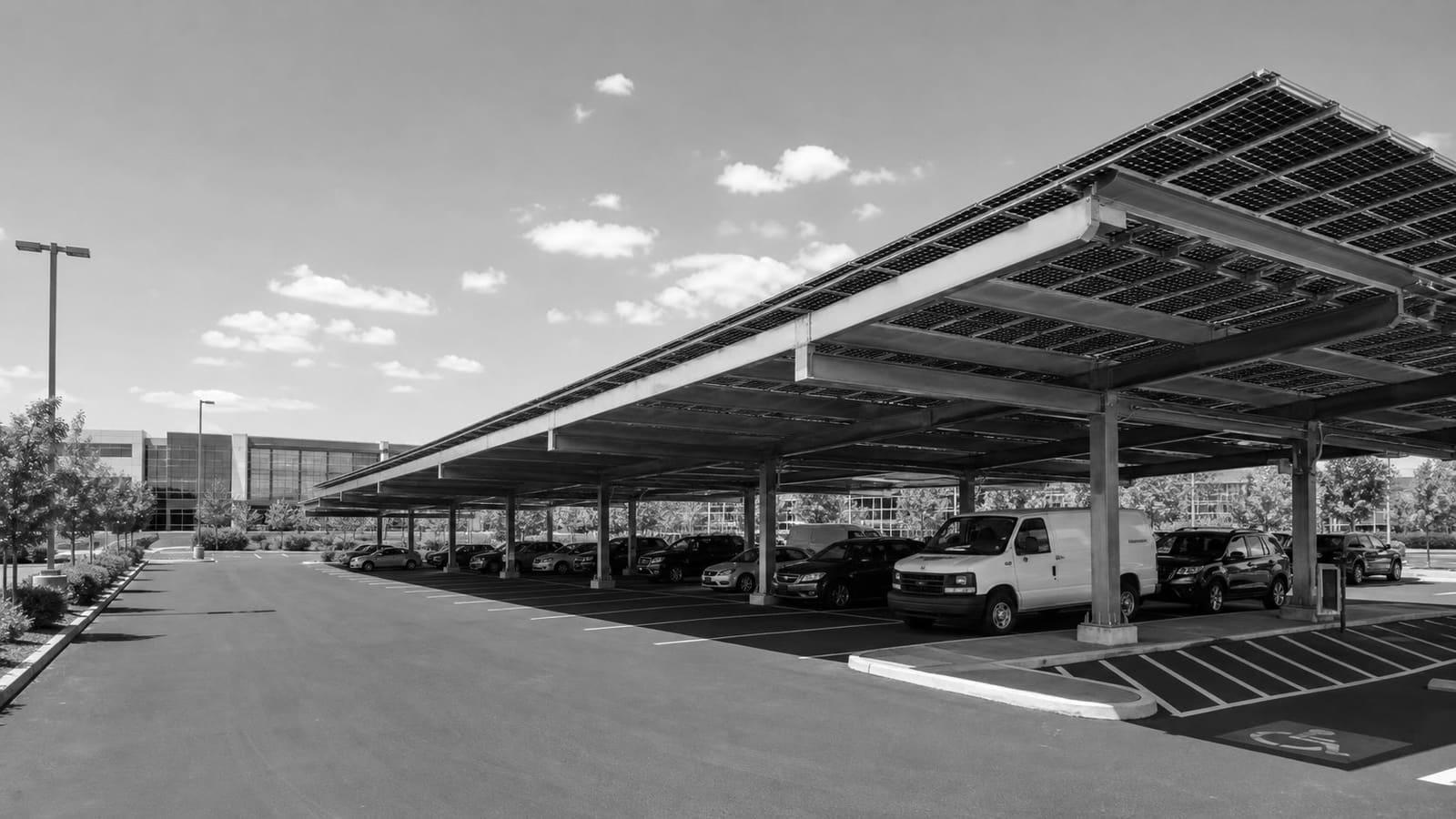
A commercial solar project has to fit the site, the roof, the electrical system, and the utility rules. We start with a solar feasibility study, then compare rooftop solar with solar carports where parking offers the stronger site.
One team carries design, permits, utility interconnection, construction, commissioning, and solar maintenance. We also compare direct ownership with solar financing and PPAs, and add battery storage only when it has a clear job.
START HERE
How does a Salt Lake City business choose the right solar system?
Commercial solar installation in Salt Lake City starts with a roof-fit check and a panel-layout choice. We compare tilt, direction, wind load, and the building envelope before the array design is set. A south-facing panel angle from 15° to 40° can support strong production in the continental United States. A lower angle may reduce wind load. A flush layout may also help with wind load and appearance, but it can give up some energy production. We use these tradeoffs to shape a system that fits the commercial building.
Plan the permit before field work
Salt Lake City accepts building permit applications through its Citizens Access Portal under the Building tab. Applications are reviewed in the order received. We use the planned array, mounting method, structural details, and electrical layout to define the permit documents. A roof plan that changes after filing can also change the drawings and review path. We set the design first so the permit set matches the system our crew will install.
Roof Fit Checks
What should commercial solar installation in Salt Lake City check first?
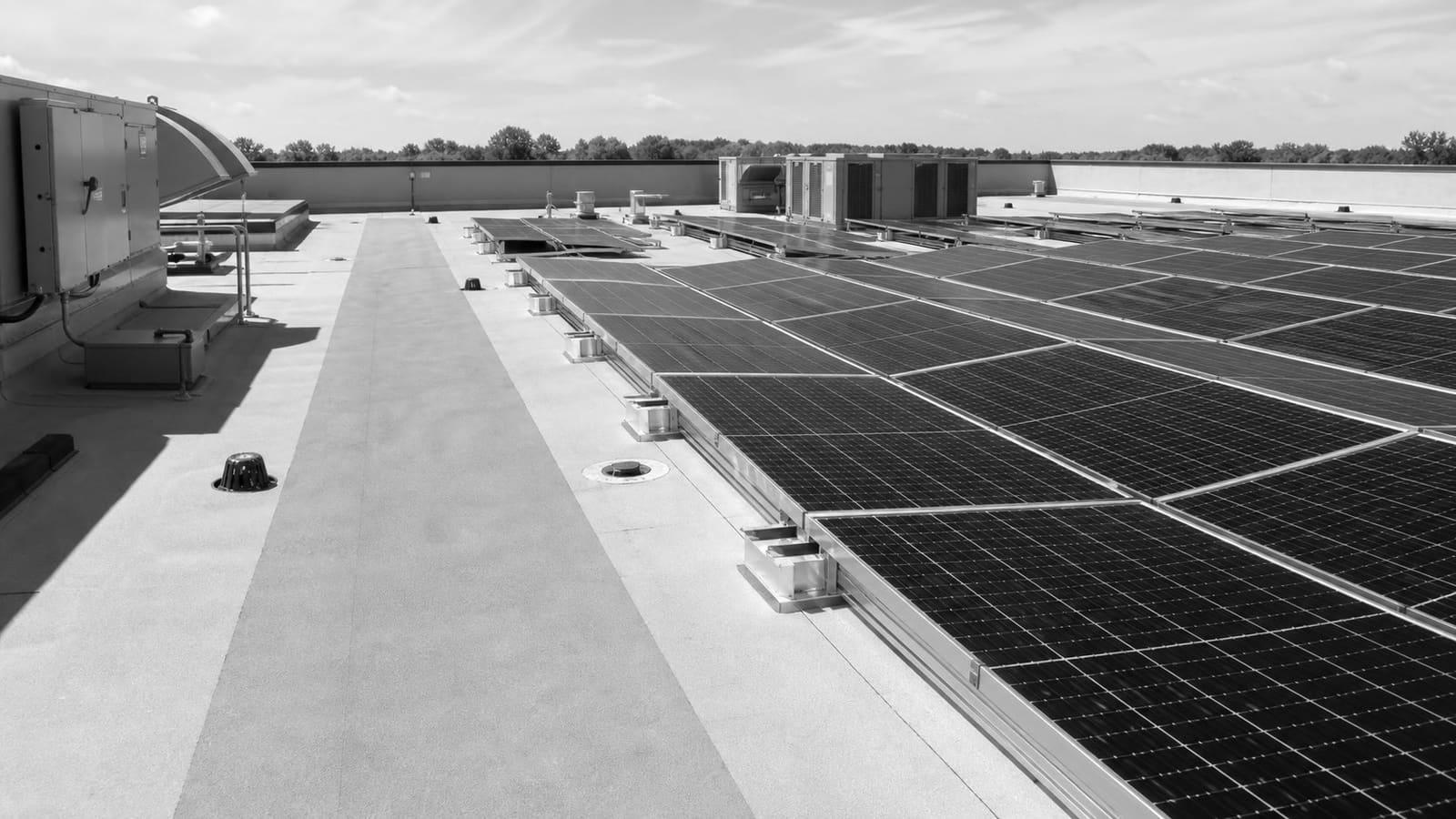
- Check the roof area and panel direction; blocked or poorly placed space changes the array layout.
- Check the selected tilt; a 15° to 40° south-facing angle can support production, while a lower angle may reduce wind load.
- Check the mounting choice; flush panels may improve appearance and reduce wind load, but they may produce less than a better-angled array.
- Check the building envelope at each mount; a layout that cannot protect the roof is a poor fit and must be changed or stopped.
WHAT WE HANDLE
Everything under the solar door.
PROJECT PLANNING
Which solar panel layout fits a Salt Lake City commercial roof?
Angled array
OUTPUT
Choose an angled array when solar exposure is the main goal; the selected angle changes production and wind load.
Lower tilt
WIND
Choose a lower tilt when reduced wind load matters; the tradeoff is a different solar exposure angle.
Flush mount
TRADEOFF
Choose flush panels when appearance or wind load carries more weight; accept that the layout may not reach the best tilt or direction.
Roof protection
PASS/FAIL
Pass only when mounts can protect the building envelope; failed attachment or sealing conditions require a new layout.
Permit Set Choices
Which Salt Lake City records guide commercial solar installation?
Permit application
PORTAL
Confirm the application is filed through the Citizens Access Portal under the Building tab; this sets the city review path.
Scaled plans
PLANS
Record the site plan, elevations, sections, and structural details; the chosen mount and array layout change what the drawings must show.
Structural details
STRUCTURE
Name each roof attachment and support condition; a failed roof-fit check changes the mounting plan or makes the proposed layout a poor fit.
Electrical layout
ELECTRICAL
Record the PV equipment and connection path; an equipment change requires the permit set and field plan to match.
BEFORE YOU BUY
What should final PV checks confirm in Salt Lake City?
- Match installed modules and mounting parts to the approved plans; any mismatch changes the closeout record.
- Confirm panel tilt and direction against the final layout; a field change can alter expected production and wind load.
- Check every roof attachment and sealed opening; any failed point must be corrected before the array passes.
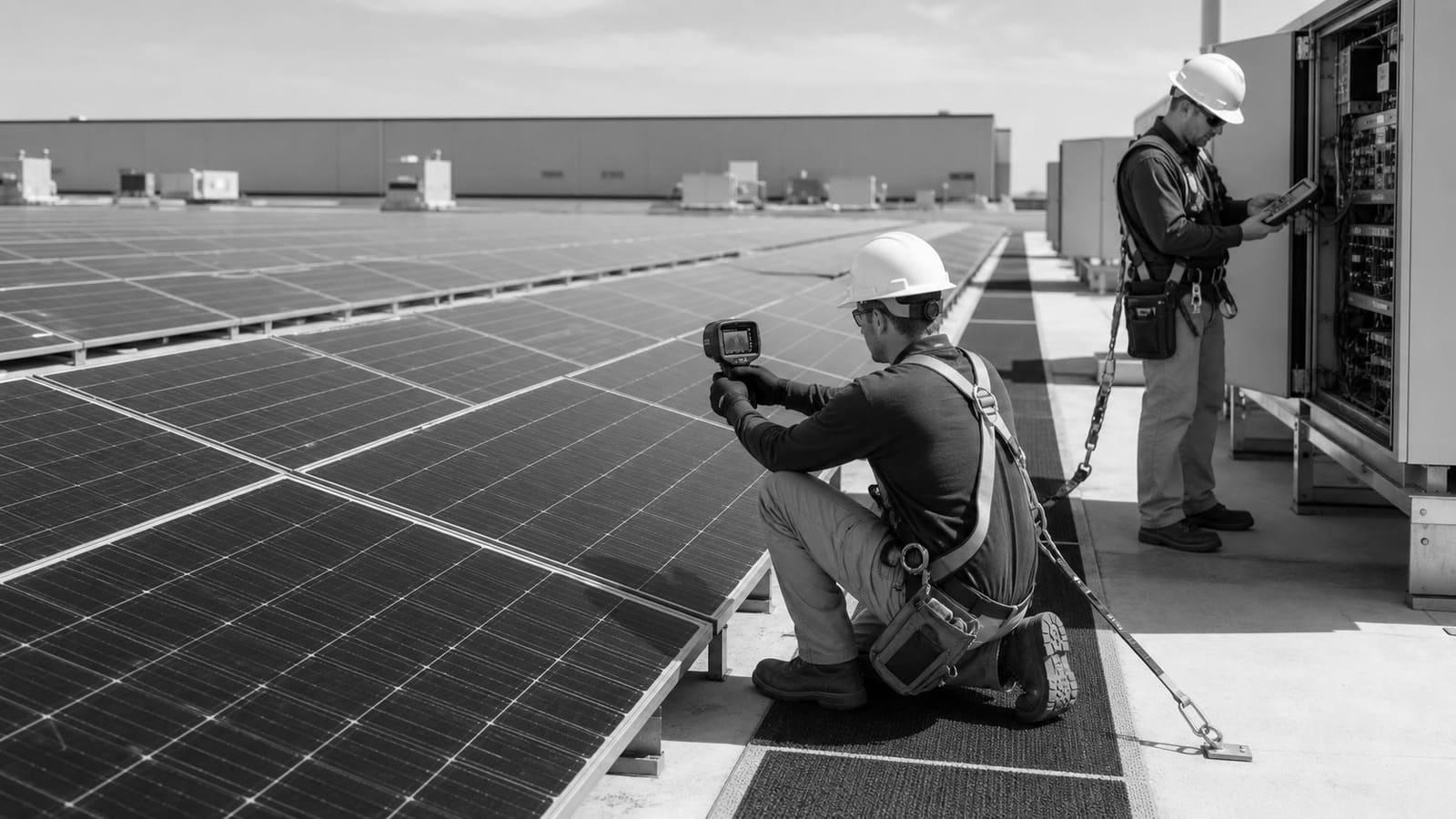
- Test the installed PV system during commissioning; a failed test blocks final handoff.
- Keep the approved plans and commissioning results with the facility records; these documents guide later maintenance and equipment checks.
QUESTIONS
Straight answers.
Where is a Salt Lake City solar permit application filed?
The city directs applicants to register or log in to the Citizens Access Portal and apply under the Building tab.
Why does panel tilt matter on a commercial building?
Tilt changes solar exposure and wind load. A 15° to 40° south-facing angle can support strong production, while lower angles may reduce wind load.
When is a flush solar layout a good fit?
A flush layout can fit a site where appearance or lower wind load matters more than the best possible tilt and direction.
What can make a proposed rooftop array fail the fit check?
The layout fails when mounts cannot protect the building envelope or the roof cannot support the planned attachment design. We then revise or stop that layout.
GET STARTED
Tell us about the building.
Whatever the trade, we scope it, price it, and put the right crew on it. Site visits are free, always.