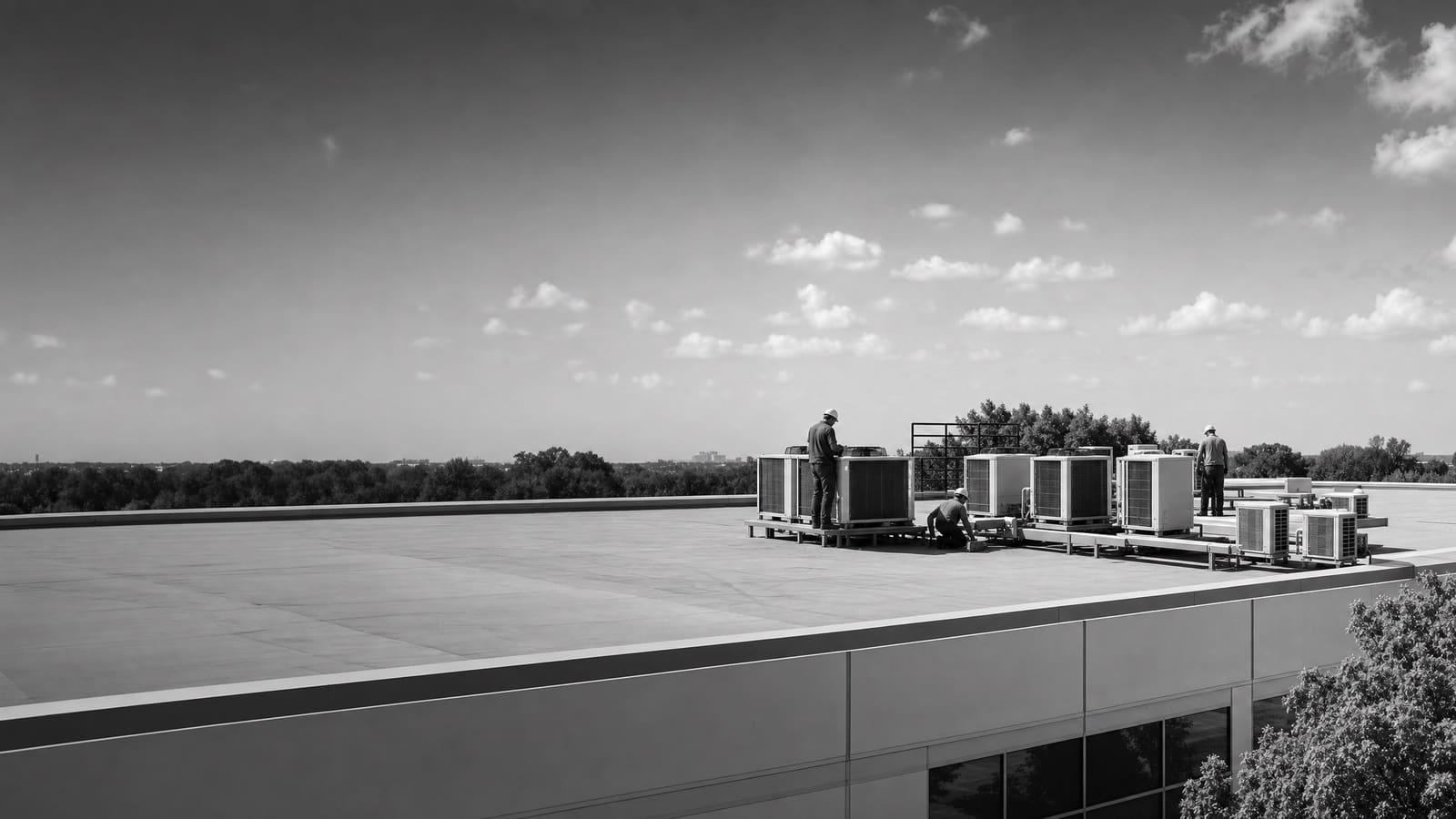
Direct answer
A commercial HVAC replacement is a load decision, not a like-for-like swap.
A commercial HVAC replacement covers the load calculation, equipment selection, curb and roof work, gas, electrical and refrigerant connections, controls, permits, and commissioning. Replacement usually beats one more repair once a rooftop unit is past about 15 years old and the service calls keep repeating. Federal research puts the annual waste from an old, inefficient rooftop unit at roughly $900 to $3,700, and units built to the high-efficiency specification were designed to cut energy use by up to half.
A site review still has to verify the actual load, the curb and structural condition, available electrical capacity, the gas service, and roof access before any of that becomes a price for your building.
Choose the heating first
Three ways to replace a commercial rooftop unit
The first fork is how the building will heat, because that decides the equipment, the connections, and most of the price. A like-for-like gas-and-electric rooftop replacement is the shortest path: same curb, same gas and power, simplest permit. It also carries forward whatever sizing mistake the old unit had.
A dual-fuel heat pump rooftop unit runs the heat pump through mild hours and hands heating back to the gas burner when it gets cold. It keeps the gas line in service and lowers the risk of a cold-weather capacity gap.
An all-electric or cold-climate heat pump unit removes the gas connection entirely. Heat pump heating efficiency falls as the outdoor temperature falls, and most all-electric and cold-climate units lean on electric resistance heat for the coldest hours. That makes winter heating load, the backup heat strategy, and available electrical capacity the questions that decide whether the switch works on your roof.
Build the whole number
What belongs in a commercial HVAC replacement budget?
Equipment is the line everyone compares. The lines under it are where two quotes for the same tonnage stop matching, so ask each bidder to show them separately.
Do not order from the nameplate
Size the replacement against how the building is used now
The nameplate on the old unit records a sizing decision made for a different era of the building — a different tenant, different lighting, different plug loads, a different schedule. Confirming the load against how the space is used today is the step that separates a replacement which fixes the comfort complaints from one that repeats them. Oversizing short-cycles the compressor and leaves humidity and hot spots in place. Undersizing shows up on the first design day of the season.
Efficiency tier is the second decision. DOE finalized a minimum efficiency standard for commercial rooftop units in December 2015, so every new unit clears a federal floor. The real question is how far above that floor to buy. The high-efficiency performance specification that reshaped the market was written to cut unit energy use by up to half, and manufacturers went on to offer more than twenty models that exceed it. With an old unit wasting somewhere between $900 and $3,700 a year, that math is worth running before the order goes in.
Federal guidance is blunt about timing: replacing an inefficient unit on purpose is often the better business move, compared with waiting for failure or with a like-for-like swap at the end of service life. Availability is part of that plan, which is why equipment lead time belongs on the quote right next to the price.
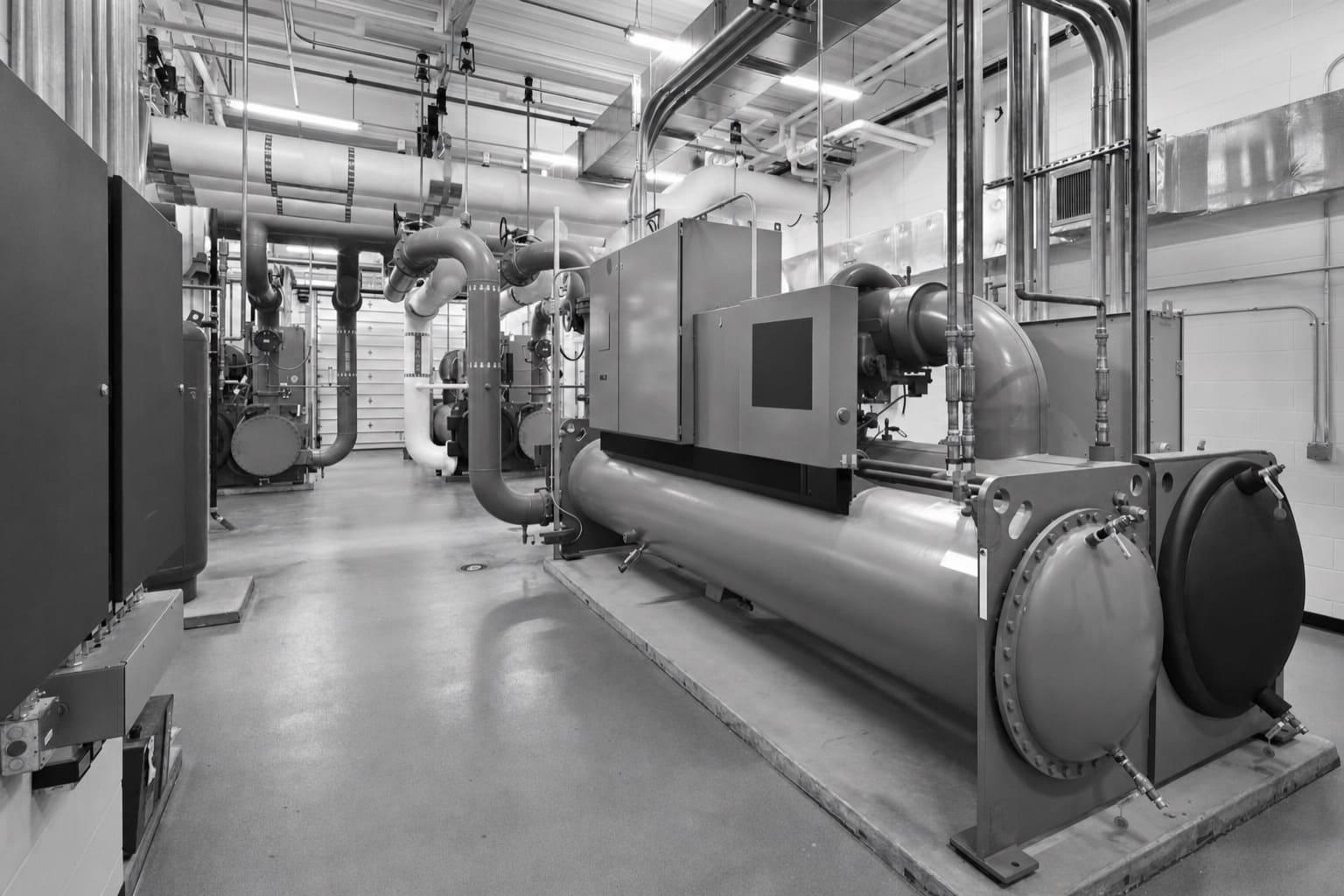
Why two quotes differ
What makes one replacement simple and the next one complicated
Two buildings on the same block can order the same tonnage and get very different numbers. The unit did not change. The roof, the route to power, the heating choice, and where the crane can park did.
Lower complexity
Same footprint, same fuel
• Matching tonnage on the existing curb
• Gas and electrical service unchanged
• Clear crane setup with a short reach
• No structural or ventilation changes triggered
Higher complexity
New capacity or new fuel
• Larger tonnage or a different footprint
• Electrical service upgrade for all-electric heat
• Curb adapter, structural review, or roof repair
• Tight lot, long reach, or a night lift over occupied space
Replace assumptions with measurements
What a site review has to settle before design starts
The first visit should end with measurements, not impressions. On the roof: existing curb dimensions, whether the structure beneath can carry the new unit, the condition of the membrane around the opening, service clearances, drainage, and the actual path a crane can take to reach the position. A curb adapter ordered from a guess is a curb adapter that arrives wrong.
Below the roof, federal guidance points at three things that decide whether an equipment option is even available to you: electrical capacity, physical constraints, and the gas line. Confirm the panel, spare breaker space, service size, and what the building already draws. If an all-electric unit is on the table, that check happens before the model is chosen, not after the order is placed.
The operating interview matters just as much. When can the space lose conditioning, and for how long? Who tells the tenants? Does the lot have to stay open? Is temporary cooling needed, or can the outage land on a weekend? Those answers set the crane day, and the crane day is the part of this project everyone in the building actually notices.
A nameplate photo is a starting point, not a scope.
It can get you an equipment option and a lead time the same day. It cannot confirm curb dimensions, roof structure, panel capacity, or the crane path — and those are the items that move the final number.
Salt Lake City specifics
The permit and any historic review come before the crane is booked
Salt Lake City requires a permit for installing or altering a mechanical system, which includes a rooftop unit replacement. The city frames that requirement around safeguarding public safety and protecting life and property, so it is not a step you can work around and settle later. Permit staff work from the Building Permits office at 451 S State St downtown, weekdays from 8 to 5, and can walk an applicant through the submission process.
There is a second step that catches owners out. If the building sits in a historic district or is a legally recognized historic structure, the city directs you to contact Salt Lake City Planning before applying for a building permit. Rooftop equipment is visible equipment, so that conversation belongs early — not after a unit has been ordered.
The Salt Lake City takeaway
Confirm the mechanical and electrical permit path, plus any historic review, while the equipment order can still change. A permit question discovered after delivery turns into stored equipment and a rescheduled crane.
After the unit lands
Two costs that outlive the installation quote
The first is refrigerant. EPA rules under the Clean Air Act govern how refrigerant is handled and recycled in stationary air conditioning and heat pump equipment, which covers recovery from the unit coming off your roof as much as service on the one going up. New equipment is shipping on newer refrigerants, so a building that replaces units one at a time will run a mixed fleet for years. That is manageable, but it belongs in the service contract and the spare-parts plan rather than being discovered on a hot Friday afternoon.
The second is commissioning. An efficient unit that was never verified is just an expensive unit. Charge, airflow, ventilation controls, and automation settings decide whether the savings on the proposal ever reach the utility bill, and the documentation is what keeps the warranty standing.
Plan for it
Refrigerant and the mixed fleet
Federal rules govern recovery from the old unit and handling in the new one. Once part of your fleet runs newer refrigerant, service contracts and spare parts need to cover both.
Budget for it
Commissioning and the service plan
Charge, airflow, ventilation control, and settings verified at startup and documented. That paperwork protects the warranty and turns the efficiency you paid for into a lower bill.
Buy the fleet, not the emergency
Replacing on a schedule costs less than replacing on failure
Rooftop units condition close to half of all commercial floor space in the country, which means most buildings are not making one replacement decision — they are making a sequence of them. Federal guidance notes the common pattern plainly: facility managers delay a new unit until the old one can no longer hold the space, needs constant service, or fails outright. That delay is expensive in a specific way. Emergency replacement means taking whatever is in stock, at whatever it costs, with no time to run the load calculation or compare heating options.
Planning the sequence changes the terms. When you know which units are oldest and which carry the heaviest load, you can order ahead of the season, standardize on a model your service team already knows, and put the disruptive work on a weekend instead of a Tuesday. The scale version of that idea is well documented: more than 200 organizations working through the federal rooftop campaign upgraded over 43,000 units and cut a combined $37 million a year from their energy bills.
Lifetime cost is the frame that makes the choice obvious. Purchase price is one number, and over the life of the unit it is the smallest one. Energy, service calls, refrigerant, and unplanned downtime are the rest of it.
Before you compare bids
Five things a comparable quote has to show
Ask every bidder to price the same tonnage, the same heating type, the same curb work, and the same crane plan. If one quote excludes structural work or permits and another includes them, the totals are not comparable numbers.
01
The load calculation behind the tonnage, not just the old nameplate
02
Heating type, efficiency tier, and the specific model with its lead time
03
Curb adapter, structural review, and any roof repair at the opening
04
Crane plan, lot closure hours, and who owns permits and inspections
05
Startup, commissioning documentation, controls integration, and warranty terms
Keep planning locally
Related mechanical pages in Salt Lake City
Get a defensible number
Price the equipment and the building together.
Send the address, operating target, and target opening date. Flux will identify what must be verified before the project can be priced.
Get a free estimateQuestions
Straight answers.
When does replacement beat one more repair?
Once a rooftop unit is past about 15 years old and the service calls keep repeating, the economics usually flip. Federal research puts the annual waste from an old, inefficient unit at roughly $900 to $3,700, and guidance is clear that a deliberate replacement often beats waiting for failure.
Should a Salt Lake City building switch to a heat pump rooftop unit?
It depends on four checks, not on preference. Heat pump heating efficiency drops as outdoor temperatures drop, so confirm the winter heating load, the backup heat plan, available electrical capacity, and whether keeping the gas line for a dual-fuel unit is the safer call.
Do I need a permit to replace a rooftop unit?
Yes. Salt Lake City requires a permit to install or alter a mechanical system. If the building is in a historic district or is a legally recognized historic structure, the city directs you to contact Salt Lake City Planning before you apply.
What sets the schedule on a replacement?
Equipment availability, not the lift itself. The crane set is a single planned outage you can put on a weekend. Federal guidance lists equipment availability among the key considerations for any rooftop replacement, so ask for the lead time in writing alongside the price.
What happens to the refrigerant in the old unit?
EPA rules under the Clean Air Act govern how refrigerant is recovered, handled, and recycled in stationary air conditioning and heat pump equipment. Recovery from the unit being removed is part of the installing contractor's scope and should be documented.
Sources used for this guide
- [1]betterbuildingssolutioncenter.energy.gov — DOE Advanced Rooftop Unit Replacement Guidance
- [2]betterbuildingssolutioncenter.energy.gov — DOE Commercial Heat Pump Rooftop Unit Replacement Guidance
- [3]betterbuildingssolutioncenter.energy.gov — DOE High-Efficiency Commercial Rooftop Unit Toolkit
- [4]energy.gov — DOE Efficient Commercial Rooftop Air Conditioner Program
- [5]epa.gov — EPA Stationary HVAC Refrigerant Management
- [6]slc.gov — FAQ’s | Building Services