COMMERCIAL ENERGY
Energy management systems.
The building's energy brain: schedules, setpoints, and control logic that stop the waste on autopilot.
THE SHORT VERSION
What an energy management system does
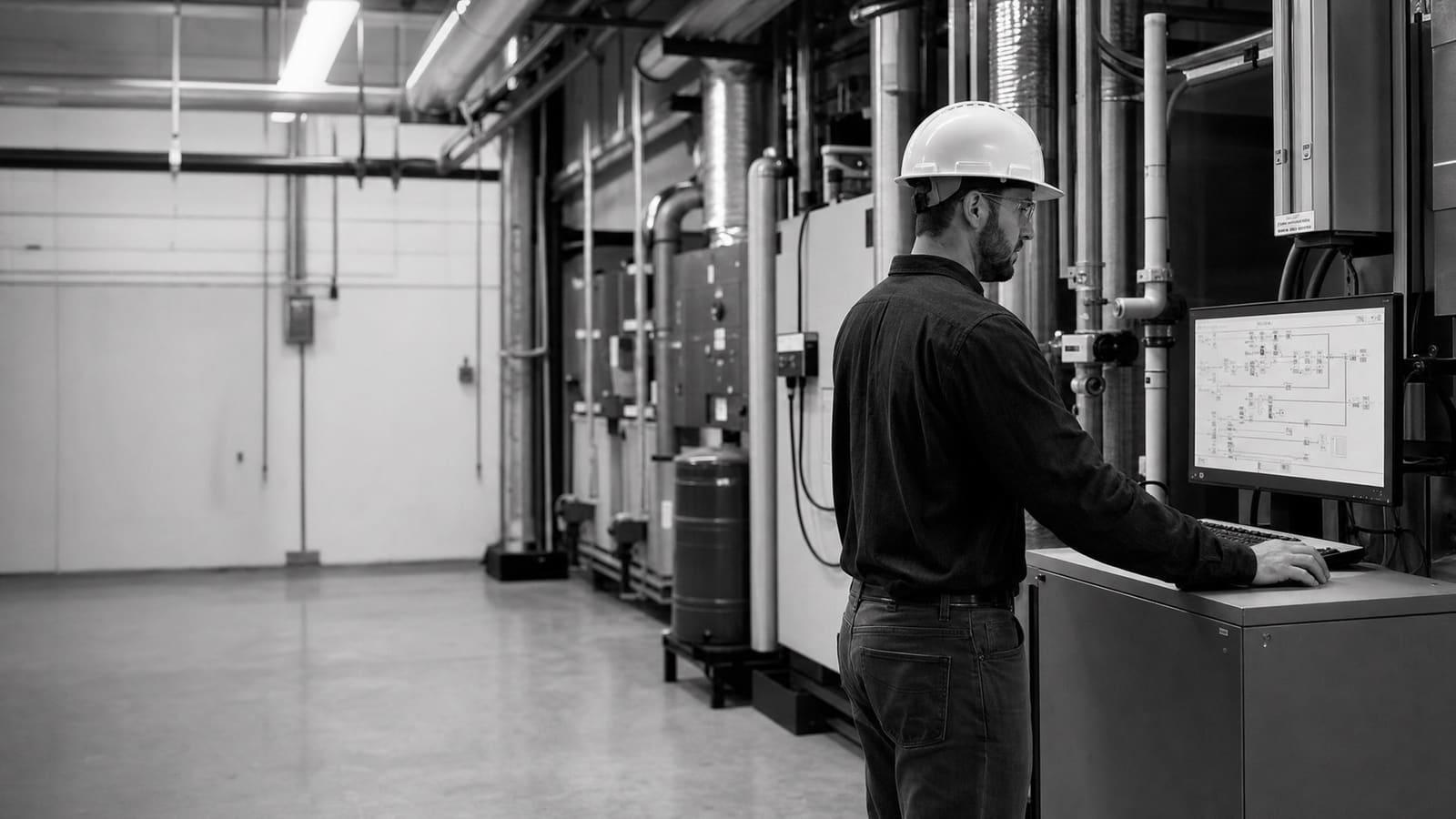
An energy management system watches a building's energy use in real time, controls the big loads, and flags what's drifting: the schedule someone overrode, the equipment running at 2 a.m., the setpoint that crept. It turns energy from a monthly bill surprise into a managed number.
The pieces are metering, controls, and software that makes the data mean something. Small buildings start with monitoring and smart schedules; bigger ones tie into building automation. Either way the goal is the same: savings that stay saved, because something is watching.
AT A GLANCE
Energy management by the numbers
~30%
TYPICAL WASTE
The share of energy the average commercial building loses to inefficiency, most of it invisible on a monthly bill.
~10%
USE ANALYTICS
The fraction of buildings running automated energy analytics. The rest manage their largest controllable cost by memory.
24/7
THE WATCH
Drift happens nights and weekends. Real-time monitoring catches what monthly bills never show.
ISO 50001
THE STANDARD
The international framework for formal energy management programs, for organizations that want structure.
WHY SAVINGS LEAK
What causes energy drift in buildings
Every retrofit's savings decay by default. Overrides stick, schedules drift, sensors fail quietly, and two years later half the savings are gone with nobody noticing, because nobody was looking.
Management is the difference between buying savings once and keeping them. The system flags drift the week it starts, and the fix is usually a setting, not a purchase.
STARTING SMALL
Energy management for small buildings
You don't need a campus-grade platform to start. Smart schedules on the biggest loads, submeters on the mystery ones, and a monthly review of the data catches most drift in most buildings.
The upgrade path is natural: monitoring first, controls where the data points, deeper automation when the building earns it. Start with visibility; everything else follows.
Nobody watching the meters?
That's normal, and expensive. Describe the building and get monitoring scoped as the first step.
QUESTIONS
Straight answers.
What does an energy management system cost?
It scales from software-plus-submeters for smaller buildings to integrated automation for large ones. Pricing follows points monitored and controlled; the request comes back tiered.
Do we need building automation first?
No. Monitoring and smart scheduling stand alone, and they're the right first step for most buildings. Automation integration comes when the building's size justifies it.
What savings should we expect?
Buildings typically waste around 30% of their energy, and management claws back a meaningful share: schedule fixes and drift-catching first, then whatever the data reveals. Honest scopes promise the process, not a magic percentage.
Who watches the system day to day?
The software flags exceptions; a human reviews them. That can be your staff with training, or a managed service that sends the findings. Both models get quoted.
GET STARTED
Put energy on autopilot.
Tell us the building and what runs it today. An energy management scope comes back sized to the systems you have.