THE DIRECT ANSWER
What commercial HVAC replacement and installation includes
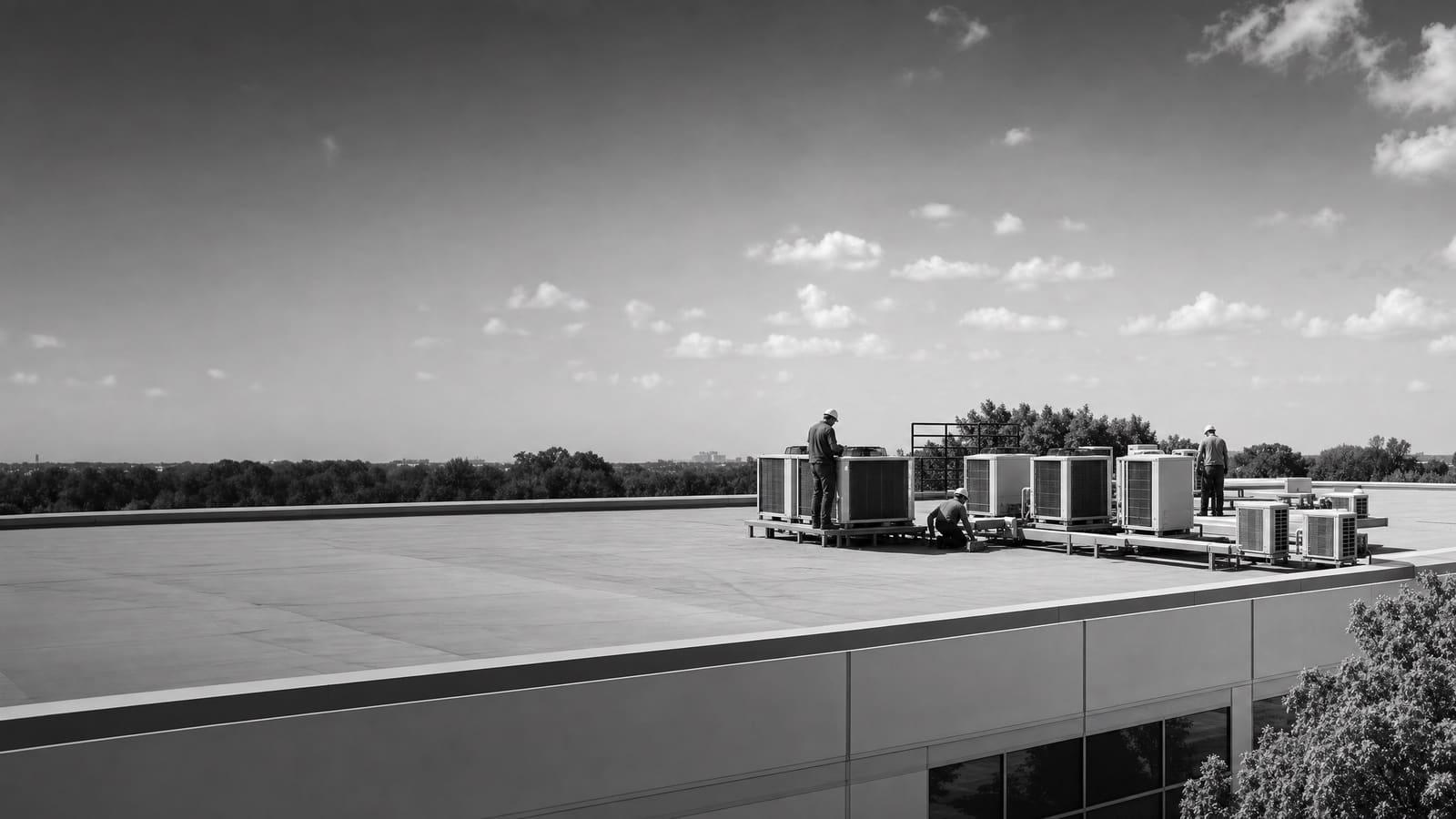
A commercial HVAC installation is a load check, an equipment selection, a rigging and connection day, and a documented startup. Replacement beats another repair once a unit is past about fifteen years, because old, inefficient rooftop units waste $900 to $3,700 each per year. Add repeat in-season failures and a unit that no longer holds the space, and the next repair is buying weeks, not years.
A site review still has to confirm tonnage against how the space is used today, the curb and roof structure, available electrical capacity, and crane access before any number is firm.
THREE WAYS TO GO
Your three real options
Once a unit is at end of life, the question is not repair or replace. It is which replacement. Each path carries a different install cost, a different utility bill, and a different amount of engineering in front of it.
Like-for-like is the fastest and simplest. Same curb, same fuel, same connections. It gets the building back online and carries forward whatever the old unit did well and badly.
A right-sized, high-efficiency replacement adds a load calculation and a longer equipment conversation. The DOE high-performance rooftop specification targets units that cut energy use by up to half compared with the older standard, and more than twenty models now exceed it. That is the upside a straight swap gives away.
A heat pump or dual-fuel unit changes the fuel decision, not just the box. DOE guidance frames that choice around climate, electricity and gas prices, electrical capacity, physical constraints, existing gas lines, and available incentives. It is the option that most often needs a feasibility look before it belongs on a quote.
WHAT MOVES THE NUMBER
Where the money actually goes
Two quotes on the same roof can land far apart without either one being wrong. The gap is almost always in these lines. Ask every bidder to price them separately so you are comparing the same scope instead of the same tonnage.
BUYING GUIDANCE
Buy the replacement, not just the unit
Most rooftop replacements happen the worst possible way. The unit fails, the space gets hot, and the building buys whatever can be on a truck by Thursday. DOE is blunt about the pattern: facility managers usually wait until a unit no longer conditions the space, needs constant service, or quits entirely, when replacing proactively is often the better business move. The difference is not the equipment. It is that you had time to choose it.
The practical version of planning ahead is a fleet list. Write down every unit, its age, its tonnage, what it serves, and how many service calls it took last year. Anything past fifteen years moves onto a replacement watch list, because that is the age where wasted energy starts to outweigh what the repairs cost. Rooftop units condition close to half of all commercial floor area in the country, so for most buildings that list is the entire HVAC capital plan.
Then set the standard before the emergency. If a unit fails next July, do you want like-for-like, or the high-efficiency tier? Do you want gas heat back, or are you converting? Answering that in advance turns a bad week into a phone call, because the specification is already written and the only open variable is who has stock.
COMPLEXITY CHECK
Simple swap or engineered project
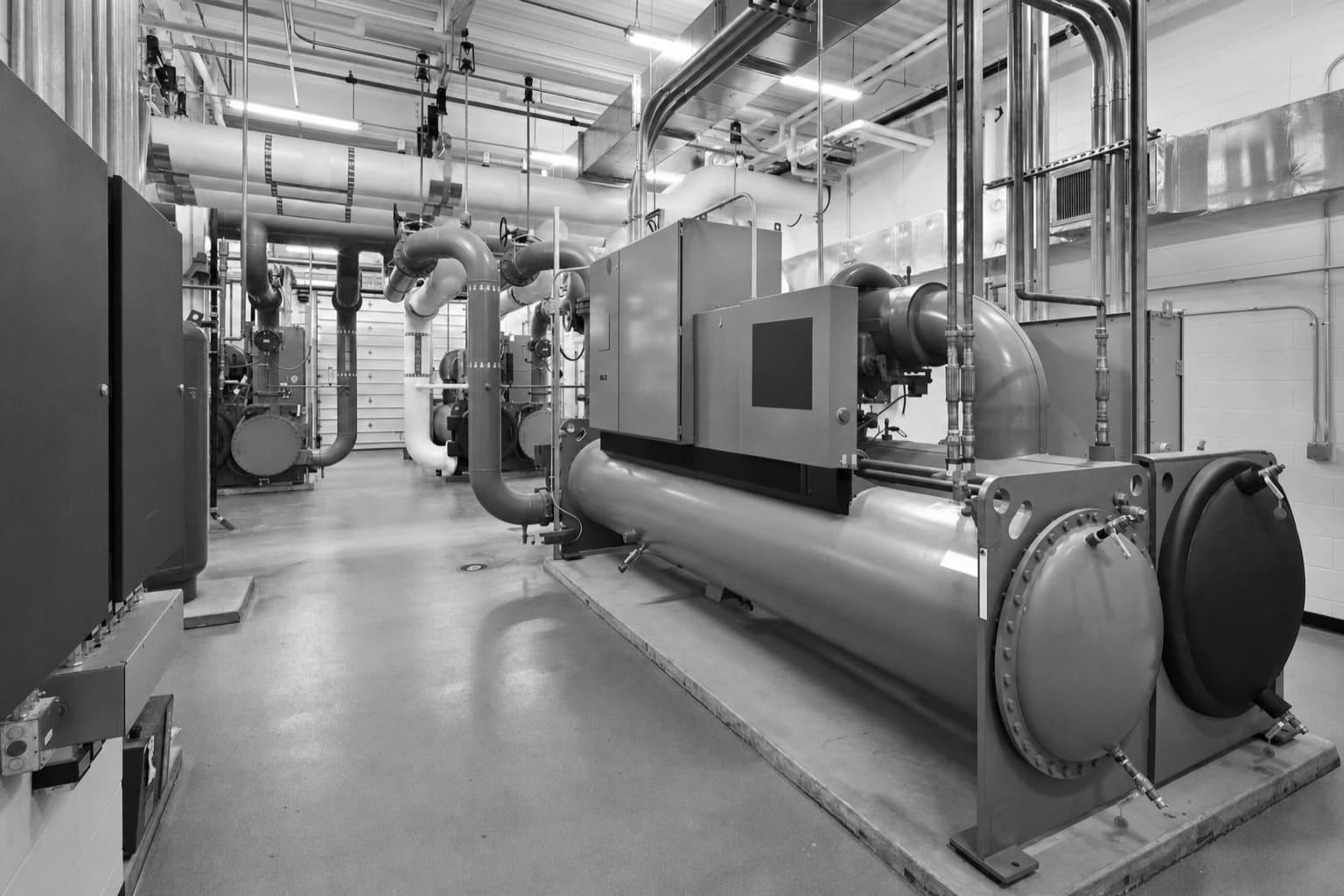
Before you budget, work out which kind of project you actually have. The tonnage on the nameplate tells you less about the price than what surrounds the unit: the curb, the panel, the roof deck, and the lot below it.
LOWER COMPLEXITY
Straight replacement
Same tonnage and fuel, a curb the new unit matches or adapts to cleanly, panel capacity already sized for the load, and a lot with room for the crane. These land in a day or two on site once the equipment arrives.
HIGHER COMPLEXITY
Engineered project
Tonnage or footprint grows, the roof needs structural review, electrical service has to be extended or upsized, the crane has to reach over the building, or the fuel is changing. Expect design time, a longer approval path, and phasing around occupied hours.
THE SITE REVIEW
What a real site review has to verify
A quote written from a nameplate photo is a starting number. A quote you can sign comes from someone who stood on the roof. DOE guidance lists the checks that decide feasibility, and they apply to conventional replacements just as much as to heat pumps: electrical capacity, physical constraints at the unit, the gas lines already in place, equipment availability, and whether the contractor has installed what you are buying before.
Electrical capacity is the one that surprises people. A higher-efficiency or electric-heating unit can draw more than the panel and feeder were built to carry, and finding that out after the old unit is on the ground makes for an expensive week. Physical constraints come next: curb dimensions, service clearance, roof structure under the new load, and whether duct connections line up or need transitions built.
The rest is logistics that belong to the contractor, not to you. Where the crane sets up, how many stalls close and for how long, what the weather call looks like, and how the old unit leaves the property with its refrigerant recovered under EPA rules. Every one of those is answerable in a single walk. A bidder who skips the walk is not pricing your building. They are pricing an average one.
Ask for these three before you sign
A photo of the existing curb and disconnect, the panel schedule showing available capacity, and a written lead time for the exact model quoted. If a bidder cannot produce all three, the number on the page is not the number you will pay.
OWNERSHIP QUESTIONS
Two things to settle at purchase
The install takes a week of your attention. The unit takes fifteen to twenty years of it. Two decisions made at purchase set how the rest of that time goes, and neither one shows up in a tonnage-and-price comparison.
The first is who is responsible for the equipment once startup is signed off, and under what terms. The second is what the new unit does to the rest of your roof, because one new machine sitting inside a group of aging ones creates a service picture that is more complicated than it looks from the ground.
WARRANTY AND SERVICE
Who owns it after startup
Manufacturer warranties generally assume documented commissioning and regular maintenance. Get the startup readings in writing, and settle whether the installer or a separate contractor carries the service agreement before the first season ends.
MIXED FLEETS
One new unit, five old ones
Refrigerants differ across equipment generations, and EPA rules govern how each one is recovered and handled. A mixed roof means two service procedures and two parts strategies. Decide now whether you replace the rest on a schedule or one failure at a time.
PHASING AND LIFETIME COST
Replacing a roof full of units without wrecking the budget
Almost nobody replaces six units at once. The useful question is the order and the pace. Rank the fleet by age, service history, and how much of the building each unit serves, then replace from the top of that list on a schedule you set instead of one the equipment sets for you.
The math that justifies the schedule sits on the utility bill, not the invoice. Old, inefficient rooftop units waste $900 to $3,700 each per year. Multiply that by the number of units past fifteen years on your roof, then by how long you plan to hold the building, and the cost of waiting becomes a number instead of a feeling. The DOE Advanced RTU Campaign is that same math at scale: more than two hundred organizations upgraded over forty-three thousand units and now save a combined $37 million a year.
Procurement follows the same logic. Ordering two or three units together usually beats buying them one emergency at a time, on price and on lead time. Check incentive programs before you order rather than after, since many require approval in advance and the window closes once equipment ships. Confirm what is actually available in your utility territory at the time you buy, because these programs change.
THE QUOTE
Five things a comparable quote must show
Bids that look far apart usually differ in scope, not in margin. Make every bidder put these five lines in writing, and the comparison stops being a guess.
01
Exact model and efficiency tier
Manufacturer, model number, tonnage, heating type, and the efficiency rating. Not "or equivalent."
02
A written lead time
Availability for that specific model, dated. A price without a delivery date is half a quote.
03
Curb, structural, and electrical scope
Adapter or new curb, any roof framing, and every electrical change, each priced as its own line.
04
Crane day and site logistics
Rigging plan, lot closure hours, and who pulls permits and schedules inspections.
05
Commissioning and closeout
Startup readings, airflow and charge verification, controls setup, refrigerant recovery records, and warranty registration.
Get a defensible number
Price the equipment and the building together.
Send the address, operating target, and target opening date. Flux will identify what must be verified before the project can be priced.
Get a free estimateQuestions
Straight answers.
When does replacement beat another repair?
Once a unit is past about fifteen years, the energy it wastes usually outruns what the repairs cost. DOE puts that waste at $900 to $3,700 per unit per year for old, inefficient rooftop units. Add repeat in-season failures and the repair is buying weeks, not years.
Should we switch to a heat pump rooftop unit?
It depends on your winter heating load, your local electricity and gas prices, and whether the electrical service can carry it. Heat pump heating efficiency drops as outdoor temperatures fall, so buildings with sustained cold winters weigh cold-climate or dual-fuel units rather than a straight all-electric swap.
How long does the installation itself take?
The visible work on a straight replacement is usually a day or two on site. The real schedule driver is equipment lead time, which is why availability for the exact model quoted belongs on the page right next to the price.
Like-for-like or right-sized?
Confirm the load either way. If the space and its use have not changed, like-for-like is often correct. If occupancy, equipment, or operating hours changed, a straight swap carries the old unit's sizing mistakes forward for another fifteen years.
Are there incentives for high-efficiency equipment?
Programs for efficient commercial equipment exist and change often. Check what is currently offered in your utility territory before you place the order, since many require approval in advance and close once equipment ships. Treat any incentive as unconfirmed until you have it in writing.
What should we do about the rest of the roof?
Build a fleet list with age, tonnage, what each unit serves, and last year's service calls, then set a replacement order from the top. Ordering two or three units together generally beats buying them one emergency at a time, on both price and lead time.
Sources used for this guide
- [1]betterbuildingssolutioncenter.energy.gov — DOE Advanced Rooftop Unit Replacement Guidance
- [2]betterbuildingssolutioncenter.energy.gov — DOE Commercial Heat Pump Rooftop Unit Replacement Guidance
- [3]betterbuildingssolutioncenter.energy.gov — DOE High-Efficiency Commercial Rooftop Unit Toolkit
- [4]energy.gov — DOE Efficient Commercial Rooftop Air Conditioner Program
- [5]epa.gov — EPA Stationary HVAC Refrigerant Management