BATTERY ENERGY STORAGE
Commercial battery energy storage cost.
What commercial battery systems cost, what drives the number, and how the payback actually works.
THE NUMBER
What commercial battery storage costs
Commercial battery energy storage cost scales with two numbers: power (how much it can deliver at once, in kW) and energy (how long it can deliver, in kWh). Most C&I systems land in six figures installed, with per-unit cost falling as systems grow.
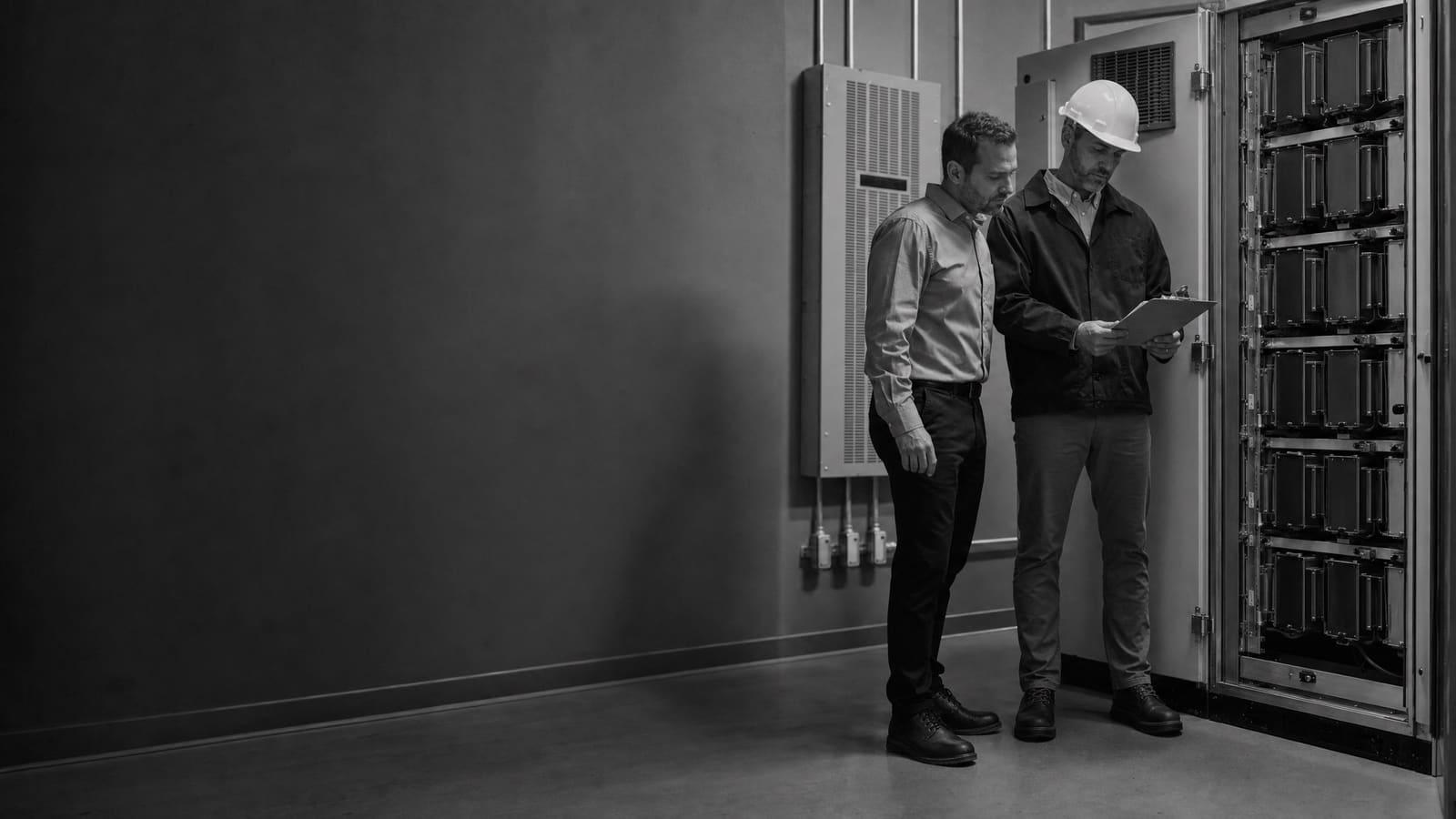
What moves the number: the battery itself, the inverter, the enclosure and thermal management, interconnection and electrical work, and the engineering that gets it permitted. Incentives then move it back down - the 30 percent federal ITC still applies to standalone storage (batteries kept their credit under the 2025 law, with construction-timing and foreign-content rules attached), and stacking state programs and accelerated depreciation can recover a large share of cost in the first years.
IN PRACTICE
What drives a battery quote up or down
- System size: power rating and hours of storage
- Chemistry and enclosure: outdoor cabinets vs containerized systems
- Electrical scope: switchgear, transformer, and interconnection work
- Siting: pad, setbacks, and fire-code spacing requirements
- Controls: peak shaving and program participation software
- Incentives captured: ITC, state programs, depreciation
WHERE PAYBACK COMES FROM
How commercial battery storage pays for itself
Batteries earn three ways. Demand-charge reduction is the big one on most bills - the battery caps your monthly peak. Load shifting buys cheap power and uses it during expensive hours. Grid programs pay for flexibility on call.
On a bill heavy with demand charges, the streams stack into paybacks that beat most building equipment.
READING QUOTES
How to compare battery storage quotes
Two quotes with the same kWh label can behave differently: usable capacity, warranty terms on degradation, round-trip efficiency, and software all decide what the system actually earns.
The honest comparison is dollars saved per year against dollars installed - which is why real quotes are built from your interval data, not a brochure.
Pricing a battery project?
Request an estimate. Sized from your actual interval data, with the credit and incentives netted into the number.
QUESTIONS
Straight answers.
What does a commercial battery system cost?
Most C&I systems land in six figures installed, scaling with power and hours. The 30% federal credit and state programs pull the net number down substantially.
What's the difference between kW and kWh?
kW is how hard it can push; kWh is how long. A 250 kW / 500 kWh system delivers 250 kW for two hours. Both numbers price the system.
What payback should we expect?
Bills heavy with demand charges see the fastest returns. Your interval data decides - which is why we price from it instead of averages.
Does the federal credit apply to standalone batteries?
Yes. Standalone storage qualifies for the 30% ITC - no solar required. Depreciation and state programs stack on top.
GET STARTED
Ready to price battery storage?
Request an estimate. Your bills in, honest system economics out.