TACOMA, WA · ROBOTS
Facility robots in Tacoma.
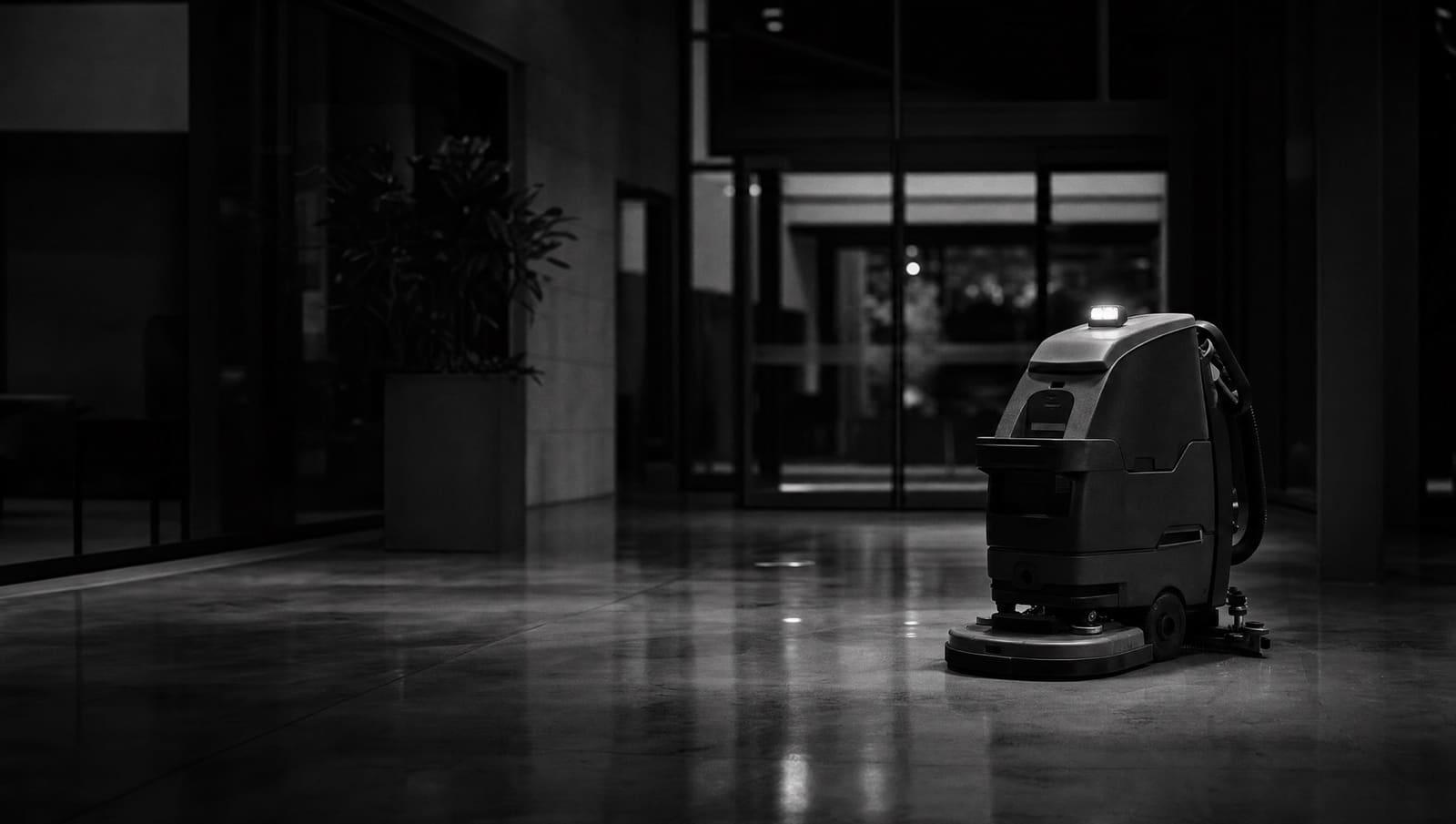
Facility robots in Tacoma handle repeat indoor routes for cleaning, delivery, security patrols, and warehouse tasks in commercial buildings.
Automation that earns its floor space.
Labor is the biggest line in most facility budgets, and it's the hardest to staff. Commercial cleaning robots and autonomous floor scrubbers take over the square footage; your crew keeps the detail work. Security robots patrol around the clock without overtime.
We pick machines for your floors and your layout, run the pilot, train your team, and keep everything running with robot repair and support. Deeper needs like robotics integration and building automation live under the same roof.
START HERE
Which commercial robots fit Tacoma buildings?
Facility robots fit Tacoma commercial buildings when a task follows a repeat route and still leaves people to handle spills, edges, tank service, and other work that needs judgment. Start with one named job. A floor scrubber can run a set cleaning path. A delivery robot can move parts or linens. A patrol robot can cover the same area each night. Warehouse robots can support repeat handling tasks. A changing layout or a route packed with exceptions is a poor fit until a live pilot proves safe, steady travel.
Keep Tacoma robot routes clear of fire systems
Tacoma Fire inspects commercial properties that are subject to fire rules and tracks required fire protection systems. Map each robot route, charging point, and parking spot before launch. Confirm that the robot and its dock do not block access to a fire protection system. Keep the final route map and dock location with the deployment record. If a route conflicts with protected equipment, move the route or dock before the robot enters daily use.
DEPLOYMENT FIT
What makes a facility robot work in a Tacoma building
PROJECT PLANNING
How to choose a commercial robot in Tacoma
WHAT WE HANDLE
Everything under the robots door.
FACILITY ROBOTS
INTEGRATION & REPAIR
SMART BUILDING
BEFORE A PILOT
How to test facility robots in a Tacoma building
Set one repeat task
SCOPE
Name one cleaning, delivery, patrol, or warehouse task; that choice sets the robot type and test route.
Run the real route
ROUTE TEST
Test doors, turns, edges, crossings, and stops during normal operations; any failed point changes the route.
Log human help
TASK LOG
Record every tank fill, tank drain, spill response, and route rescue; the log shows the true support load.
Make the buy decision
PASS/FAIL
Choose lease or purchase only after the pilot proves performance in the current role and layout.
BEFORE YOU BUY
Lease or buy commercial robots in Tacoma
Stable route and role
BUY FIT
Buy only when the pilot confirms steady performance and no major layout or operating change is expected.
Changing operating needs
LEASE FIT
Lease when tasks or layouts are still changing; Flux uses this to keep upgrade and replacement choices open.
Maintenance responsibility
CONTRACT
Check whether a lease includes maintenance; the answer changes staffing and service planning.
Building changes
PERMIT
Confirm whether a fixed dock or related building change needs review; if it does, use Tacoma's permit timeline to plan the start.
Project in Tacoma?
Tell us the building, exact scope, and target date. Flux will review the request and send the next step.
QUESTIONS
Straight answers.
What robot should a Tacoma commercial building test first?
Test the robot tied to the clearest repeat task. Use a scrubber for set floor paths, a delivery robot for parts or linens, a patrol robot for planned coverage, or warehouse automation for repeat handling.
What makes a Tacoma building a poor fit for a robot?
A route that changes often, has many exceptions, or needs frequent staff rescue is a poor fit. The pilot should fail if the robot cannot complete the named route reliably.
Do staff still have duties after an autonomous floor scrubber starts?
Yes. Staff still fill and empty tanks, handle spills, clean detailed areas, and manage cases that need human judgment.
What local record should a Tacoma facility keep before launch?
Keep the approved route map, dock location, pilot results, and human-help log. The route record should show that robot travel and parking do not interfere with tracked fire protection systems.
GET STARTED
Run the robot math on your building.
Square footage and hours in, labor math out. Pilot it on your worst floor, and if it doesn't pencil, we'll say so.