THE DIRECT ANSWER
What a commercial HVAC replacement actually includes
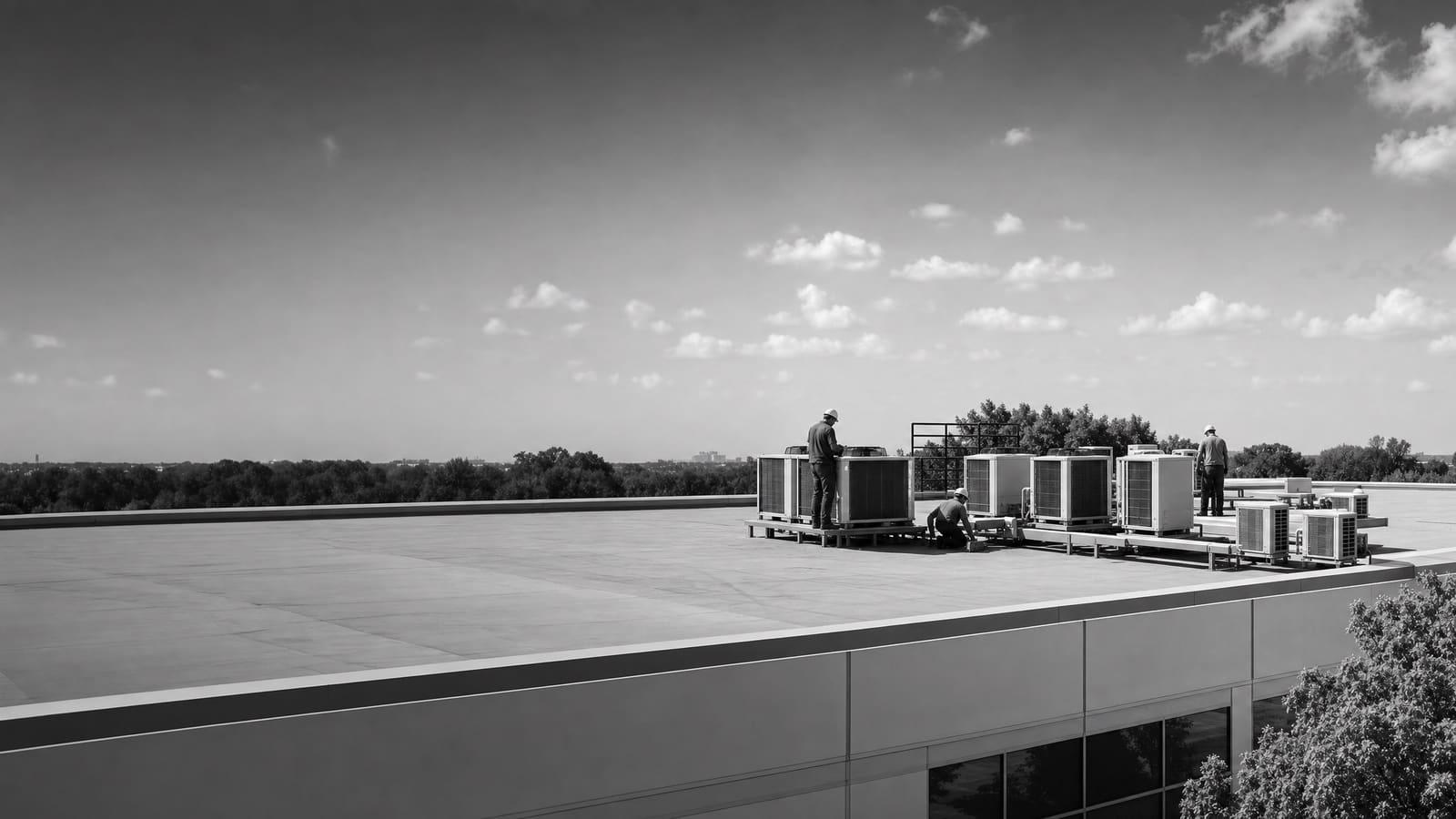
A commercial HVAC replacement means confirming the load your building carries now, selecting equipment against real availability, setting the unit, and commissioning it before handoff. Replacement usually beats another repair once a rooftop unit passes 15 years. DOE reports that old, inefficient commercial rooftop units waste anywhere from $900 to $3,700 per unit every year. Past that point you pay for the new unit twice: once in repair calls, once on the utility bill.
A site review has to confirm tonnage against current use, the curb and roof structure, crane access and reach, and whether electrical service and existing gas lines support the unit you actually want.
THE EQUIPMENT DECISION
Three rooftop paths worth pricing
Most commercial roofs carry a packaged rooftop unit, and DOE reports rooftop systems cool close to half of all U.S. commercial floor area. That means your replacement is usually a choice between three rooftop paths, not a redesign of the building.
Heat pump rooftop units are built much like air-conditioning units, but they run the refrigerant cycle in reverse to heat. DOE guidance says that for most of the South and West, today's heat pump rooftop units can handle most or all of the winter heating demand. The caution in that same guidance matters here: as outdoor temperatures fall, heat pump efficiency drops toward parity with electric resistance heat, and southern climates still see sharp cold snaps like the February 2021 Texas freeze. That is the reason dual-fuel exists.
Before you pick, DOE tells owners to check three infrastructure items: electrical capacity, physical constraints on the roof, and the gas lines already serving the unit.
WHAT MOVES THE NUMBER
The lines that decide your installed price
No one can price your roof from a web page, and any number that arrives before someone looks at the curb is a guess. These are the lines that actually move an installed price, ordered roughly by how much they can swing.
HOW TO BUY IT
Buy the replacement, not just the box
The most useful thing you can do before signing is confirm the load. A unit that went on the roof twenty years ago was sized for the occupancy, lighting, and equipment of that year. Offices got emptier, lighting stopped throwing heat, kitchens got busier, and server closets came and went. Replacing the nameplate copies all of that history forward, including the part that never worked right.
The second thing is to treat availability as part of the decision, not a footnote to it. DOE's work with manufacturers took high-efficiency rooftop units from nothing on the market to more than twenty models that beat the challenge specification, and a federal minimum-efficiency standard followed. So the efficient option is usually real and orderable. But orderable and on-a-truck-next-week are different facts. An efficiency tier that adds six weeks to the schedule is a different decision in July than it is in October, and you should be told that before you choose.
Third, decide who owns commissioning. Startup, refrigerant charge, airflow balance, and control settings either get verified against spec and documented, or they show up as comfort complaints in month two. Make it a deliverable with a signature on it, not a courtesy.
SIDE BY SIDE
Simple swap or scoped project
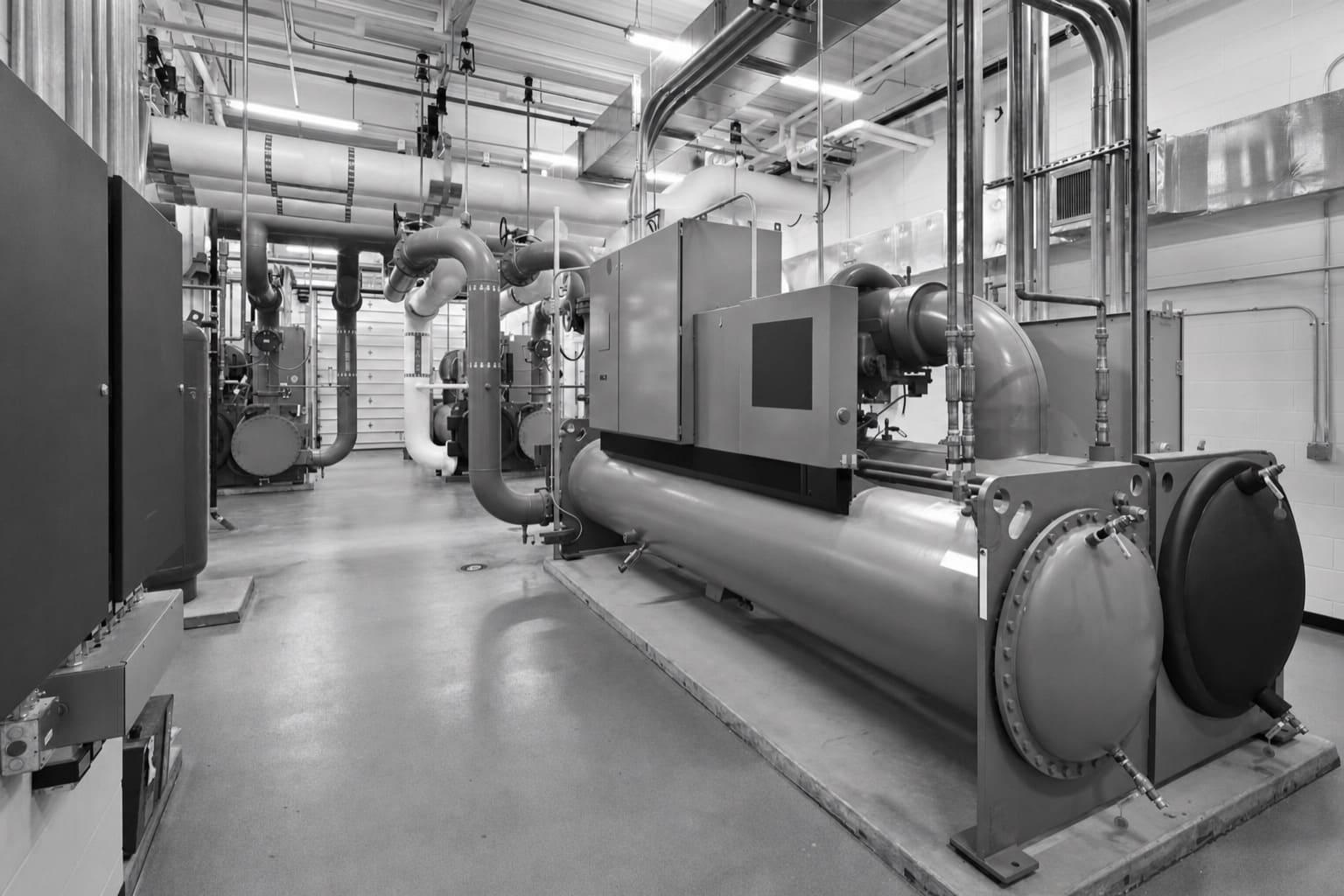
Two buildings with the same tonnage can be very different jobs. The gap is almost never the equipment. It is the curb, the crane, the power, and how much of the building has to keep running while the work happens.
LOWER COMPLEXITY
A clean swap
Same tonnage, an existing curb the adapter fits, roof structure unchanged, gas and electric already sized for the unit, and open lot space for the crane. Work like this is usually set and connected inside a day or two.
HIGHER COMPLEXITY
A scoped project
Tonnage changes, a new footprint that triggers structural review, an all-electric path that needs added electrical capacity, tight crane access, controls integration, or an occupied building that only allows nights and weekends. Each of these adds schedule before it adds price.
SCOPING
What a real site review has to cover
A quote is only as good as the walk behind it. DOE's guidance for owners weighing rooftop replacement lists the questions plainly, and they are the same ones a contractor should be answering on your roof.
Start with the load and the building type. How the space is used now sets the tonnage, and a school, a restaurant, and a warehouse with the same square footage do not carry the same load.
Then infrastructure. Electrical capacity decides whether an all-electric path is even available without a service upgrade. Physical constraints decide the curb, the footprint, and the rigging. Existing gas lines decide whether dual-fuel is a cheap hedge or dead weight.
Then availability. Equipment lead time and whether contractors nearby actually know the technology are both DOE-listed considerations, and both are easier to check before you commit than after.
Finally, incentives. Utility and program incentives change on their own schedule, so any incentive in your math should be confirmed as currently open at the time you buy, never assumed from an older project.
Ask for this in writing
Before you compare prices, get the load basis, the curb and structural finding, the electrical service check, and the quoted lead time from every bidder. Two quotes that skipped different steps are not comparable.
OWNING IT
Two things that outlive the install
Two things outlive the install and decide what the unit actually costs to own. Neither one shows up on the equipment quote. Both are easier to settle before you order than after the crane leaves the lot. DOE frames rooftop replacement as a portfolio decision for exactly this reason: the call you make on one roof tends to set the pattern for the next three, and the cost of getting it wrong is paid slowly, in utility bills and service calls, rather than all at once on invoice day.
OWNERSHIP
Who pays and who benefits
In a leased building, the owner buys the equipment and the tenant usually pays the utility bill. That split is how a like-for-like swap wins arguments it should lose. Put the annual energy difference in dollars in front of whoever signs.
OPERATIONS
One roof, three refrigerants
If the new unit uses a different refrigerant than the one it replaces, your roof becomes a mixed fleet, which is a parts and training problem before it is a comfort problem. EPA rules govern how refrigerant is handled, recovered, and recycled at every service call.
PLANNING AHEAD
Replace on your schedule, not the equipment's
DOE puts the choice bluntly. Most facility teams wait until a unit fails, needs constant repair, or stops holding the space, and replacing proactively is often the smarter business move than either replacement-on-failure or a like-for-like swap at the end of service life. The difference is leverage. A planned replacement lets you bid the work, choose the efficiency tier, wait out a lead time, and pick the week. A failure in August lets you take whatever is available.
If you have more than one unit, phase them. Rank the roof by age and repair history, replace the worst one this year with the specification you actually want, and let that unit set the standard for the rest. The Advanced RTU Campaign ran on this logic: more than 200 organizations upgraded over 43,000 rooftop units and cut a combined $37 million a year from their energy bills.
The lifetime math fits on one page. Take the annual waste of the old unit, the efficiency difference on the new one, the repair spend you stop making, and any incentive you can confirm is currently open. Set that against the installed price. Most of the time the number makes its own argument.
BEFORE YOU SIGN
Five things a comparable quote shows
Two quotes are only comparable when both show the same work. Ask every bidder for these five items in writing, then compare. A bid missing three of them is not cheaper, it is just less specific.
01
Tonnage, efficiency tier, and the load basis
Not the old nameplate. The sizing should reference how the space is used today.
02
Equipment lead time, in weeks
Written next to the price, with a note on what happens if the unit slips.
03
Curb adapter, structural findings, and roof patching
Who owns the roofing work, and what warranty survives it, should be named.
04
Rigging plan, lot closure, permits, and inspections
Included in the installed price or excluded from it. Either is fine if it is stated.
05
Commissioning and documented startup
Charge, airflow, and control settings verified against spec, with a signed report at handoff.
Keep planning locally
Related mechanical pages in Lubbock
Get a defensible number
Price the equipment and the building together.
Send the address, operating target, and target opening date. Flux will identify what must be verified before the project can be priced.
Get a free estimateQuestions
Straight answers.
When is replacing a commercial rooftop unit better than another repair?
Once a unit is past about 15 years, repairs stop being the cheaper path. DOE reports that old, inefficient commercial rooftop units waste roughly $900 to $3,700 each per year, and that spend continues quietly between service calls. If the unit also cannot hold the space during peak load, the decision has already been made for you.
Should a Lubbock building choose a heat pump rooftop unit?
Often it is worth pricing. DOE guidance says today's heat pump rooftop units can cover most or all winter heating demand across most of the South and West. The caveat is deep cold: efficiency falls toward electric-resistance parity as temperatures drop, which is why dual-fuel units exist. Confirm electrical capacity before committing to an all-electric path.
How fast can a dead rooftop unit be replaced?
The set and connect is usually a day or two once the unit is on site. Equipment availability is the real variable, and DOE lists it as a core consideration for owners. That is why lead time belongs on the quote, next to the price, instead of being discovered after you sign.
How much does commercial HVAC installation cost in Lubbock?
The installed price comes from tonnage, curb and structural work, crane access, and any electrical or gas changes, so an honest number follows a real look at the roof. What you can price today is the other side of the ledger: old, inefficient units waste $900 to $3,700 a year each, and that is the number the new unit has to beat.
Will a new unit use a different refrigerant than the old one?
It can. If it does, your roof becomes a mixed fleet, which affects spare parts, technician training, and your service contract more than it affects day-one comfort. EPA rules cover how refrigerant is handled, recovered, and recycled, so it is worth setting a fleet standard rather than deciding unit by unit.
Sources used for this guide
- [1]betterbuildingssolutioncenter.energy.gov — DOE Advanced Rooftop Unit Replacement Guidance
- [2]betterbuildingssolutioncenter.energy.gov — DOE Commercial Heat Pump Rooftop Unit Replacement Guidance
- [3]betterbuildingssolutioncenter.energy.gov — DOE High-Efficiency Commercial Rooftop Unit Toolkit
- [4]energy.gov — DOE Efficient Commercial Rooftop Air Conditioner Program
- [5]epa.gov — EPA Stationary HVAC Refrigerant Management