LITTLE ROCK, AR · SOLAR
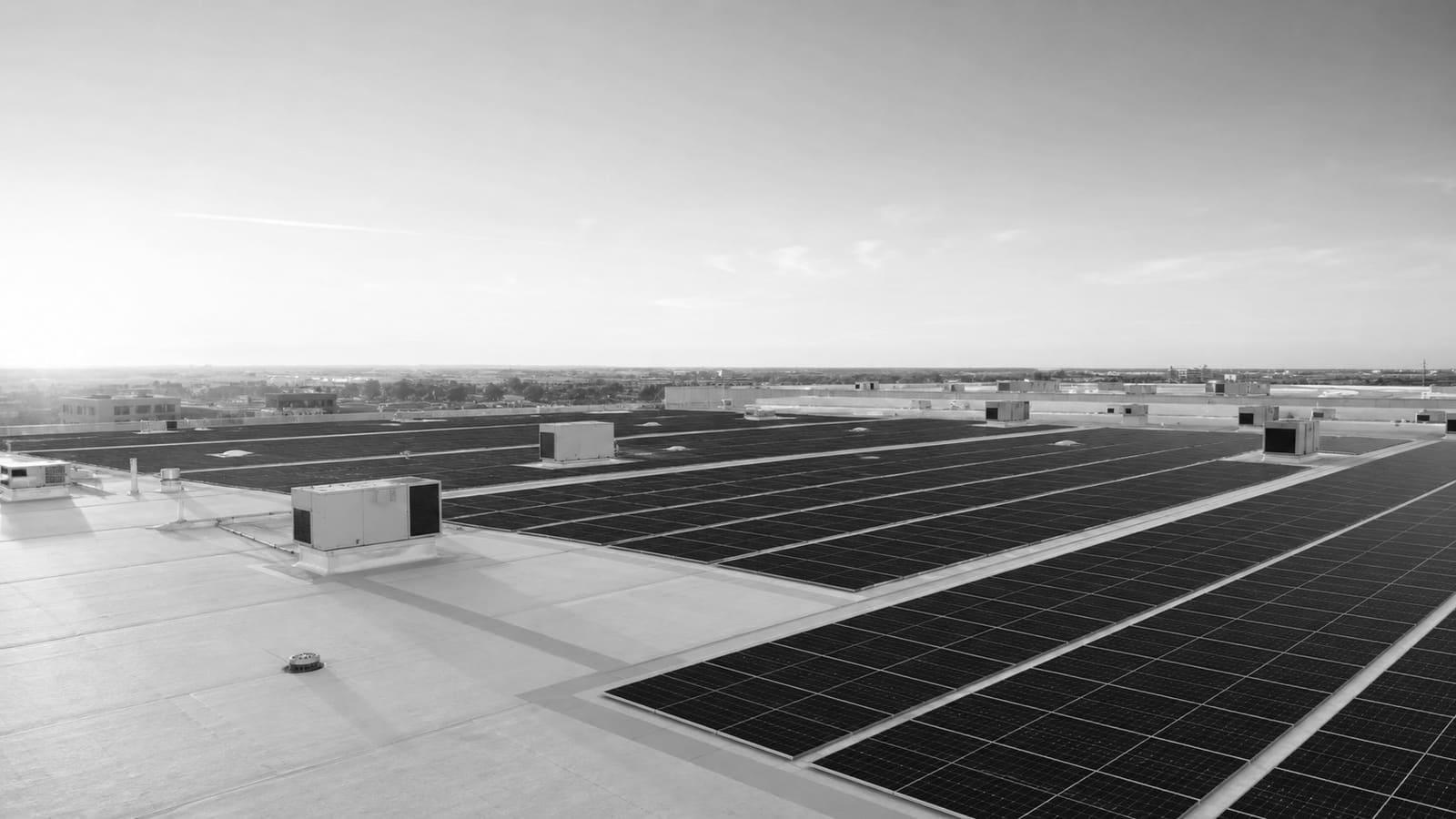
Commercial solar installation in Little Rock.
We plan commercial solar installation in Little Rock around roof space, panel tilt, wind load, permit documents, and each facility’s power use.
Start with the building, not the panels.
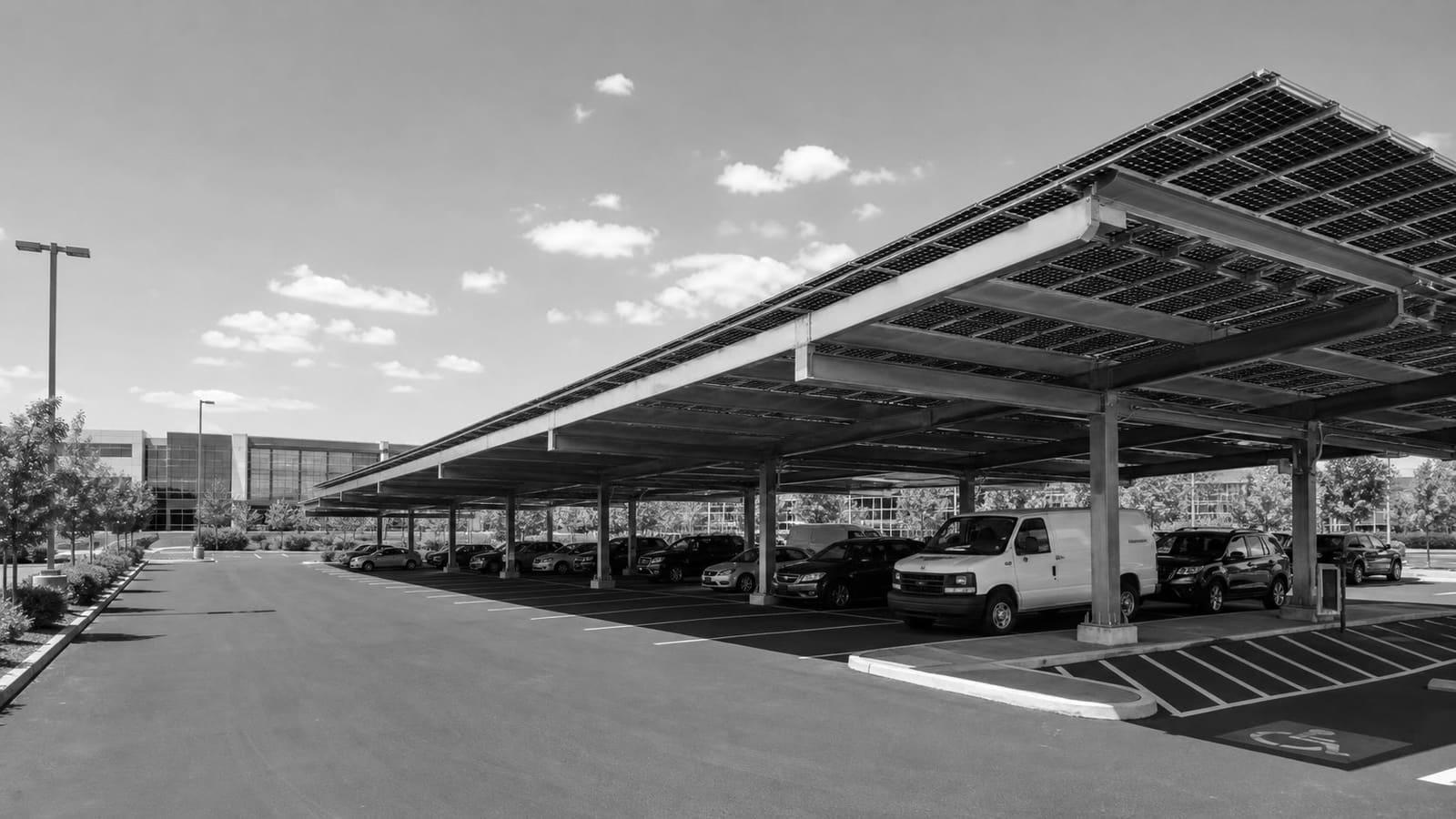
A commercial solar project has to fit the site, the roof, the electrical system, and the utility rules. We start with a solar feasibility study, then compare rooftop solar with solar carports where parking offers the stronger site.
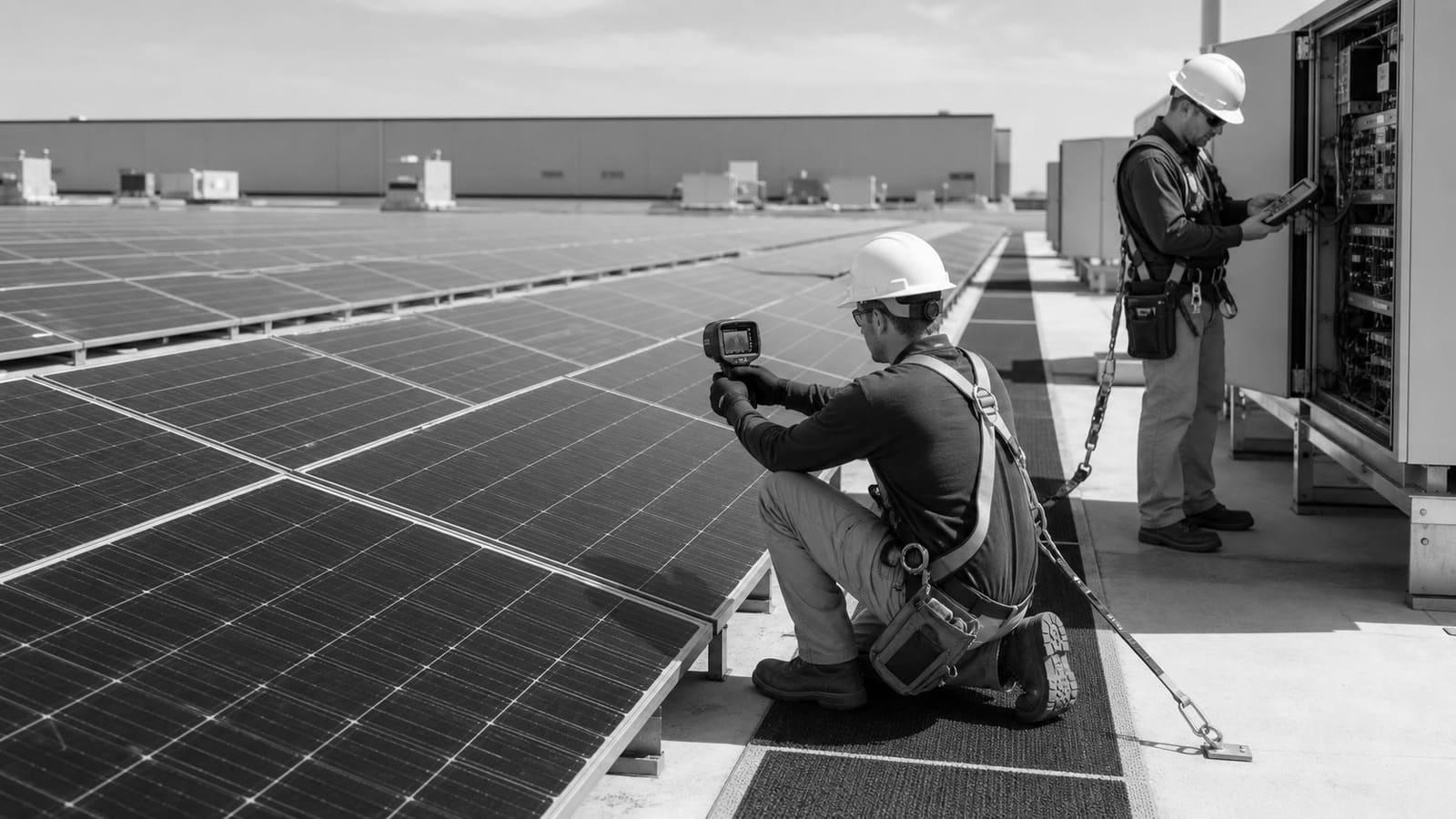
One team carries design, permits, utility interconnection, construction, commissioning, and solar maintenance. We also compare direct ownership with solar financing and PPAs, and add battery storage only when it has a clear job.
START HERE
What should a Little Rock business plan before adding solar?
For Little Rock commercial buildings, commercial solar installation can use a roof or ground array, with panel angle set by power goals and wind load. A south-facing tilt from 15° to 40° gives strong production in the continental United States. A lower tilt can cut wind load, while a steeper tilt can shed hail and winter weather better. We match the array type to usable site space and the facility’s energy needs. A flush roof array may suit appearance and wind-load goals, even when its angle is not best for output. A ground array may fit a commercial site that lacks enough clear roof space.
Check Little Rock plan review before design is final
Little Rock lists added plan records for some large commercial projects. If project value exceeds 50% of the building’s replacement cost, the city calls for stamped architectural, mechanical, electrical, and plumbing drawings, plus civil sheets, a utility plan, landscape sheets, a stamped legal survey, specifications, and a permit application. That threshold changes the document scope, design schedule, and review path, so we check it before the solar layout is locked.
Array fit checks
How we size commercial solar installation in Little Rock
Usable roof area
SITE FIT
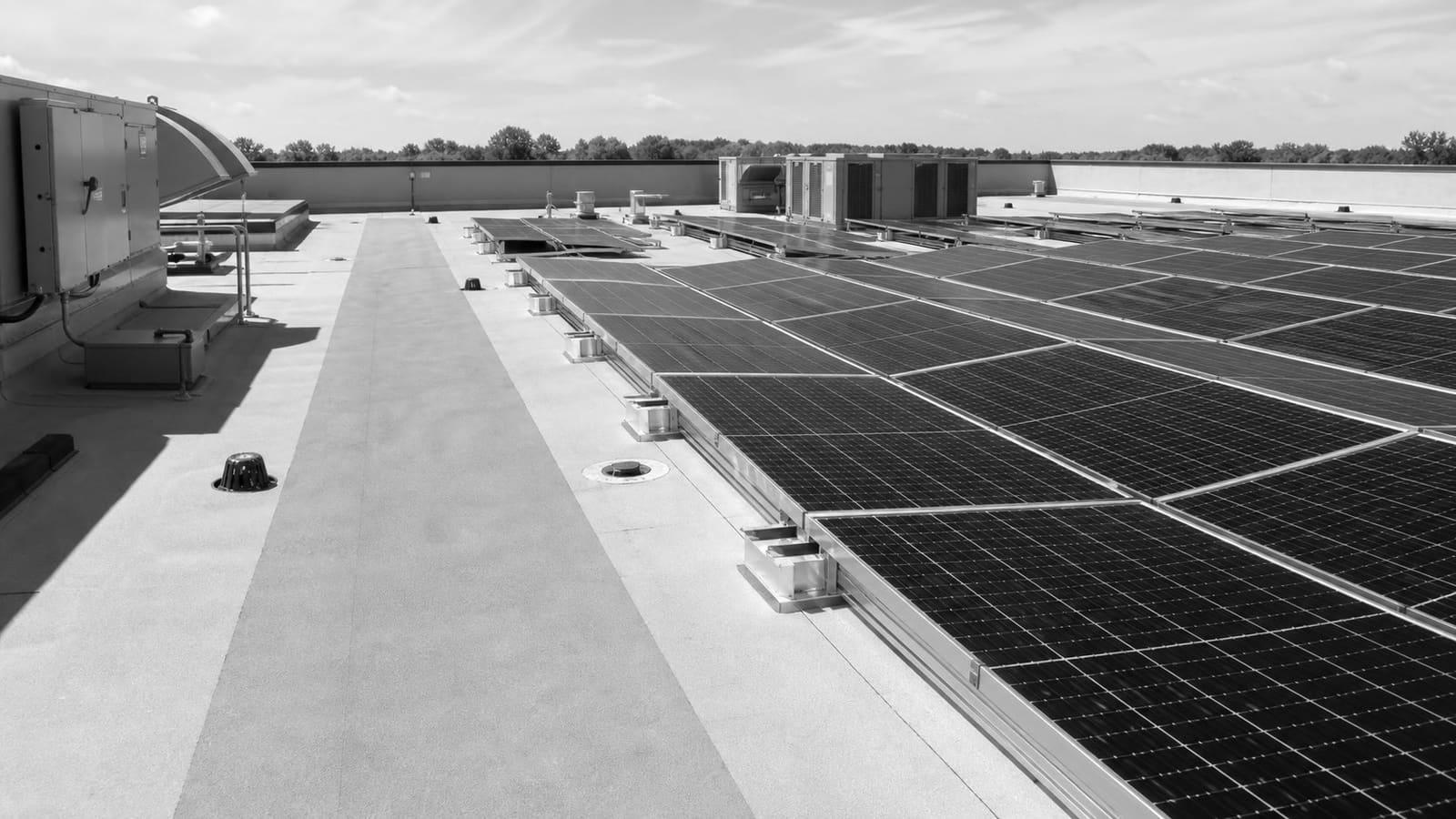
We check whether the commercial roof has enough clear space. If it does not, the buyer must consider a ground-mounted array or a smaller roof array.
Panel tilt
ANGLE
We compare a south-facing tilt from 15° to 40°. A lower angle can reduce wind load, while a steeper angle sheds hail and winter weather better.
Mounting position
TRADEOFF
We check whether panels should sit flush with the roof. Flush mounting may improve appearance and wind-load fit, but it can reduce power output when tilt or direction is less favorable.
WHAT WE HANDLE
Everything under the solar door.
PROJECT PLANNING
Which solar array fits a Little Rock commercial site?
- Choose a roof array when the commercial roof has enough usable space for the planned system.
- Choose a ground array when roof space cannot hold the planned system and the site has suitable open land.
- Use a flush roof layout when appearance or lower wind load matters more than the best tilt and direction.
- Do not approve the layout if the chosen roof or ground area cannot hold the planned array. Change the array type or size.
Permit path
What Little Rock commercial solar installation plans may require
Project value threshold
VALUE CHECK
We record whether project value exceeds 50% of the building’s replacement cost. If it does, the city’s listed commercial plan package applies.
Stamped plan set
DRAWINGS
When that threshold applies, we account for two full sets of stamped architectural, mechanical, electrical, and plumbing drawings. This adds design records before review.
Site records
DOCUMENTS
When that threshold applies, we account for civil sheets, a site utility plan, landscape sheets, a stamped legal survey, specifications, and the permit application.
Work-area threshold
AREA CHECK
For listed non-routed projects, we check whether the work area exceeds 50% of the building, space, or floor area. That condition changes the plan package sent for review.

BEFORE YOU BUY
Solar design tradeoffs for Little Rock facilities
Power production
OUTPUT
We compare panel direction and tilt with the facility’s power goal. A poor angle lowers production and may change the number or placement of panels.
Wind load
WIND
We compare lower and steeper panel angles. Lower angles can reduce wind load, so the result may change the mounting angle.
Hail shedding
EXPOSURE
We compare the need to shed hail with the added wind load from a steeper angle. That tradeoff changes the final tilt choice.
Roof appearance
PROFILE
We record whether a low-profile array is a buyer goal. If it is, flush mounting may take priority over the best angle for production.
QUESTIONS
Straight answers.
Can a Little Rock commercial solar array be installed away from the roof?
Yes. A ground-mounted array can be considered when a commercial roof lacks enough usable space and the site has suitable open land.
What panel angle should a Little Rock commercial facility consider?
A south-facing tilt from 15° to 40° gives strong production in the continental United States. The final angle must also weigh wind load and weather exposure.
When is a flush roof array a good fit in Little Rock?
It may fit when appearance or lower wind load matters. The tradeoff is that a less useful tilt or direction can reduce power production.
What can expand Little Rock’s commercial plan package?
The city lists added records when project value exceeds 50% of building replacement cost. A listed non-routed project also changes when work area exceeds 50% of the covered area.
GET STARTED
Tell us about the building.
Whatever the trade, we scope it, price it, and put the right crew on it. Site visits are free, always.