THE DIRECT ANSWER
What a commercial HVAC replacement actually includes
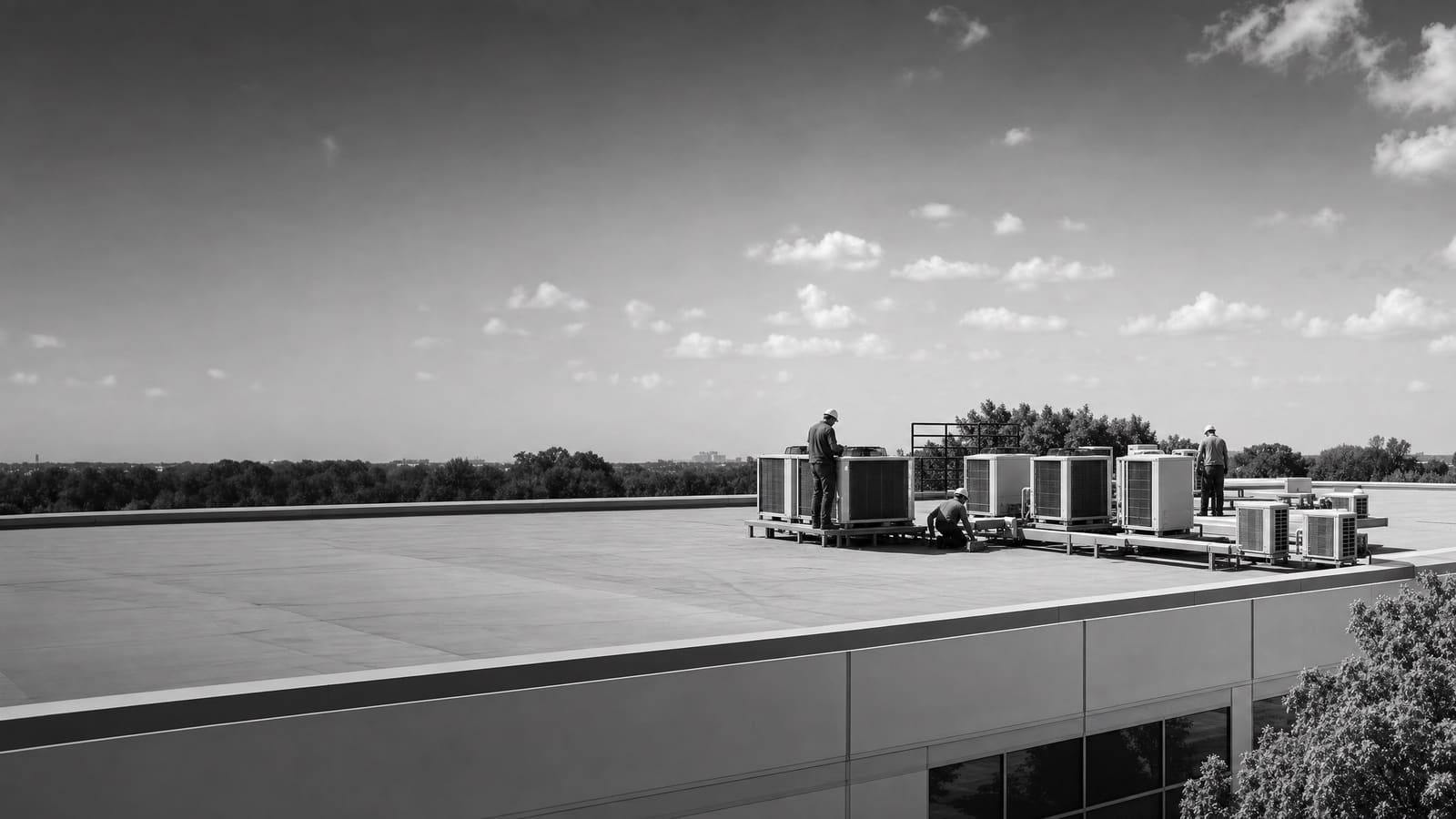
A commercial HVAC replacement covers a confirmed load calculation, equipment selection, rigging and set, a new curb or curb adapter, gas, electrical and refrigerant connections, controls integration, permits, and commissioning. Replacement beats another repair once a unit is past roughly fifteen years and needs frequent service. Old, inefficient rooftop units can waste $900 to $3,700 each per year, and waiting for total failure removes your choice of equipment and your schedule.
A site review still has to verify curb size and roof structure, available electrical capacity, gas service, and crane access. Those four items decide whether a swap stays simple or turns into a project.
THREE PATHS
What goes back on the curb
Rooftop units cool nearly half of all U.S. commercial floor area, so most replacement decisions here come down to what lands back on the curb. There are three honest paths, and the right one depends on your winter heating load, your electrical service, and whether gas is already at the roof.
Federal guidance for building owners frames the choice the same way: climate zone, utility prices, building type, equipment availability, and existing infrastructure decide whether an electric option fits a given site. That is a per-building answer, not a portfolio-wide one. Two buildings a mile apart can land differently because one has spare panel capacity and the other does not.
Whichever path you take, the baseline has moved. Minimum efficiency standards for commercial rooftop units were raised years ago, so even a straightforward like-for-like replacement of a fifteen-year-old unit puts better equipment on the roof than what came off.
WHAT MOVES THE NUMBER
The lines that decide the installed price
Installed price is a stack, not a number. The unit is the visible part. The roof, the utilities, and the access decide how far the rest travels. Ask for these as separate lines so you can compare two bids that describe the same building.
HOW TO BUY IT
Buy the replacement instead of reacting to it
Most commercial HVAC work happens twice: once when the unit fails, and once when someone finally plans the replacement. The planned version is cheaper almost every time. Federal guidance for building owners is blunt about it — proactively replacing an inefficient, underperforming rooftop unit is usually the smarter business move compared with replacement on failure, and often better than a like-for-like swap at the end of service life.
The reason is choice. Plan the work and you can compare efficiency tiers, negotiate lead times, put the crane on a Saturday, and take the upgrade that pays back. Wait for the unit to quit in July and you take whatever is on a truck that week, at whatever rigging costs on short notice, with rental equipment humming in the parking lot.
Sizing deserves the same treatment. The nameplate on a fifteen-year-old unit describes a building that may no longer exist — different tenants, different plug load, different hours. A replacement sized to how the space runs today fixes comfort complaints the old unit could never solve, and it stops you from paying to move tonnage you stopped needing years ago.
SIDE BY SIDE
What separates a simple swap from a hard one
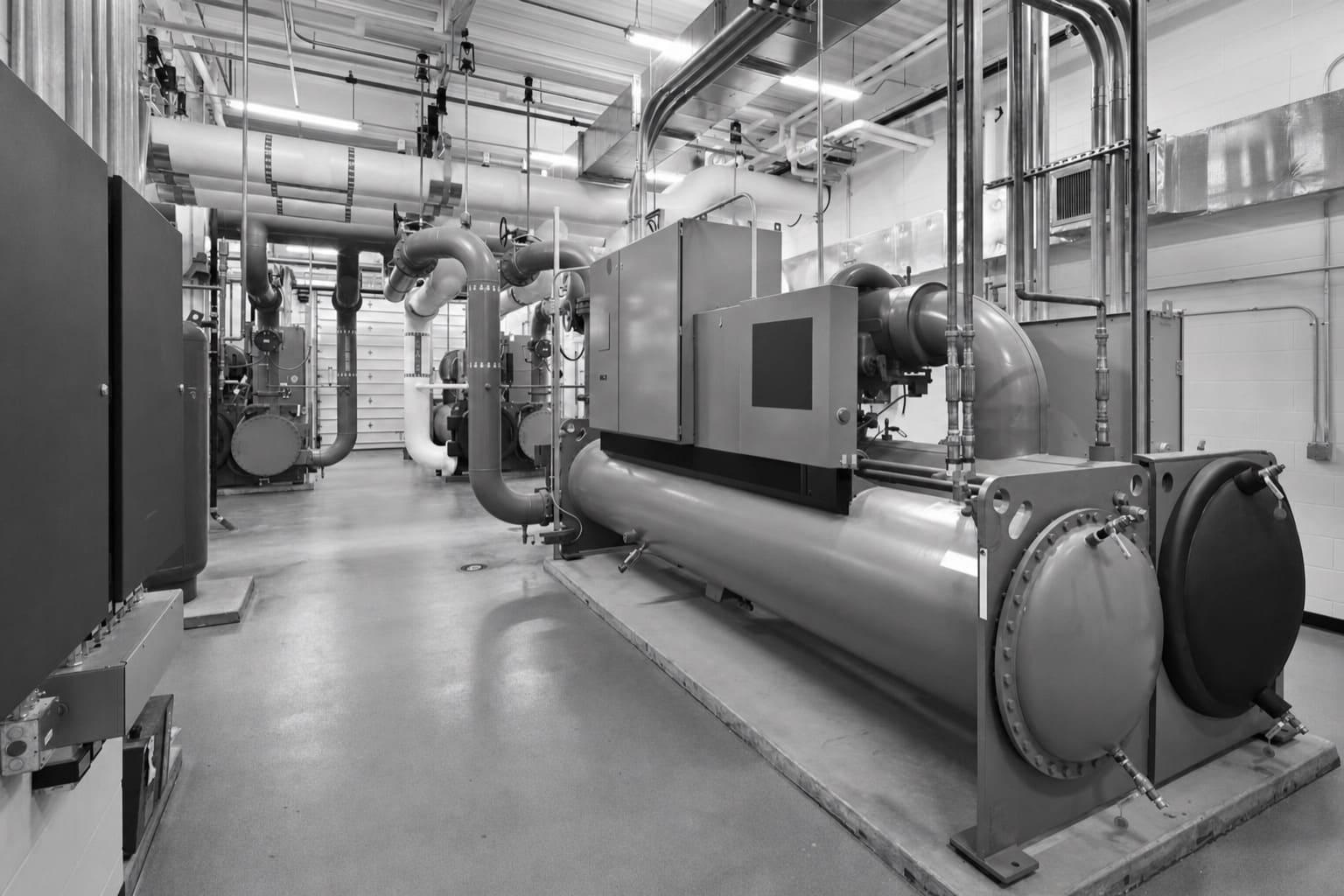
Two replacements on the same block can price very differently. What separates them is rarely the equipment. It is what the building makes the crew do to get the unit in place and connected.
LOWER COMPLEXITY
A clean swap
Same tonnage and fuel, the existing curb reused or a simple adapter, an open lot with room for the crane, adequate electrical service already at the unit, and a space that can lose conditioning for part of one day. Permits stay routine and the scope is easy to price.
HIGHER COMPLEXITY
The jobs that stretch
Larger tonnage or a new footprint, a roof that needs structural review, tight access with street closure and a long crane reach, a panel with no spare capacity, and a tenant who cannot go without heat or cooling. Each one adds both cost and calendar.
SCOPING THE JOB
What a real site review checks
A site review is where the quote stops being a guess. Start on the roof: curb dimensions and condition, the structure under it, how the existing unit is anchored, and the state of the membrane around the opening. A curb that does not match the new unit means an adapter, and an adapter means fabrication time before anything gets scheduled.
Then the utilities. Federal guidance for owners weighing electric equipment puts infrastructure at the center of the decision — available electrical capacity, physical constraints on the roof, and whether gas lines are already run. Those three items are what turn a like-for-like swap into a much larger project, and all three are checkable in an afternoon.
Last, the operating picture. Which zones does this unit serve, and who is in them during business hours? What is the earliest acceptable outage window? Does the unit tie into building automation, and does anyone still have the sequence of operations? Contractor availability belongs on the list too. The same guidance flags it as a real constraint, because equipment nobody nearby wants to service is a decision you make once and live with for years.
Before anyone prices the unit
Ask for curb dimensions, a note on the roof structure, a photo of the electrical disconnect and panel, and the planned crane setup location. A quote built without those four is an estimate wearing a number.
DETROIT CONTEXT
What Detroit winters change about the decision
Detroit sits well north of the easy case for electric heating. Federal guidance on commercial heat pump rooftop units is direct about it: heat pump heating efficiency falls as outdoor temperature drops, trending toward parity with electric resistance heat at the cold end, so these units suit mild-to-moderate winter heating best. That guidance calls today's models fully capable across most of the South and West. Detroit is not that, which is exactly why dual-fuel and cold-climate categories exist.
None of that rules anything out here. It changes what has to be proven before you buy. Local electricity and gas prices, your building's real heating hours, and the electrical capacity at the roof are what decide whether an electric or dual-fuel unit saves money in this climate. Run that comparison on your own rates and schedule rather than on a national average.
Ask this before committing to all-electric
Have the contractor model heating hours against your building's schedule and your actual utility rates, then confirm the panel can carry backup resistance heat on the coldest days. That single check usually settles dual fuel versus all-electric.
OWNING THE SYSTEM
Two things that outlive the install
The install is a few days. The consequences run fifteen years or more. Two of them are worth deciding on purpose rather than discovering later: how refrigerant gets handled across a roof of mixed equipment, and whether your next replacement gets easier or harder because of the one you are buying now. Neither shows up on the invoice, and both show up in every service call afterward.
REFRIGERANT
Servicing a mixed roof
Federal rules govern how refrigerant is handled and recycled in stationary cooling and heat pump equipment, so removing the old unit is documented work rather than scrap hauling. If your roof carries several vintages, record what each unit holds so service contracts and spare parts actually match the fleet.
STANDARDIZATION
Fewer models, fewer surprises
Owners with several units get more from replacement when they settle on one efficiency tier and one control platform, then work through the roof over a few seasons. Technicians learn a single system, parts stock shrinks, and every later quote becomes easier to compare against the last one.
PHASING AND PAYBACK
Phasing a roof full of units
If you own one unit, this is a project. If you own eight, it is a program, and the ordering matters. Rank by age and service history first. A unit past fifteen years that has needed repeated attention is both the biggest energy waster and the most likely to quit on the hottest day of the year. Replace those before the ones that are merely old.
The scale of the savings is documented. Through a federal campaign, more than 200 public and private organizations upgraded over 43,000 rooftop units and cut a combined $37 million a year from their energy bills. The high-efficiency specification behind that effort targeted energy use up to 50 percent below the standard equipment of the day. Those are portfolio-wide results rather than a promise for your roof, but they show where the money in this decision actually sits.
Which is the lifetime-cost point. Purchase price is the smallest number attached to a rooftop unit across its service life. The utility bill is the large one, and waste from a tired unit accrues every month whether or not anyone looks at it. Phasing spreads the capital while the units you replace first start paying toward the ones that come later.
WHAT THE QUOTE SHOWS
Five things a comparable quote should show
Two bids are only comparable when both describe the same scope. These five items are where the differences hide. When one quote comes in meaningfully cheaper, it is usually missing one of them rather than beating the other on price.
01
The equipment, spelled out
Model, tonnage, efficiency tier, and heating type, plus the quoted lead time and what happens to your schedule if it slips.
02
Curb and roof scope
New curb, adapter, or reuse; membrane patching; and whether structural review is included or explicitly excluded.
03
Rigging and site plan
Crane size, setup location, lot closure hours, and which day of the week the lift is planned for.
04
Utility connections
Electrical, gas, and refrigerant work priced as their own lines instead of buried inside one install number.
05
Startup and commissioning
Charge, airflow, and control settings verified against spec and handed over as a written record you keep.
Keep planning locally
Related mechanical pages in Detroit
Get a defensible number
Price the equipment and the building together.
Send the address, operating target, and target opening date. Flux will identify what must be verified before the project can be priced.
Get a free estimateQuestions
Straight answers.
When is replacement smarter than another repair?
Once a unit is past roughly fifteen years and needs frequent service, repairs are usually buying time on equipment that is already costing you money. Old, inefficient rooftop units can waste $900 to $3,700 each per year. The replacement conversation is worth having before the failure forces it.
Should the new unit match the size of the old one?
Confirm the load either way. If the space and how it gets used have not changed, like-for-like is often correct and simpler to permit. If occupancy, hours, or plug load moved, right-sizing fixes comfort complaints the old unit was never able to solve.
Does a heat pump rooftop unit make sense in Detroit?
It can, but the model matters. Heat pump heating efficiency drops as outdoor temperatures fall, and federal guidance points to dual-fuel and cold-climate categories for colder regions rather than a standard heat pump unit. Model your own heating hours and rates before committing.
Who handles permits, the crane, and inspections?
The installing contractor should own the rigging plan, lot coordination, permits, and inspections as part of the installed price. Confirm it is written into the quote rather than assumed, because those items are the most common source of change orders after the fact.
Why won't anyone give an installed price over the phone?
Because the unit is only part of the cost. Curb fit, roof structure, electrical capacity, gas service, and crane access can swing the total more than the equipment does. A number given before those are checked tends to get revised once someone stands on the roof.
How long does a rooftop replacement take on site?
The lift and connection is the short part of the project. Equipment availability is the real schedule driver, which is why lead time belongs on the quote next to the price. Planned replacements let you choose the date; failures hand that decision to whatever is in stock.
Sources used for this guide
- [1]betterbuildingssolutioncenter.energy.gov — DOE Advanced Rooftop Unit Replacement Guidance
- [2]betterbuildingssolutioncenter.energy.gov — DOE Commercial Heat Pump Rooftop Unit Replacement Guidance
- [3]betterbuildingssolutioncenter.energy.gov — DOE High-Efficiency Commercial Rooftop Unit Toolkit
- [4]energy.gov — DOE Efficient Commercial Rooftop Air Conditioner Program
- [5]epa.gov — EPA Stationary HVAC Refrigerant Management