DIRECT ANSWER
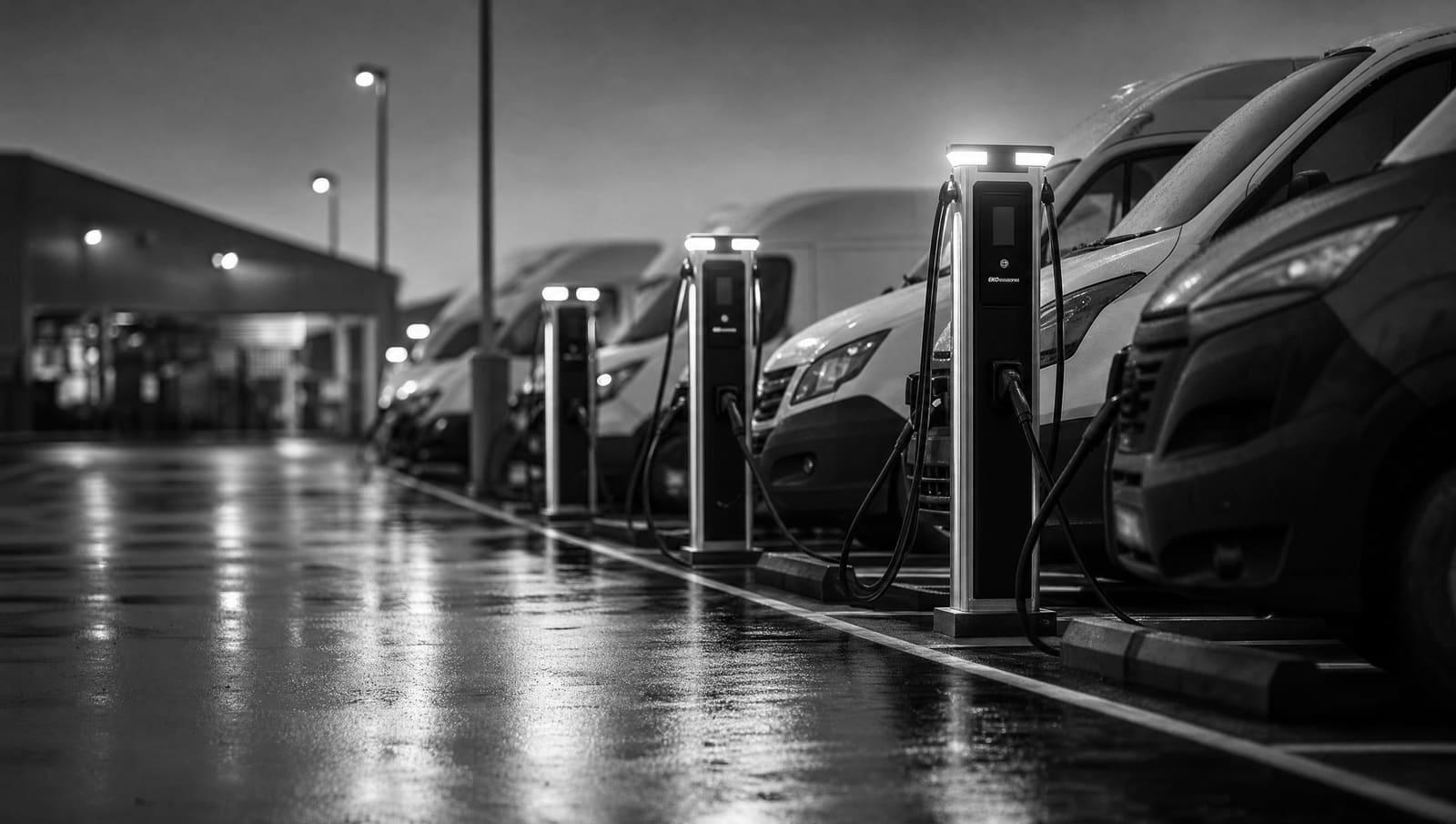
Commercial EV charger installation in Washington.
A commercial EV charger installation starts with a site and electrical assessment. The project then moves through charger selection, utility coordination, design, District permitting, construction, inspection, commissioning, and staff turnover. Level 2 charging often suits longer parking stays. DC fast charging serves shorter stops or fast-turning fleets but can require a more demanding power and utility plan.
A site review must verify usable electrical capacity, cable routes, parking access, charger protection, communications, drainage conditions, and room for planned growth.
OPERATING PLAN
Make three choices before selecting chargers
Start with the job the chargers must perform. An office may need steady charging across a workday. A public garage may need access controls, payment, and clear driver instructions. A fleet may need vehicles ready by set departure times. These goals lead to different charger counts, power levels, layouts, and software.
Next, decide who can use each port. Employees, tenants, visitors, customers, and fleet drivers may need different access rules. A networked system can support user controls, session data, payment, and alerts, but it also adds service responsibilities and ongoing fees.
Finally, set the charging window. Longer parking stays may allow lower power to serve the required driving need. Short stays or rapid fleet turnover may point toward higher-power equipment. The right choice is based on dwell time and energy demand, not the fastest charger available.
QUOTE VARIABLES
What changes the installation budget
Equipment is only one part of the project. A useful budget separates the charger purchase from the electrical, civil, communications, permit, and operating work needed to place it in service.
EQUIPMENT CHOICE
Choose Level 2 or DC fast charging by use case
Level 2 charging is often a practical fit when vehicles remain parked for a meaningful part of the day or overnight. That can include workplace, tenant, guest, and depot use. It may also let a site serve more ports within a limited electrical capacity, especially when load management shares available power among chargers. The design still must account for dedicated circuits, distribution equipment, communications, mounting, cable reach, and future expansion.
DC fast charging moves the power conversion into larger charging equipment and serves vehicles that need a faster turnaround. It can fit public charging, active fleet routes, or properties where drivers cannot stay long. The installation may have greater power demand, larger equipment, more heat-management needs, and closer utility involvement. Placement must also protect equipment without making stalls hard to use.
Do not compare chargers by nameplate power alone. The vehicle, battery condition, shared site capacity, and operating controls can affect delivered charging. Compare the complete system: usable power, supported connectors, network functions, warranty, parts access, service response, and the electrical work required to operate it.
COMPLEXITY CHECK
A short cable route is not the whole story
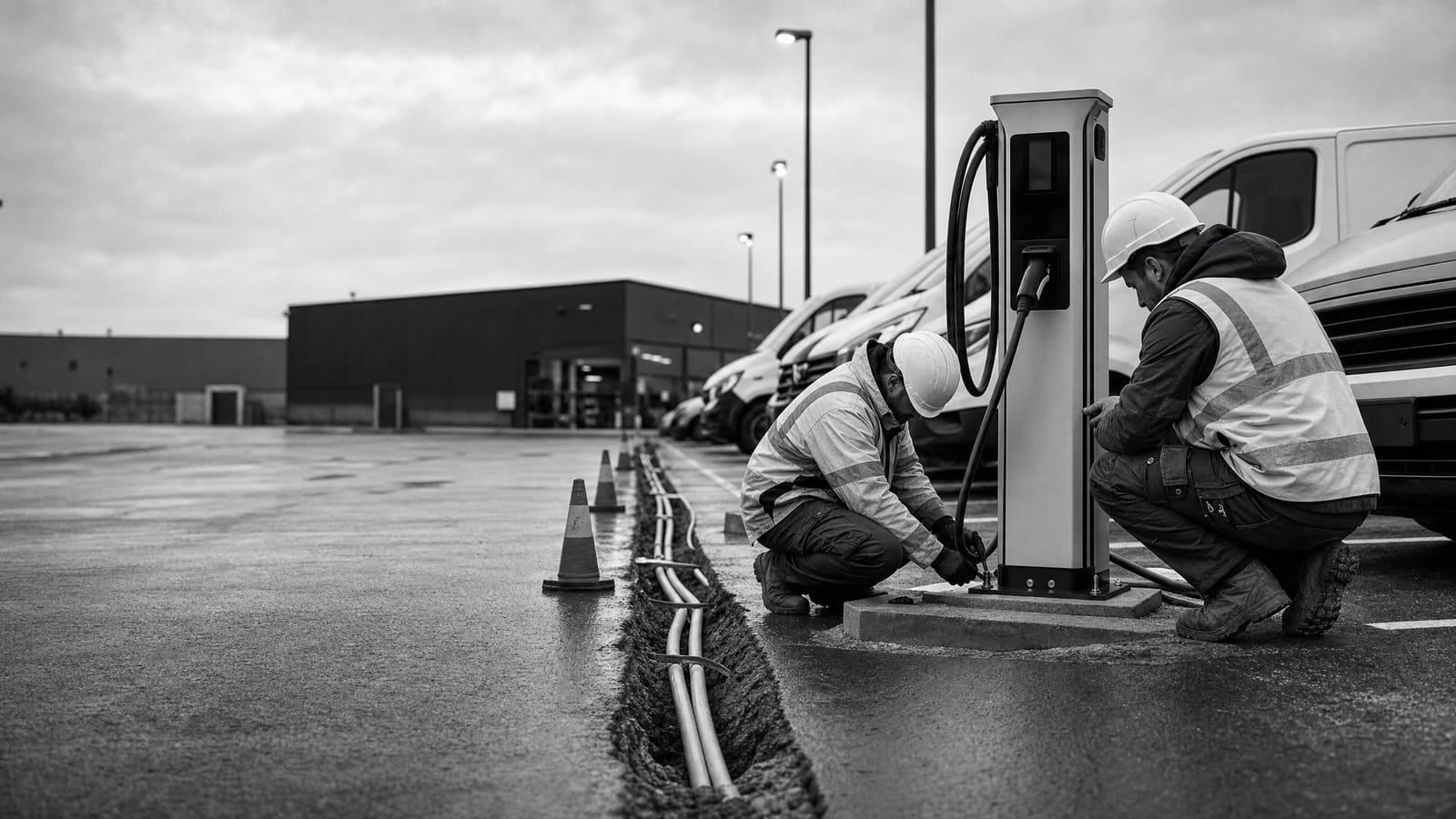
Installation complexity depends on the relationship between the chargers, the building, the parking area, and the utility service. Two projects with the same port count can require very different work.
LOWER COMPLEXITY
Capacity and routing are already workable
The electrical source is near the stalls, usable capacity is confirmed, mounting is simple, communications are reliable, and construction causes little disruption.
HIGHER COMPLEXITY
Power or site work must expand
Service upgrades, long trench routes, structural work, busy parking operations, exterior plan details, or higher-power chargers add coordination and schedule exposure.
SITE REVIEW
Turn a parking idea into a buildable scope
A strong site review begins at the electrical source and follows the proposed path to every charging stall. The team should document service information, panels, distribution equipment, existing loads, likely charger demand, and space for new gear. It should also check where conduit can run and whether walls, ceilings, paved areas, landscaped areas, or occupied spaces affect that route.
The parking review should show stall dimensions, traffic flow, accessible routes, equipment clearances, cable reach, mounting points, wheel stops, signs, lighting, drainage, and physical protection. Networked chargers also need a dependable communications plan. A signal that works at the building entrance may not work in a lower garage or at the far side of a lot.
The result should be a marked layout and a written basis of design. It should state the intended users, charging schedule, equipment power, assumed electrical capacity, utility questions, permit path, and future phase. This gives designers, contractors, equipment vendors, and the owner the same starting point.
Ask for assumptions in writing
If capacity, utility work, trench conditions, communications, or restoration remain unverified, the proposal should identify them as allowances or exclusions instead of hiding them in a lump sum.
WASHINGTON REVIEW
Include District permitting in the early schedule
The DC Department of Buildings lists electric car charging equipment among work that requires a permit. Its process includes selecting the permit type, submitting the required information, and completing plan review and inspection steps that apply to the scope. More complex commercial submissions may use ProjectDox. Exterior work may also need a scaled surveyor’s plat showing existing and proposed conditions.
Treat permit preparation as part of design, not as a task left until equipment arrives. The layout, electrical documents, exterior work, mounting, and project description should agree. A mismatch can create questions or revisions. Confirm the current submission requirements, fees, and review path with the District for the exact property and scope before setting the construction date.
Local decision
Before approving the quote, confirm who prepares the permit set, who submits it, whether a surveyor’s plat is needed, who answers review comments, and who schedules inspections.
FACILITY FIT
Match the design to how the property operates
Washington has substantial office, retail, and commercial activity. Those settings do not need the same charging plan. Parking time, turnover, security, electrical routing, and operating hours should guide the scope.
AFTER TURNOVER
Decide who owns the operating work
A charger is both electrical equipment and an operating service. Before purchase, assign responsibility for driver support, software administration, pricing or access rules, station status, repairs, and reporting. The property team should know which issues go to the network provider, equipment maker, electrical contractor, or facility staff.
Ownership terms also affect flexibility. Confirm who owns the hardware, accounts, session data, and network agreement. Ask how the station behaves when communications fail and how data can be exported. A clear handoff helps the facility respond when a charger is blocked, damaged, offline, or unable to start a session.
OWNER OPERATED
Keep control in-house
The property controls equipment and policies but must manage vendors, software, driver questions, maintenance, and replacement planning.
SERVICE MODEL
Assign defined duties
A provider may handle selected operating tasks, but the agreement should state fees, response duties, data rights, warranties, and exit terms.
PHASING
Build today without closing off tomorrow
A first phase should solve a clear current need while preserving practical expansion choices. During site design, identify the likely future stalls and the electrical path that could serve them. Spare pathway, planned equipment space, and a documented load strategy may reduce later disruption. They should be included only where the expected growth supports the added work.
Procure long-lead electrical equipment and chargers against an approved design. Confirm model numbers, connectors, mounting, communications, warranties, and delivery assumptions before release. Substitutions should receive both electrical and operational review. A unit that fits the circuit may still fail the property’s access, payment, reporting, or service needs.
Compare lifetime responsibility as well as installation scope. Network subscriptions, payment processing, communications, inspections, preventive care, repairs, replacement parts, utility rate effects, and staff time can continue for years. Create a maintenance plan before opening the stations. Turnover should include tested charging sessions, labels, account access, warranty records, as-built documents, staff training, and a clear support path.
BID CHECK
Five items every comparable quote should show
Ask each bidder to price the same documented scope. Clear inclusions, assumptions, allowances, and exclusions make proposals easier to compare and reduce surprises after award.
01
Exact charging equipment
List models, ports, power, connectors, mounting hardware, network features, warranties, and delivery assumptions.
02
Electrical and civil scope
Show distribution gear, circuits, conduit, trenching, supports, protection, signage, striping, and surface restoration.
03
Utility and permit duties
Name who coordinates service, prepares drawings, submits permits, answers comments, pays fees, and schedules inspections.
04
Testing and turnover
Include commissioning, network setup, charging tests, labels, training, manuals, warranties, and as-built records.
05
Assumptions and ongoing costs
Separate allowances, exclusions, change-order triggers, software fees, connectivity, payment charges, maintenance, and support.
Keep planning locally
Related EV charging pages in Washington
Get a defensible number
Price the equipment and the building together.
Send the address, operating target, and target opening date. Flux will identify what must be verified before the project can be priced.
Price my chargersQuestions
Straight answers.
Does commercial EV charger installation require a permit in Washington, DC?
Yes. The DC Department of Buildings lists electric car charging equipment as work that requires a permit. The exact permit type, documents, review path, and inspections depend on the property and installation scope. Exterior construction may also require a scaled surveyor’s plat.
Should a commercial property install Level 2 or DC fast chargers?
Choose by parking time, vehicle energy needs, daily turnover, and available power. Level 2 often works for workplaces, tenants, guests, and overnight fleets. DC fast charging can fit short public stops or active fleets, but it may require a more demanding electrical and utility plan.
What should happen before chargers are ordered?
Confirm the users, charging schedule, site layout, electrical capacity, cable route, communications, utility questions, permit requirements, and operating model. Then approve equipment that matches the documented design. Ordering first can leave the owner with hardware that does not fit the site or service.
Can load management avoid an electrical upgrade?
It can sometimes keep combined charger demand within a defined power limit, but it does not guarantee that existing service is adequate. An electrical assessment must confirm available capacity, other building loads, operating needs, and whether managed charging still delivers enough energy before vehicles leave.
How long does a commercial EV charging project take?
The supplied sources do not support one fixed timeline. Duration depends on design, permit review, utility work, equipment availability, site access, construction complexity, inspections, and commissioning. A proposal should identify dependencies and separate contractor work from utility-controlled milestones.
What does commissioning include?
Commissioning should verify installation, safety functions, communications, user access, software settings, and successful charging sessions. Turnover should also provide account credentials, equipment records, warranties, as-built documents, staff training, and clear contacts for network, hardware, and electrical support.
Sources used for this guide
- [1]afdc.energy.gov — Alternative Fuels Data Center: Procurement and Installation for Electric Vehicle Charging Infrastructure
- [2]betterbuildingssolutioncenter.energy.gov — DOE Better Buildings Commercial EV Charging Infrastructure Guide
- [3]driveelectric.gov — Public electric vehicle charging infrastructure playbook · Joint Office of Energy and Transportation
- [4]energy.gov — DOE Federal Workplace Charging Program Guide
- [5]dob.dc.gov — How to Get a Permit | dob
- [6]planning.dc.gov — 07_ED.pdf