THE DIRECT ANSWER
What a commercial HVAC replacement actually covers
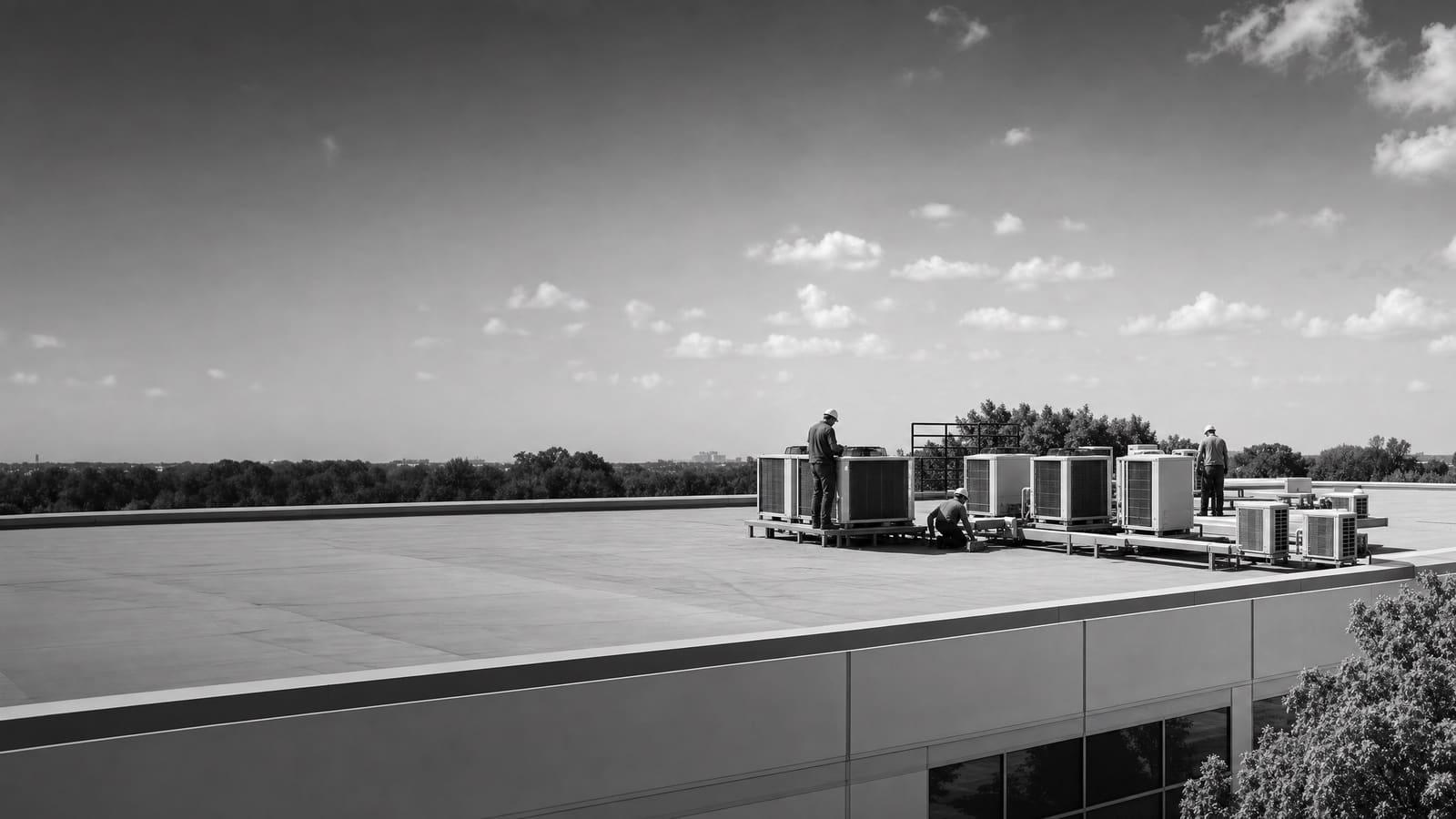
A commercial replacement covers load confirmation, equipment selection, regulated refrigerant recovery, removal and rigging, gas and electrical connections, controls, permits, and a documented startup. Replacement beats one more repair once the unit stops holding the space, needs frequent service calls, or has passed fifteen years, where efficiency losses compound. An old, inefficient rooftop unit can waste $900 to $3,700 a year by itself, and that number usually settles the argument between fixing it again and planning the swap.
A site review has to verify tonnage against how the space is used now, roof and curb condition, available electrical capacity, and whether the existing gas service stays or gets abandoned. Those four answers set the real price.
THE MAIN CHOICE
Three ways to replace a rooftop unit
Most replacements come down to three paths, and the right one depends on what changed since the last unit went in.
A like-for-like swap keeps the same fuel and the same curb. It is the fastest way back to conditioned space, and it is the honest choice when occupancy, hours, and equipment loads have not moved. Its weakness is that it carries forward whatever sizing error the old unit had.
A high-efficiency rooftop unit costs more up front and returns it through operating cost. Manufacturers now offer more than twenty models that exceed the high-performance specification written to cut rooftop energy use by up to half against the older baseline, so this is a catalog decision rather than a special order.
A heat pump rooftop unit replaces the gas burner with reverse-cycle heating. It is technologically close to a standard unit, but it changes electrical demand, gas line disposition, and who on the service side knows the equipment.
WHAT MOVES THE NUMBER
Where two quotes on the same roof diverge
Installed price is set by the unit and by what the roof and the electrical service make you do to receive it. These are the lines that move most between two bids on the same building.
BUYING GUIDANCE
Choose the unit, not just the price
The most expensive version of this project is the one you never choose. Waiting until a unit fails completely means buying whatever is available that week, at whatever price, with the space out of service while you wait. Replacing a tired unit on a planned date usually beats replacement-on-failure, and it often beats a like-for-like swap made at the end of the old unit's service life, because the planned version is the only one where you still get to pick the tier.
Start with what the space does now. A unit sized twenty years ago was sized for a different occupancy, different plug loads, and often a different tenant. Confirm the load before you shop, or the new unit inherits the old complaint list.
Then walk the checklist that decides whether an electric option is even on the table: climate and heating hours, expected utility bill impact, building type, equipment availability, electrical capacity at the panel, physical constraints on the roof, existing gas lines, and whether the contractors who will service it afterward know the technology. Any one of those can rule an option out, and it is far cheaper to learn that during scoping than during rigging.
COMPLEXITY CHECK
What keeps this simple, and what makes it hard
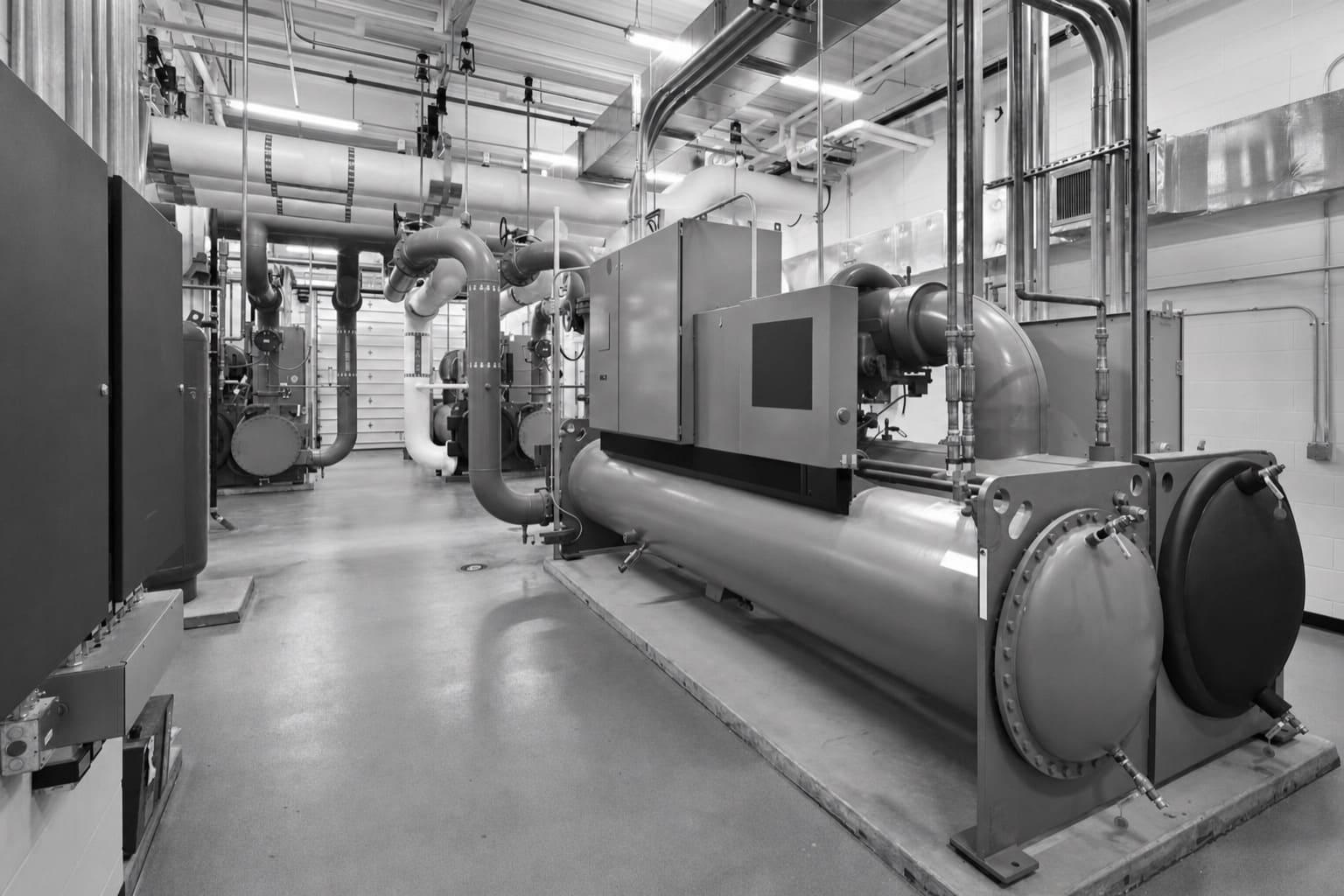
Two projects with the same tonnage can be a week apart in effort. The difference is usually fuel, load, and access, not the box itself.
LOWER COMPLEXITY
Same fuel, same footprint
The replacement matches the existing curb, keeps the gas and electric service already there, and the load has not changed. Design work is minimal, and the site day is mostly rigging and connections.
HIGHER COMPLEXITY
New fuel, new load, or tight access
Going all-electric, growing tonnage, or landing a larger footprint pulls in panel capacity, structural review, and a curb adapter. Crane reach over a constrained lot adds closure time and a weather contingency.
SCOPING
What the site review has to settle
A quote written from a nameplate photo is a starting point, not a price. The site review is where the guesses turn into scope.
On the roof, it confirms curb dimensions and condition, the structure underneath, clearance around the new footprint, and how a crane can actually reach the location. In the electrical room, it confirms available capacity, because an all-electric or heat pump unit can ask for more than the gas unit it replaces, and panel or feeder work is the single item most likely to reset a budget. At the meter, it settles whether the gas service stays live, gets capped, or gets abandoned.
The review should also cover the old unit's refrigerant. Federal Clean Air Act rules govern how refrigerant is handled and recycled when stationary air-conditioning and heat pump equipment is serviced or removed, so recovery is certified work with a paper trail rather than a hauling line item.
Finally, ask who maintains the unit afterward. If the technology is new to the building, service coverage should be arranged before the equipment lands, not after the first fault code.
Four answers to get before signing
Curb and structure confirmed, electrical capacity measured rather than assumed, gas service disposition decided, and refrigerant recovery written into the scope. A quote that answers all four can be compared line for line against another one that does.
BAKERSFIELD SPECIFICS
Settle the permit path before the crane date
Permitting is set by whichever jurisdiction your address falls in, and that matters more than it sounds. Kern County city permit desks publish HVAC permit requirements that reach any mechanical, electrical, or plumbing upgrade or repair, not only a full unit replacement. Assuming a same-size, same-fuel swap slips under the line is a common way to lose a scheduled crane day.
Confirm the reviewing office for your parcel first, then confirm which permits your scope triggers. A straight replacement is usually mechanical plus electrical. Adding tonnage, changing the footprint, or setting a heavier unit is what pulls structural review into the file, and structural review is measured in weeks rather than days. Filing early costs nothing. Discovering the requirement the morning the crane is on the lot costs the mobilization.
Make this call first
Contact the permit desk for your parcel before locking an equipment date, and ask whether your scope triggers structural review. That one call decides whether the crane date is real or aspirational.
OWNERSHIP
Two decisions that outlive the install
A rooftop replacement is a long-horizon decision usually made in a single week, under pressure. Two choices made during that week decide what the next decade of operating cost and service looks like.
The first is timing across the whole roof. Rooftop units condition close to half of all commercial floor space in the country, and most buildings carry several of them at different ages. The second is what happens to service and parts once one unit on that roof is newer or different from the rest. Both are easier to answer before the equipment is ordered than after it lands.
TIMING
Plan the year, don't wait for the failure
Old units announce themselves through frequent service calls and spaces that no longer hold temperature. Replacing on a chosen date lets you pick the tier, the vendor, and the shutdown window instead of taking what is in stock.
SERVICE
Cover the mixed fleet
Once one unit is newer or runs a different refrigerant, the service contract and spare-parts plan has to cover both generations. Confirm the maintaining contractor knows the new equipment before it reaches the curb.
PHASING
When the roof has more than one unit
Most commercial buildings are not replacing one unit. They are managing a roof full of them at different ages, which turns a purchase into a sequence.
Rank by waste, not by nameplate age alone. An old, inefficient rooftop unit can spend $900 to $3,700 a year more than it needs to, so the unit with the worst combination of age, run hours, and service history goes first, and the savings usually help fund the next one. Units past fifteen years belong on that list even while they still run.
Ordering two or three at once also helps on availability, which is the part of the schedule you control least. Group the order, stage the curb adapters, and give the crane one mobilization instead of three.
Two things work in your favor on lifetime cost. The federal minimum efficiency standard for commercial rooftop units was raised years ago, so even a base-tier unit today is a meaningful step up from one installed before that. And the path is well travelled: more than two hundred organizations have replaced tens of thousands of these units, saving tens of millions of dollars a year in the aggregate.
THE QUOTE
Five things a comparable quote shows
Two quotes are only comparable when both show the same five things. If one leaves an item blank, that item is not free. It is unpriced, and it returns later as a change order.
01
Tonnage, tier, and load basis
The model selected, the efficiency tier it meets, and the load it was sized from rather than the old nameplate.
02
Equipment availability date
A real arrival date sitting next to the price, not a generic lead-time range.
03
Rigging, access, and lot plan
Crane placement, closure hours, and who coordinates tenants and parking.
04
Electrical, gas, and curb scope
Panel or feeder work, gas service disposition, curb adapter, and any structural item, priced in rather than noted as an exclusion.
05
Permits, startup, and documentation
Permit filing and inspection included, plus a startup report covering charge, airflow, and control settings.
Keep planning locally
Related mechanical pages in Bakersfield
Get a defensible number
Price the equipment and the building together.
Send the address, operating target, and target opening date. Flux will identify what must be verified before the project can be priced.
Get a free estimateQuestions
Straight answers.
When is replacement better than another repair?
Once a unit no longer holds the space, needs frequent service calls, or has passed fifteen years, repairs stop being the cheaper path. An old inefficient unit can waste $900 to $3,700 a year on its own, which usually settles the question before the next repair bill does.
Does a heat pump rooftop unit work in this climate?
Across most of the U.S. South and West, today's heat pump rooftop units are capable of handling most or all of the winter heating demand. The limiting factor is usually electrical capacity at the building, not the weather.
Do I need a permit for a like-for-like replacement?
Assume yes and confirm with the office that reviews your parcel. Kern County city permit desks list HVAC permits as required for mechanical upgrades and repairs generally, not only for full replacements.
What happens to the refrigerant in the old unit?
It must be recovered and handled under federal Clean Air Act rules covering stationary refrigeration, air-conditioning, and heat pump equipment. Certified recovery belongs in the written scope of work, not in a verbal assurance.
How much does commercial HVAC installation cost?
There is no single installed price, because tonnage, curb and structural work, electrical capacity, and crane access differ on every roof. The number you can pin down before quoting is what the old unit wastes each year, commonly $900 to $3,700, and that sets how much efficiency is worth buying.
Sources used for this guide
- [1]betterbuildingssolutioncenter.energy.gov — DOE Advanced Rooftop Unit Replacement Guidance
- [2]betterbuildingssolutioncenter.energy.gov — DOE Commercial Heat Pump Rooftop Unit Replacement Guidance
- [3]betterbuildingssolutioncenter.energy.gov — DOE High-Efficiency Commercial Rooftop Unit Toolkit
- [4]energy.gov — DOE Efficient Commercial Rooftop Air Conditioner Program
- [5]epa.gov — EPA Stationary HVAC Refrigerant Management
- [6]californiacity-ca.gov — HVAC Permits