The direct answer
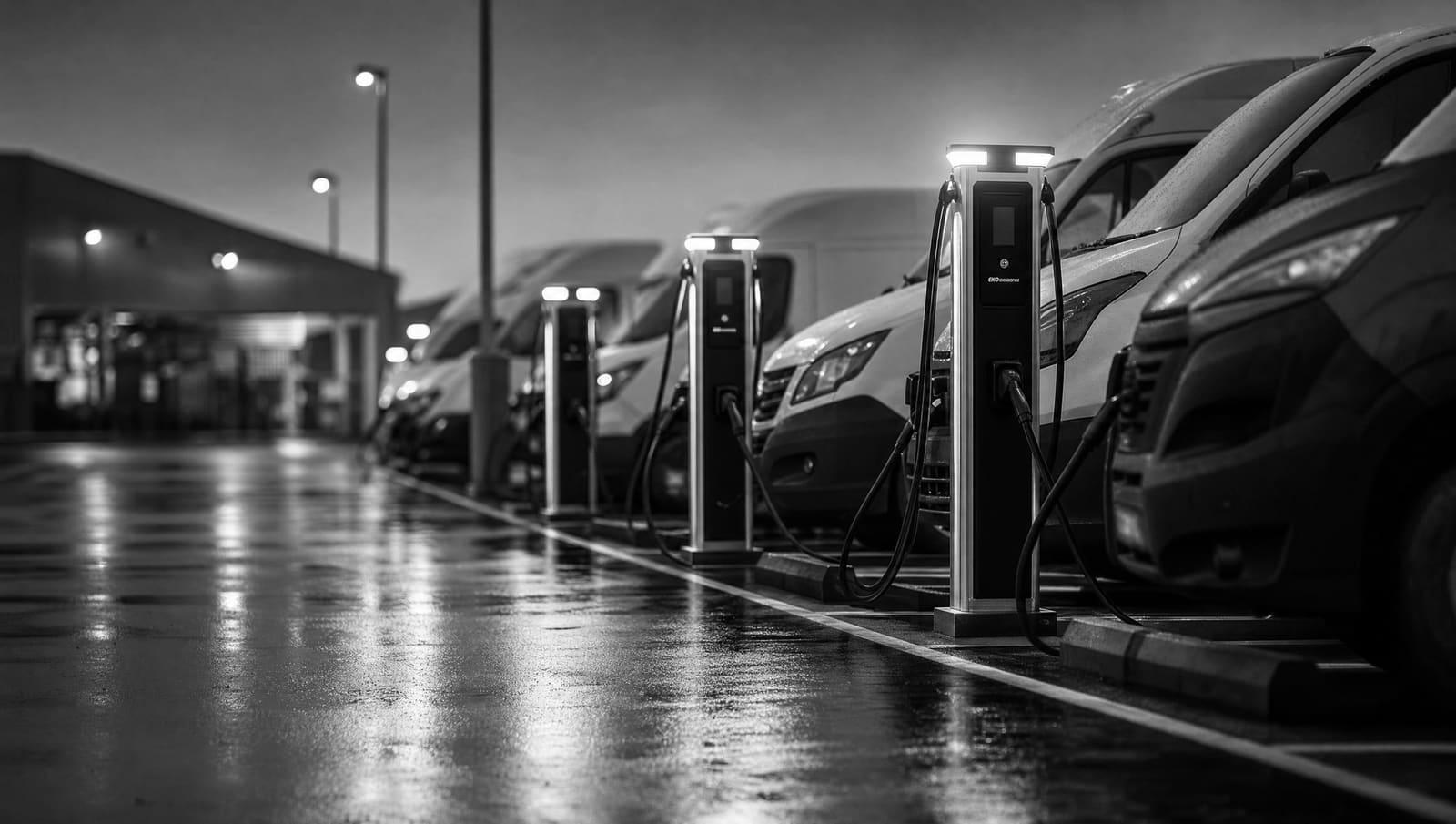
Commercial EV charger installation in Sioux Falls.
A complete commercial installation covers the site and electrical assessment, charger selection, utility coordination, design, permitting, construction, inspection, network setup, testing, and turnover. Level 2 charging often connects through commercial panels for vehicles parked for hours. DC fast charging can require much larger electrical equipment, added utility work, and a longer development plan.
The site review must verify available power, parking time, cable routes, equipment locations, communications, accessibility needs, and room for future chargers.
Start with operations
Choose the charging plan before choosing the charger
The right charger is the one that gives each vehicle enough energy before it must leave. Begin with who will charge, how long vehicles stay, and how many may connect at once. A workplace may value steady charging across a full shift. A fleet may need firm departure targets. A public site may need access control, payment, clear signs, and reliable driver support.
These choices affect more than the station. They shape electrical demand, parking layout, networking, ownership, maintenance, and the utility conversation. They also help prevent a common buying mistake: paying for charging speed that vehicles cannot use or operations do not need. Write the operating plan first, then ask bidders to design around it.
Scope control
The budget lives in the full installation, not only the charger
A useful budget separates equipment from the work needed to make it operate. Compare these lines across proposals and ask bidders to identify allowances, exclusions, and unresolved conditions.
Equipment fit
Level 2 and DC fast charging create different projects
Level 2 equipment supplies AC power, while the vehicle converts that power for its battery. It is often a practical fit when cars or light-duty vehicles remain parked for hours. A commercial Level 2 project still needs careful load calculations, circuiting, mounting, cable management, signs, communications, and a plan for simultaneous use. Several ports may create a meaningful combined building load even when each port seems modest alone.
DC fast charging converts power outside the vehicle and delivers DC power to the battery. Faster charging changes the scale of the electrical design. The project may need substantial distribution equipment, cooling, protective devices, metering, and utility coordination. Equipment placement must also allow service access and safe vehicle movement.
Do not compare the two options by nameplate output alone. Vehicle acceptance limits, battery condition, shared power, parking time, and operating goals affect the useful result. Ask the designer to show how the proposed system serves real vehicles during the busiest expected charging period.
Complexity check
What makes one installation simpler than another?
The charger count does not tell the whole story. Existing capacity, construction routes, utility involvement, networking, and operating rules determine how much design and coordination the project needs.
Lower complexity
Power and parking already align
Available panel capacity, short wiring routes, suitable mounting areas, clear communications, and long vehicle dwell times can reduce the amount of new infrastructure.
Higher complexity
The site needs new capacity or major civil work
Service changes, long trenching routes, pavement restoration, fast charging, payment systems, or phased occupied-site work require more engineering and coordination.
Site assessment
A site walk should turn unknowns into a buildable scope
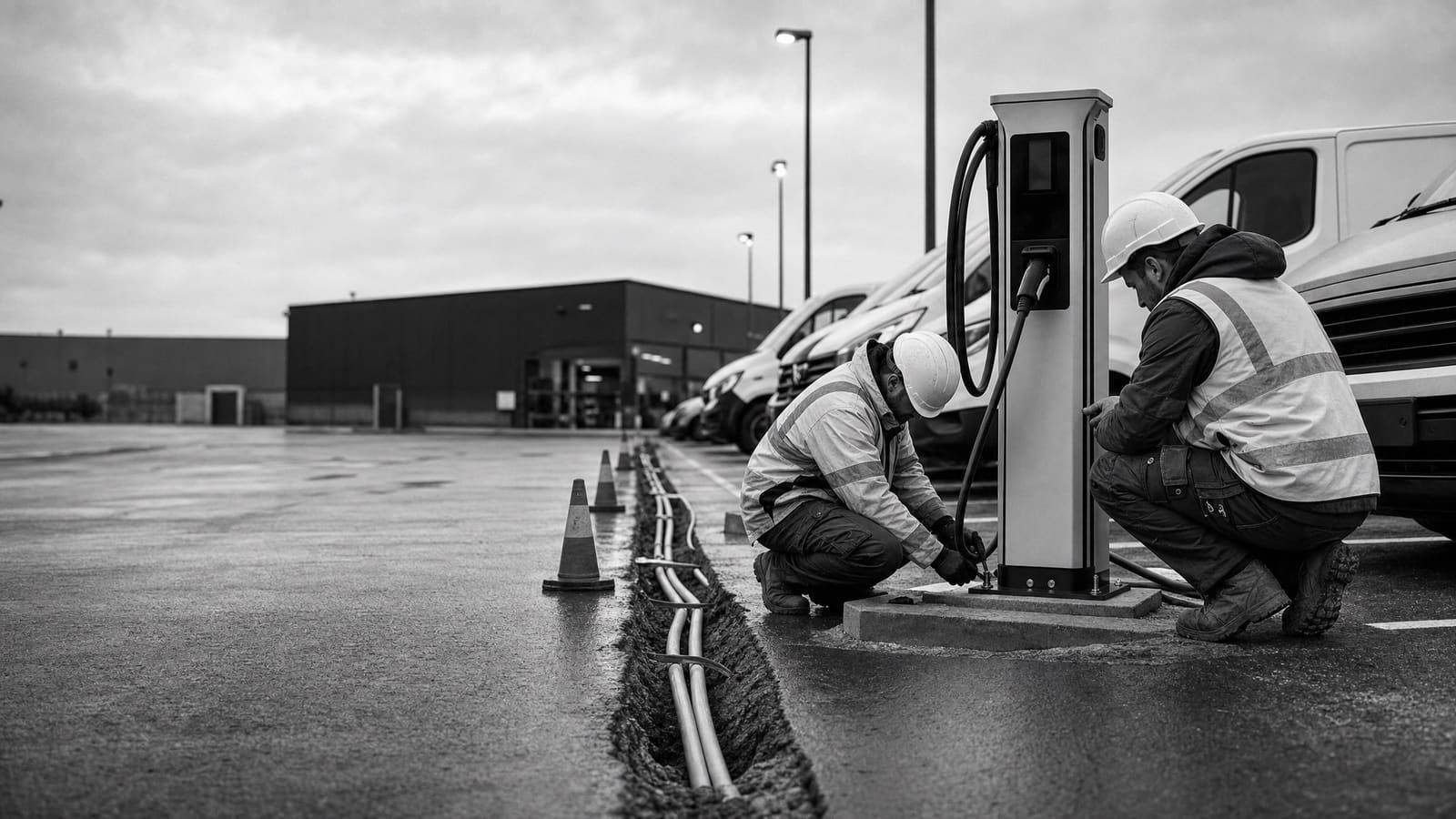
Begin at the electrical service, not at the parking stall. The reviewer should record service and panel information, identify likely connection points, examine available spaces, and trace a realistic route to the charging area. The review should also note obstacles such as finished interiors, pavement, landscaping, drainage features, vehicle lanes, and areas that must remain open.
At the parking area, confirm how vehicles enter, park, and leave. Charger position and cable reach should work without stretching cords across walking paths or relying on drivers to park perfectly. The design should account for signs, protective equipment, lighting, communications, maintenance access, and any accessibility requirements that apply to the project.
The assessment should then connect these field conditions to a load study and operating plan. If available capacity is limited, the designer can compare fewer ports, lower output, managed charging, staged construction, or an electrical upgrade. That comparison is more useful than a proposal built on an unverified assumption.
Ask for the assumptions in writing
The proposal should state the observed electrical conditions, expected charging load, route used for pricing, surface restoration, utility dependencies, and items that still require field verification.
Operating model
Decide who owns the station experience after construction
Commercial charging continues to create work after energization. Someone must manage driver access, pricing, user questions, software accounts, fault notices, repairs, and changes to parking policy. A networked station can support data collection, payment, remote controls, and monitoring, but those features may bring recurring fees and another service relationship.
Simple equipment may reduce software needs, yet it can provide less control over access and reporting. The right model depends on the purpose of the site. Put ownership of every operating task in writing before procurement so the equipment, network, and service plan support the same goal.
Site-owned operation
Keep direct control
The facility controls equipment and policy but must assign staff or service partners to manage accounts, drivers, maintenance, and repairs.
Managed operation
Buy defined support
A service provider may handle selected operating duties. Compare contract term, fees, data access, response duties, and equipment restrictions.
Project delivery
Coordinate design, utility work, permits, and procurement
A commercial EV charging schedule has several linked tracks. The design team develops the electrical and site plan. The utility reviews near-term and future charging needs when utility work is required. The permitting authority reviews the submitted work, and inspectors confirm completed construction. Equipment procurement must fit those approvals instead of getting ahead of them.
Assign one party to maintain the schedule and dependency list. A charger delivery date is not an energization date. Construction may depend on approved drawings, available electrical gear, utility decisions, inspections, communications, and site access. The proposal should show which party owns each task and what information the facility must provide.
For public-facing equipment, include the launch work as well. Set access rules, payment settings, driver instructions, signs, support contacts, and station-listing responsibilities before opening the chargers. For workplace or fleet equipment, train the people who will manage vehicles and respond to faults. Turnover should leave the owner with approved drawings, equipment records, warranties, network credentials, test results, and clear support contacts.
Future planning
Build the first phase without trapping the second
Phasing can control initial spending while preserving a useful path to growth. The first phase may install only the ports needed now, while the design reserves panel space, equipment locations, conduit routes, or other practical provisions for later work. The future phase still needs review when it is built, but early planning can reduce the chance that finished construction must be opened again.
Ask for a near-term and long-term charging schedule. Then have the designer show how many vehicles charge at once, the requested output, and the resulting building demand. Managed charging may let software allocate available power among connected vehicles. This can help align charging with the electrical system, but it does not create energy or guarantee that every vehicle will meet an aggressive departure target. The control plan must be tested against actual schedules.
Evaluate lifetime cost as well as the first invoice. Include network subscriptions, payment processing where relevant, inspections, preventive care, repairs, replacement parts, communications, and staff time. For a separate discussion of project drivers, review commercial EV charging cost.
Quote checklist
Five items every comparable installation quote should show
Give bidders the same operating goals and ask them to return the same core details. Clear proposals make differences in scope, risk, and long-term obligations easier to see.
01
Defined charging performance
Ports, output, vehicle assumptions, dwell time, simultaneous use, and any power sharing.
02
Verified electrical basis
Connection point, load assumptions, service needs, metering, protective equipment, and utility dependencies.
03
Complete construction scope
Routing, trenching, mounting, protection, signs, restoration, communications, testing, and site access.
04
Approvals and schedule ownership
Design, permits, inspections, utility tasks, procurement milestones, exclusions, and responsible parties.
05
Turnover and operating costs
Training, records, warranties, software fees, payment fees, maintenance, monitoring, and support responsibilities.
Keep planning locally
Related EV charging pages in Sioux Falls
Get a defensible number
Price the equipment and the building together.
Send the address, operating target, and target opening date. Flux will identify what must be verified before the project can be priced.
Price my chargersQuestions
Straight answers.
What is included in commercial EV charger installation?
A complete scope normally includes site assessment, load review, charger and mounting selection, electrical design, utility coordination when needed, permitting, equipment procurement, electrical and civil construction, inspection, network activation, testing, training, and turnover documents. The quote should say exactly which party owns each task.
Should our Sioux Falls facility install Level 2 or DC fast charging?
Choose from vehicle schedules, not from speed alone. Level 2 often fits vehicles parked for hours, including workplace and overnight fleet use. DC fast charging is better suited to short turnaround needs, but it can require much larger electrical infrastructure and closer utility coordination. A charging-demand study should test both choices against actual departures.
Can our existing electrical service support EV chargers?
That requires a site-specific load review. The assessment should examine the service, panels, current building demand, proposed charging load, and expansion plan. If capacity is constrained, compare managed charging, lower output, fewer initial ports, phased work, and a service upgrade before selecting a solution.
Do commercial chargers need to be networked?
Not always. Networking can provide access control, payment, usage data, remote settings, and fault monitoring. Those features may require communications and recurring fees. A private fleet with simple operating rules may need different controls than a public charging site. Decide which functions matter before choosing hardware.
What can delay a commercial charging project?
Common schedule dependencies include incomplete site information, redesign after equipment selection, utility work, permitting and inspections, long equipment lead times, communications setup, and construction in an active parking area. A useful schedule names each dependency, responsible party, and decision deadline.
How should we compare EV charger installation bids?
Use the same charger performance and operating requirements for every bidder. Compare the electrical basis, construction route, restoration, utility assumptions, permits, commissioning, software, recurring fees, warranties, maintenance, exclusions, and allowances. A low price is not comparable if major work is missing or left undefined.
Should we install extra capacity for future chargers?
Plan for expansion even if the first phase is small. Ask the designer to consider future charger locations, conduit routes, electrical space, communications, and expected demand. Only include provisions that have a clear use; vague claims of being future-ready are less helpful than a documented second-phase plan.
What should happen during commissioning and turnover?
Every port should be energized and tested, including charging sessions, power sharing, access controls, payment functions where used, communications, and fault reporting. The owner should receive approved drawings, equipment records, warranties, network credentials, test results, training, and support contacts.
Sources used for this guide
- [1]afdc.energy.gov — Alternative Fuels Data Center: Procurement and Installation for Electric Vehicle Charging Infrastructure
- [2]betterbuildingssolutioncenter.energy.gov — DOE Better Buildings Commercial EV Charging Infrastructure Guide
- [3]driveelectric.gov — Public electric vehicle charging infrastructure playbook · Joint Office of Energy and Transportation
- [4]energy.gov — DOE Federal Workplace Charging Program Guide