Direct answer
Commercial EV charger installation in Garland.
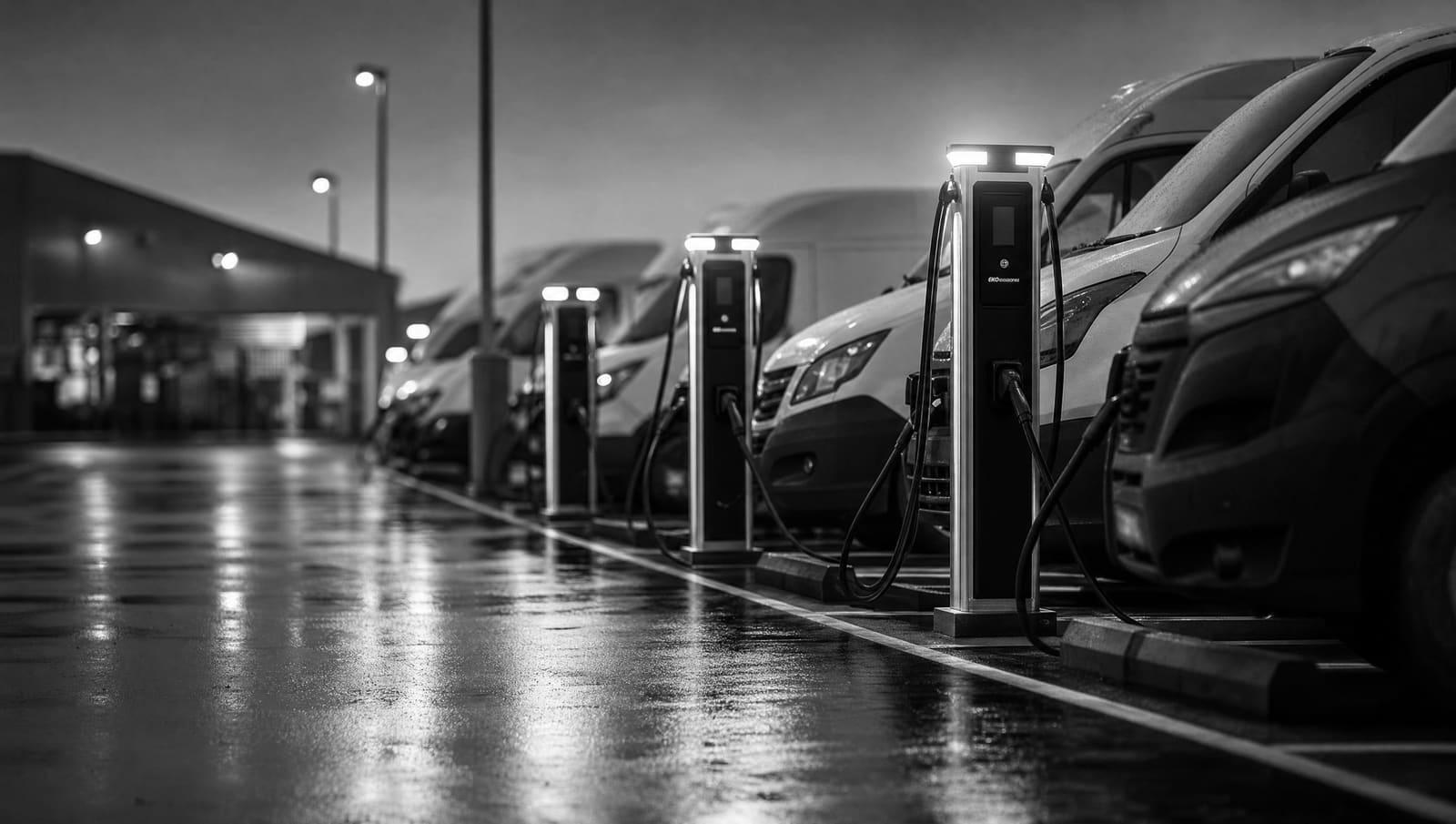
A commercial installation starts with a site and electrical assessment. It then moves through charger selection, utility coordination, design, permitting, construction, activation, testing, and turnover. Level 2 charging often connects through commercial panels. DC fast charging places much greater demands on service capacity, utility equipment, switchgear, cooling, and site construction.
The site review must verify available power, parking dwell time, cable routes, accessibility needs, communications, drainage, security, and room for later chargers.
Operating plan
Choose charging around the vehicles, not the charger catalog
The first decision is how long vehicles will remain parked. Employees, tenants, and many visitors may stay for hours, which can make Level 2 charging a practical match. Public drivers or fleet vehicles with short stops may need faster energy delivery. That can point toward DC fast charging, but it also creates a larger electrical and construction project.
Next, decide who may charge and what the site must record. A private fleet may need driver access controls and vehicle data without public payment. A workplace may need employee rules, guest access, or cost recovery. A public station may need payment processing, pricing controls, remote support, and listing in charging maps.
Finally, set an expansion plan. The opening phase may include only the chargers needed now, while conduit, panels, pads, and communications are arranged for later ports. This can reduce repeated disruption, but only when the future load and physical layout are considered during design.
Quote structure
The main installation budget lines
A useful proposal separates equipment from the work that makes it usable. Review commercial charging cost factors as a complete system, not as a charger price alone.
Equipment choice
Level 2 and DC fast charging create different projects
Level 2 equipment supplies AC power, while the vehicle converts that power for its battery. It commonly fits workplaces, multifamily properties, and other locations where vehicles remain parked. The design still must account for simultaneous charging, panel loading, cable reach, mounting, communications, and future ports. Networked equipment can add access controls, session records, payment tools, and remote monitoring.
DC fast equipment converts AC power outside the vehicle and delivers DC power to the battery. That faster transfer can suit public charging or fleets that cannot remain parked for long. It can also require much more electrical capacity and additional equipment. Utility service, transformers, switchgear, equipment pads, cooling, protective barriers, and construction sequencing can become central parts of the job.
Do not specify the highest available charger output by default. A vehicle may accept less power than the charger can provide, and charging speed also depends on the battery and its state of charge. Start with the operating need, then find the lowest-complexity system that meets it. That approach keeps equipment, electrical infrastructure, and software aligned.

Site conditions
What makes an installation simpler or more complex
Two projects with the same port count can require very different work. Existing capacity, distance to parking, pavement, communications, and utility involvement matter as much as charger selection.
Lower complexity
Capacity and parking are already aligned
The building has suitable distribution capacity, the charging spaces are near the electrical source, routing is open, communications are available, and the work leaves room for safe access and expansion.
Higher complexity
New infrastructure must reach the parking area
The project needs service changes, transformers, switchgear, long underground routes, pavement restoration, equipment pads, protection from vehicles, network improvements, or staged work around active operations.
Site assessment
Turn the operating plan into an installable design
A serious site review begins at the electrical service and ends at each proposed charging space. The reviewer should document service and distribution equipment, existing loads, meter locations, panel space, routing obstacles, parking dimensions, cable reach, communications, lighting, signage, security, and places where equipment could be struck. The review should also identify weather exposure and any operating hours that limit construction.
The load analysis must consider more than the nameplate rating of one charger. It should test the planned number of ports, expected simultaneous use, other building loads, and future expansion. If the existing system cannot support unrestricted charging, the team can compare a service upgrade with managed charging or a phased deployment. Managed charging may control how available power is shared, but its fit depends on vehicle schedules and the minimum energy each vehicle needs.
The result should be a written basis of design. It should state the users, charging window, equipment type, port count, target power, access rules, network needs, electrical approach, construction limits, and expansion assumptions.
Ask for the assumptions in writing
If a quote does not state vehicle dwell time, simultaneous charging, available capacity, route length, network scope, and expansion assumptions, it is difficult to compare or trust.
Ownership and operation
Decide who owns the equipment and who keeps it working
Commercial charging continues to create work after construction. Someone must manage users, pricing, software accounts, station status, repairs, warranties, and driver support. Those duties may stay with the facility, sit with a charging provider, or be divided between several parties.
Define those responsibilities during procurement. Confirm who owns the chargers and electrical infrastructure, who controls station data, and whether software can move to another provider. Ask what happens when network service ends and whether basic charging can continue. Set a process for alarms, damaged cables, failed payment sessions, replacement parts, and software updates. The final agreement should make response duties clear instead of leaving them for the facilities team to discover after opening day.
Facility-owned
More control, more direct responsibility
The owner can control equipment, access, pricing, and vendors, but must assign staff or contractors to monitoring, accounts, maintenance, warranties, and driver support.
Provider-supported
Bundled services with contract dependencies
A provider may handle software and support. Review recurring fees, data access, service levels, hardware compatibility, contract exit terms, and charging behavior during a network outage.
Procurement and phasing
Buy the system in the order that reduces rework
Set the operating requirements before choosing a charger brand. Then complete the site assessment, load study, preliminary layout, and utility discussion. This sequence helps reveal whether the preferred equipment fits the building and whether long-lead electrical work may control the schedule. Confirm logistics and expected delivery before construction dates are fixed.
For phased projects, separate installed ports from make-ready capacity. The first phase may install chargers for current demand while providing selected pathways, panels, pads, or communications for a later phase. Avoid vague promises that a site is “future-ready.” The documents should show exactly which future elements are included and which would still require demolition, utility work, or new equipment.
Compare lifetime obligations as well as initial installation costs. Include network subscriptions, payment processing, electricity-rate effects, inspections, maintenance, replacement parts, warranties, and staff time. Incentives and tax provisions can change. As of August 2026, verify current eligibility, location rules, deadlines, and tax treatment with the responsible program and qualified advisers before placing them in the financial plan.
Proposal review
Five things every comparable quote should show
Require the same scope categories from each bidder. A low total is not comparable when it leaves design, utility work, pavement repair, networking, or commissioning outside the price.
01
A defined charging basis
Users, vehicles, dwell time, port count, power, access, payment, and expansion assumptions.
02
A clear electrical scope
Capacity findings, panels, switchgear, metering, conductors, transformers, protection, and utility responsibilities.
03
A complete site-work scope
Routes, trenching, pads, mounting, pavement restoration, barriers, signage, communications, and excluded conditions.
04
An approval and schedule plan
Design, permitting, inspections, utility milestones, equipment delivery, construction phases, and dependencies.
05
Commissioning and operating terms
Activation, test sessions, training, documents, warranties, software fees, maintenance, and support ownership.
Keep planning locally
Related EV charging pages in Garland
Get a defensible number
Price the equipment and the building together.
Send the address, operating target, and target opening date. Flux will identify what must be verified before the project can be priced.
Price my chargersQuestions
Straight answers.
What is included in commercial EV charger installation?
A complete scope can include site assessment, load analysis, equipment selection, electrical and civil design, utility coordination, permitting, construction, charger mounting, networking, activation, inspections, commissioning, training, and turnover documents. The proposal should identify any work assigned to the owner, utility, network provider, or another contractor.
Should a commercial property choose Level 2 or DC fast charging?
Choose from the required vehicle turnaround. Level 2 often fits vehicles parked for hours. DC fast charging may fit short public stops or fleet routes that need rapid energy delivery. DC fast charging usually creates a more demanding service, equipment, utility, and civil design, so speed should be justified by the operating plan.
Can chargers use the building's existing electrical service?
Possibly, but the answer requires a load assessment. The review should consider present building loads, charger ratings, simultaneous use, operating schedules, and future expansion. When capacity is limited, the team can compare managed charging, phasing, distribution changes, and a service upgrade rather than assuming one solution.
Does commercial charging equipment need a network?
Not every installation needs the same network features. Networking may support user authentication, payment, pricing, session data, remote monitoring, energy management, and software updates. Ask about recurring fees, cellular or internet requirements, data ownership, provider changes, and whether charging continues during a communications outage.
When should the electric utility become involved?
Engage the utility during planning when the project may affect service capacity, metering, transformers, rates, or other utility equipment. Early coordination can expose requirements and schedule dependencies before equipment is ordered or construction dates are promised. The proposal should say who manages each utility submission and follow-up.
How should a business compare EV charger installation quotes?
Normalize every proposal around the same port count, power, access rules, network functions, expansion plan, and site assumptions. Then compare engineering, utility work, electrical equipment, trenching, restoration, charger hardware, software, commissioning, warranties, maintenance, exclusions, allowances, and recurring fees. Clarify who carries the risk for unknown site conditions.
What happens during commissioning?
Commissioning confirms that the installed system works as intended. It can include electrical checks, charger configuration, network activation, access and payment tests, charging sessions on every port, load-management checks, alarm verification, labeling, staff training, and delivery of warranties, settings, drawings, contacts, and maintenance information.
Can a commercial installation be built in phases?
Yes. A phased project can install the ports needed now while preparing selected electrical and physical infrastructure for future chargers. The design should state future load assumptions and show which conduit, panels, pads, communications, and utility work are included now. This prevents “future-ready” from becoming an undefined sales claim.
Sources used for this guide
- [1]afdc.energy.gov — Alternative Fuels Data Center: Procurement and Installation for Electric Vehicle Charging Infrastructure
- [2]betterbuildingssolutioncenter.energy.gov — DOE Better Buildings Commercial EV Charging Infrastructure Guide
- [3]driveelectric.gov — Public electric vehicle charging infrastructure playbook · Joint Office of Energy and Transportation
- [4]energy.gov — DOE Federal Workplace Charging Program Guide