Direct answer
Commercial EV charger installation in Chula Vista.
A complete commercial installation covers site and electrical assessment, charger selection, utility coordination, design, permitting, construction, inspections, network setup, commissioning, and turnover. Level 2 charging often connects through the building distribution system. DC fast charging can require much larger electrical equipment and deeper utility involvement.
The site review must verify usable electrical capacity, power-to-parking distance, vehicle dwell time, trenching conditions, communications, access, and room for later expansion.
Start with operations
Choose the charging experience before choosing hardware
The right station is the one that serves the vehicles while they are already parked. A workplace may have hours to deliver a charge. A fleet vehicle may have a short window between routes. Public charging may need access controls, pricing, status reporting, and clear driver instructions.
Define who can charge, how long vehicles stay, how much energy they need, and whether drivers will pay. Then set the number of ports and power available to each one. This approach keeps the electrical design tied to a real operating need. It also helps avoid buying high-power equipment that vehicles cannot use well or low-power equipment that cannot finish the job.
Budget structure
What belongs in the installation budget
A useful budget separates equipment from the work needed to bring safe, usable power to each parking space. Review commercial EV charging cost only after the scope is clear.
Equipment choice
Level 2 and DC fast charging create different projects
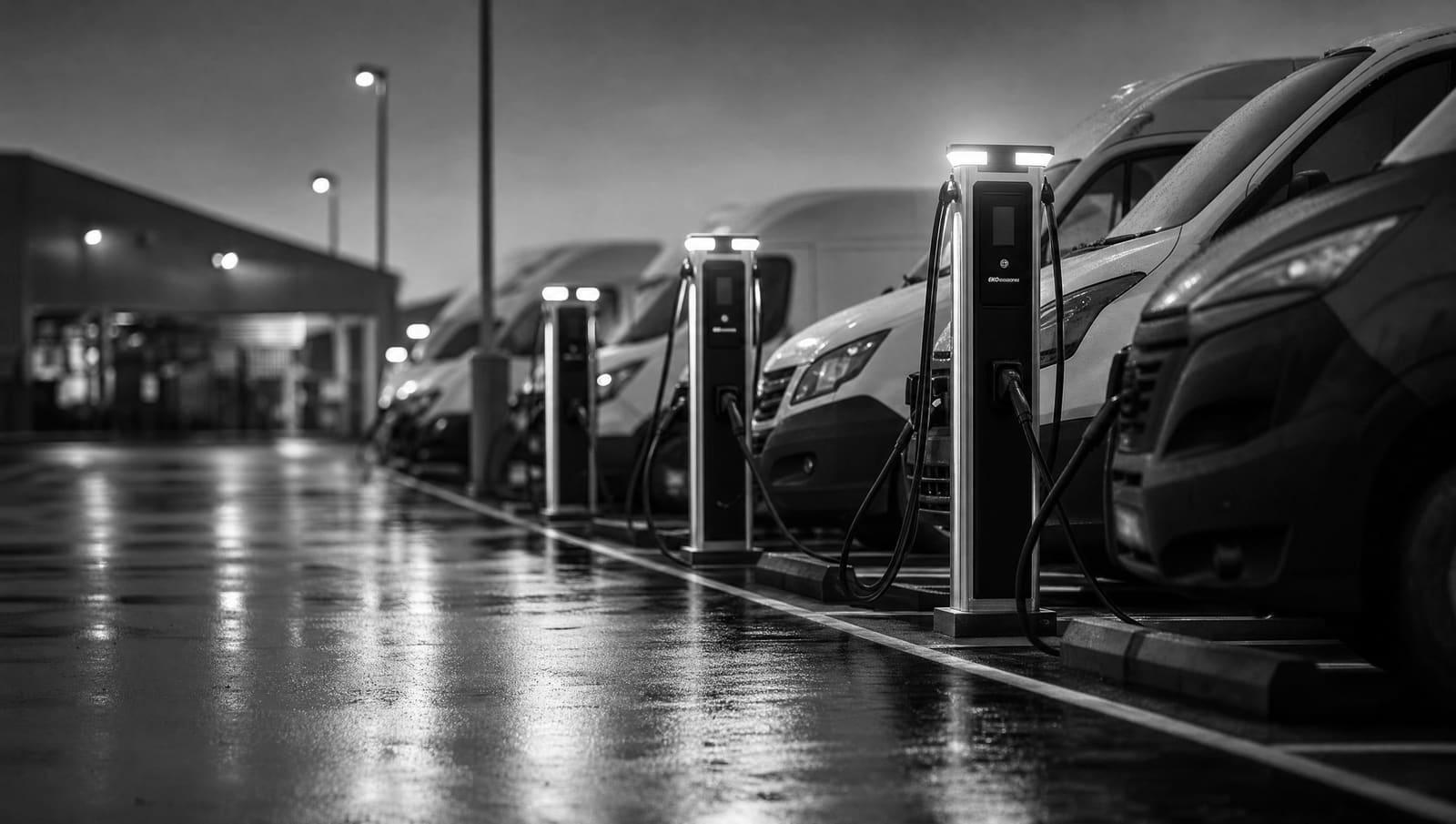
Level 2 equipment uses AC power, with the vehicle converting that power for its battery. Commercial units commonly connect to an electrical panel or subpanel. This can suit workplaces, longer customer visits, overnight fleet parking, and other settings where vehicles remain parked. A network can add driver access, session records, pricing, and remote status tools.
DC fast equipment converts power outside the vehicle and delivers DC power to the battery. That faster operating goal changes the project around it. The design may need larger conductors, switchgear, service equipment, cooling support within the charger, and closer utility review. Equipment placement also matters because drivers need safe circulation and cables must reach supported vehicle inlets.
Do not compare Level 2 and DC fast units by nameplate power alone. Ask how many vehicles must be ready, when they arrive, how long they stay, and what their batteries can accept. A mixed design can be practical when most vehicles have long dwell times but a smaller group needs quick recovery.
Complexity check
What makes one installation simpler than another
Two projects with the same number of ports can require very different work. The dividing line is usually the condition of the existing electrical system and the path between power and parking.
Lower complexity
Capacity and a clear route already exist
The panel has verified capacity, parking is close to the electrical room, conduit routing is direct, communications are available, and the first phase leaves a sensible expansion path.
Higher complexity
Power or construction must be added
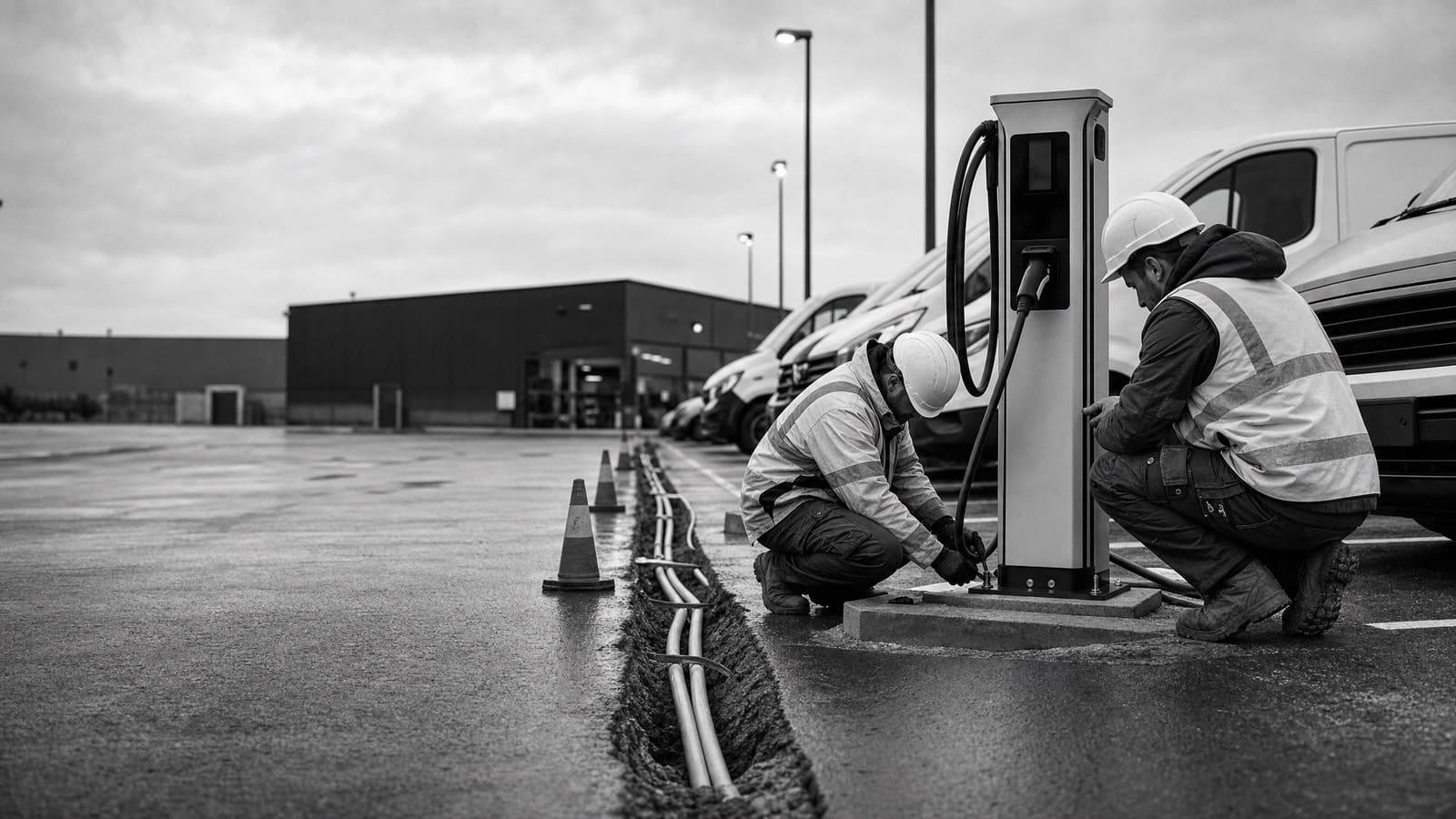
The scope may include service changes, new distribution equipment, long trenching, pavement restoration, protective barriers, network connectivity work, or construction that must be phased around occupied parking.
Site review
Measure the electrical and parking conditions before procurement
A commercial site review should trace the project from the incoming electrical service to the proposed charging spaces. The reviewer should document service and panel information, existing loads, available breaker space, likely equipment locations, conduit routes, trench surfaces, meter conditions, communications, and physical protection needs. Parking observations should cover vehicle flow, cable reach, space turnover, operating hours, and areas that must remain open during construction.
The next step is an electrical load assessment. Existing equipment labels alone do not prove that capacity is available. The design team needs a supported view of building demand and the proposed charging load. If full simultaneous charging does not fit, managed charging may divide available power among ports or schedule fleet sessions. That option should be evaluated against the operating plan, not treated as an automatic substitute for adequate capacity.
The resulting scope should show assumptions and unresolved items. If utility work, subsurface conditions, or existing equipment ratings remain unknown, the proposal should identify how and when those questions will be closed.
Bring operating data to the site review
Share vehicle types, arrival and departure times, daily energy needs, parking rules, expected growth, and any payment or reporting needs. Better inputs produce a more useful design.
Operating model
Ownership and software decisions continue after construction
The buyer should know who owns the chargers, who controls the network account, and who responds when a port stops working. Networked equipment can support access rules, utilization records, payment, and remote monitoring, but it may also carry recurring fees and depend on reliable communications.
Non-networked equipment may reduce software needs, yet it offers fewer tools for public payment, driver management, and remote troubleshooting. Neither model is right for every facility. Put account ownership, data access, warranty handling, software renewals, and maintenance responsibility in writing before equipment is ordered.
Owner-operated
More control and more responsibility
The property owner controls equipment and operating rules but must manage software, driver support, maintenance, warranties, and replacement planning.
Third-party operated
Shared duties require clear terms
Confirm equipment ownership, revenue handling, data rights, service levels, contract length, renewal terms, and what happens when the agreement ends.
Procurement
Buy the full charging system, not an isolated charger
A sound procurement package starts with performance requirements. State the intended users, required ports, parking windows, access method, reporting needs, payment needs, uptime expectations, and expansion goal. Then let the electrical design define compatible equipment. Confirm connector support for the vehicles expected at the site instead of assuming every charger serves every vehicle in the same way.
Compare total ownership needs as well as installation scope. Review software subscriptions, connectivity, payment processing, warranty coverage, replacement parts, remote support, field service, and the process for transferring network administration. Ask whether a charger can continue basic service if communications fail and how operating data can be exported.
Phasing can protect cash flow and reduce disruption when it is designed from the start. A first phase may install fewer active ports while preparing pathways or distribution for future growth. The proposal should distinguish installed capacity, reserved capacity, empty conduit, spare equipment space, and work that will still be required later. Those terms are not interchangeable.
Quote comparison
Five items every comparable proposal should show
Put proposals into the same structure before comparing them. A low total can reflect a narrower scope, unresolved allowance, excluded restoration, or missing operating expense.
01
Defined design basis
Show users, vehicle needs, port count, charger power, access method, and future-phase assumptions.
02
Electrical and civil scope
List panels, breakers, conductors, conduit, trenching, pads, protection, striping, signage, and restoration.
03
Approvals and coordination
State responsibility for engineering, permits, inspections, utility communication, corrections, and closeout documents.
04
Equipment and operating fees
Identify exact hardware, warranties, activation, subscriptions, connectivity, payment charges, and account ownership.
05
Schedule, exclusions, and acceptance
Show dependencies, allowances, excluded work, commissioning tests, training, and the standard for final turnover.
Keep planning locally
Related EV charging pages in Chula Vista
Get a defensible number
Price the equipment and the building together.
Send the address, operating target, and target opening date. Flux will identify what must be verified before the project can be priced.
Price my chargersQuestions
Straight answers.
What does a commercial EV charger installation include?
A complete scope includes site assessment, electrical load review, charger and network selection, design, utility coordination, permitting, equipment procurement, electrical and civil construction, inspections, activation, test sessions, training, and turnover documents. The proposal should also identify software, maintenance, and future expansion responsibilities.
Should our Chula Vista property use Level 2 or DC fast charging?
Choose from the operating need. Level 2 often fits vehicles parked for hours. DC fast charging is meant for shorter turnaround and usually creates a larger electrical project. Use vehicle schedules, daily energy needs, supported connectors, and available capacity to make the decision.
Can chargers be installed without upgrading electrical service?
Sometimes. A load assessment may find usable capacity, or managed charging may keep simultaneous demand within a set limit. Other sites need new panels, distribution equipment, or service work. The decision requires verified electrical information and a charging schedule, not a guess from the service rating.
When should the electric utility be involved?
Bring the utility in during planning when the project may affect service, metering, rates, or upstream equipment. Early coordination can expose long-lead work before charger procurement or construction commitments are made.
Should we apply for an EV charging incentive before ordering equipment?
Check current eligibility and program rules before committing funds. Incentives, tax provisions, eligible locations, equipment rules, application steps, and deadlines can change. Treat any benefit as confirmed only after the responsible program or tax professional verifies it for the site and project.
What should happen during commissioning?
Each port should be energized, configured, and tested with a real or suitable test session. Verify access controls, payment behavior when used, network reporting, fault reporting, cable reach, labels, and driver instructions. The owner should receive equipment records, warranties, account access, inspection closeout, and operating guidance.
How can we prepare for more chargers later?
Set the long-term port goal during the first design. Evaluate distribution space, conduit routes, trench capacity, equipment locations, communications, and parking layout for that goal. The quote should clearly separate what is installed now from what is merely reserved or planned.
What information should we gather before requesting proposals?
Gather vehicle types, arrival and departure times, daily energy needs, parking maps, operating hours, known electrical documents, access rules, payment needs, reporting needs, expected growth, and construction restrictions. Sharing the same information with every bidder makes scope comparisons more reliable.
Sources used for this guide
- [1]afdc.energy.gov — Alternative Fuels Data Center: Procurement and Installation for Electric Vehicle Charging Infrastructure
- [2]betterbuildingssolutioncenter.energy.gov — DOE Better Buildings Commercial EV Charging Infrastructure Guide
- [3]driveelectric.gov — Public electric vehicle charging infrastructure playbook · Joint Office of Energy and Transportation
- [4]energy.gov — DOE Federal Workplace Charging Program Guide