Direct answer
Commercial EV charger installation in Santa Ana.
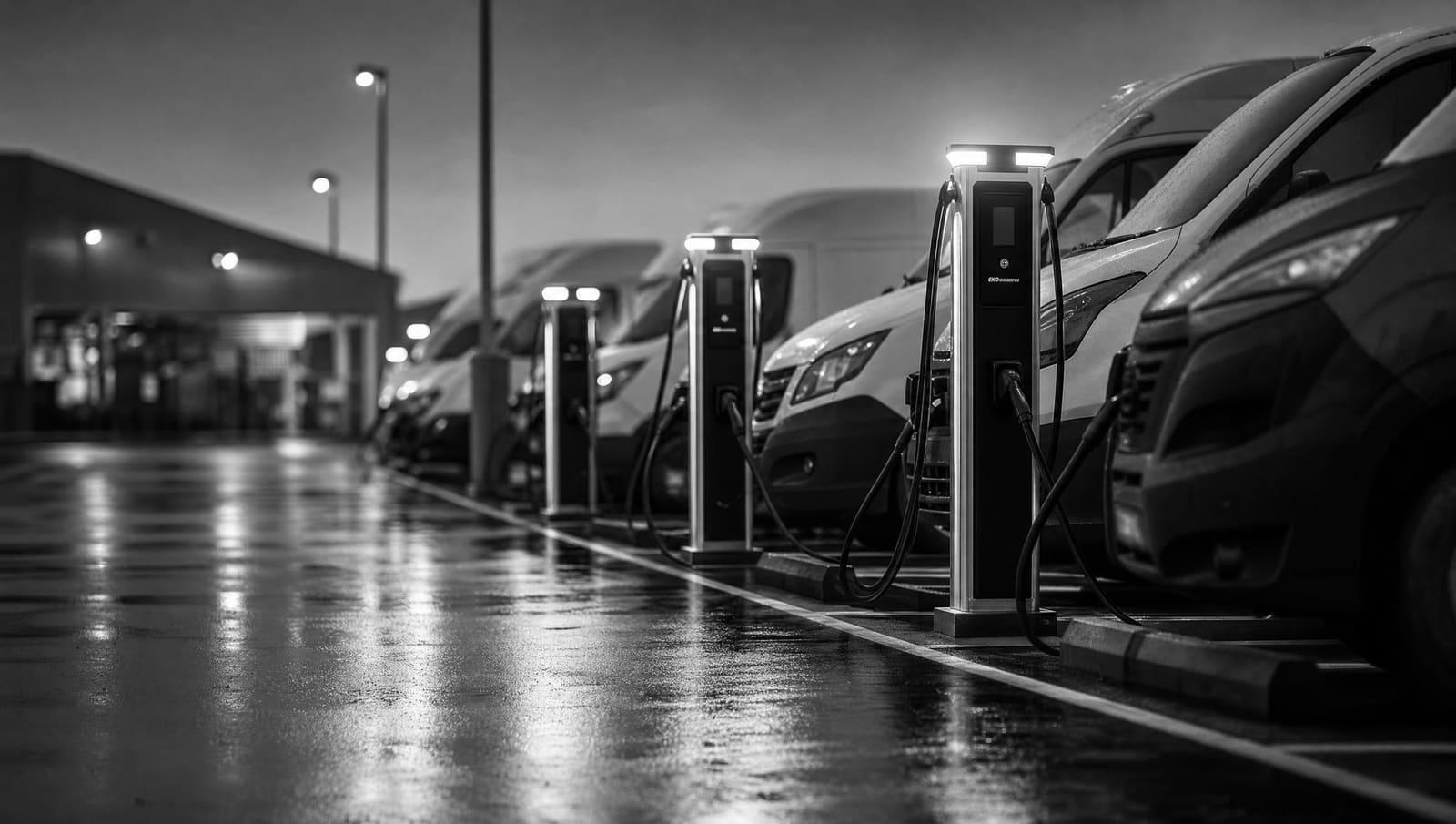
A commercial installation starts with a site and electrical assessment. It then moves through charger selection, utility coordination, design, permitting, construction, network setup, inspection, commissioning, and turnover. Level 2 charging often serves vehicles parked for hours. DC fast charging supports shorter stops but can require a more demanding electrical and utility plan.
The site review must verify available power, parking use, cable routes, civil work, communications, accessibility needs, and room for future chargers.
Operating plan
Make three choices before selecting equipment
The charger is only one part of the system. First decide who will charge, how long vehicles will stay, and what must happen when several vehicles connect at once. These choices shape power demand, parking layout, software, payment features, and support.
A workplace may value steady charging across a full shift. A fleet may need each vehicle ready before a set departure. A public site may need payment, driver support, clear signs, and dependable network service. Write these needs down before requesting proposals. That gives bidders the same operating target and reduces the chance of buying features that do not solve the real problem.
Also separate the opening-day plan from the long-term plan. A smaller first phase can work well when conduit, panels, communications, and parking layouts are designed for later expansion.
Quote structure
Where project budgets change
Ask for a line-item scope instead of one bundled number. The largest uncertainty often comes from existing site conditions, electrical upgrades, routing, and civil construction—not the charger alone. For broader budgeting guidance, review commercial EV charging costs.
Equipment selection
Level 2 and DC fast charging solve different jobs
Level 2 equipment uses AC power, while the vehicle converts that power for its battery. It commonly fits workplaces and other sites where vehicles remain parked long enough to charge over time. Commercial Level 2 equipment can include networking, metering, access controls, payment tools, communications, and load management. A proposal should state the power assigned to each port and what happens when many ports are active.
DC fast equipment performs the AC-to-DC conversion outside the vehicle. It can serve public charging or commercial fleets that need faster turnaround. That speed changes more than the charger. It may increase the need for service equipment, utility coordination, switchgear, cooling, protective hardware, and a carefully planned equipment area.
Do not select DC fast charging only because it is faster. Select it when vehicle schedules and charging demand require it. Likewise, do not assume every Level 2 port must always receive its maximum output. Managed charging may distribute available power according to departure times, priorities, or building load. Ask bidders to explain their operating assumptions, not just list charger ratings.

Project complexity
The same charger can lead to a very different installation
Equipment count alone does not define the job. Existing capacity, distance to parking, construction conditions, communications, and future plans determine how much infrastructure must surround the chargers.
Lower complexity
Capacity and parking align
The electrical source is near the stalls, usable capacity is confirmed, routing is open, communications are available, and the first phase fits without major service work.
Higher complexity
The site needs new infrastructure
Long routes, pavement cuts, new distribution equipment, utility work, multiple operating phases, payment systems, or DC fast charging add design and coordination.
Site assessment
Turn the parking plan into an electrical plan
A useful site review follows the full path from the electrical service to each charging space. The reviewer should examine available records, panels, distribution equipment, meter locations, likely cable routes, mounting conditions, vehicle movement, and communications. The review should also identify where assumptions still need testing or design work.
Parking behavior matters as much as electrical capacity. Chargers must be placed where users can reach them without creating unsafe cable paths or blocking normal circulation. Fleet projects should map parking assignments, arrival times, departure times, and charging priorities. Shared or public projects should address access rules, signs, payment, security, and driver assistance.
The assessment should compare present demand with planned expansion. Installing empty conduit, reserving panel space, or creating a scalable communications plan may reduce disruption later. That does not mean every future component must be bought now. It means the first phase should not create a dead end. Request a written basis of design so charger quantity, power, routing, software, and future capacity can be checked before construction pricing is finalized.
Ask for assumptions in writing
The site report should identify confirmed conditions, unresolved conditions, planned charger loads, routing assumptions, utility dependencies, and work excluded from the proposed price.
Ownership and operation
Decide who controls the system after turnover
Commercial charging equipment can involve separate owners for the site, electrical infrastructure, chargers, software, and network account. Put those relationships in writing. The facility team should know who receives alerts, changes access rules, handles payment issues, approves software renewals, and calls for repairs.
The operating plan should also cover electricity use. Metering and network data may help the owner understand demand, utilization, and billing. Managed charging can coordinate charger output with available building capacity or vehicle priorities. These tools add value only when someone is responsible for reviewing and acting on the information.
Before purchase, confirm what happens if a network agreement ends or a charger loses communications. Ask which functions remain available, who owns the data, and whether equipment can move to another supported network.
Owner-operated
More control, more responsibility
The facility controls policy and vendors but must manage subscriptions, users, maintenance, reporting, and replacement planning.
Third-party operated
Simpler administration, added dependency
A provider may handle more daily work, but contract terms, fees, data access, service levels, and exit rights matter.
Procurement
Buy a working charging system, not a box on a wall
A strong procurement package gives every bidder the same facts. Include the intended users, parking schedule, opening-day port count, future port count, charging-speed goal, access policy, payment needs, reporting needs, and desired turnover date. Provide available electrical records and a site plan, while making clear which conditions bidders must verify.
Separate required features from optional features. Required items may include specific access controls, uptime reporting, cable management, warranties, staff training, or integration with facility systems. Optional prices can show the effect of higher power, extra ports, additional conduit, longer service coverage, or a later phase. This structure makes alternatives easier to compare.
Evaluate total ownership needs as well as installation. Network fees, communications, payment processing, routine inspection, repairs, replacement parts, and software support can continue after construction. Ask how warranty service works and who supplies parts. Incentives and tax provisions can change, and eligibility may depend on the project location and other rules. Verify any current opportunity before placing it in the approved budget or schedule.
Bid comparison
Five things every comparable quote should show
Quotes are comparable only when scope boundaries are visible. Require the same operating goals and ask bidders to show these five items separately.
01
Design basis
Port count, power, users, dwell time, load assumptions, and expansion plan.
02
Complete construction scope
Equipment, electrical work, trenching, restoration, communications, signs, and protection.
03
Coordination responsibility
Utility, design, permit, inspection, network, and equipment-delivery tasks.
04
Allowances and exclusions
Unverified conditions, upgrade assumptions, owner work, and change-order triggers.
05
Turnover and support
Testing, training, documents, warranties, subscriptions, maintenance, and response process.
Keep planning locally
Related EV charging pages in Santa Ana
Get a defensible number
Price the equipment and the building together.
Send the address, operating target, and target opening date. Flux will identify what must be verified before the project can be priced.
Price my chargersQuestions
Straight answers.
What is included in commercial EV charger installation?
A complete scope can include site assessment, electrical load review, charger selection, utility coordination, design, permitting, equipment procurement, electrical and civil construction, mounting, networking, inspection, commissioning, training, and turnover documents. The proposal should clearly state which party owns each task.
Should our facility install Level 2 or DC fast chargers?
Use vehicle dwell time and operating need as the starting point. Level 2 often fits vehicles parked for hours. DC fast charging may fit short stops or fleets with tight turnaround needs, but it can create a larger electrical, utility, equipment, and construction scope. Some sites use both.
How do we know whether the existing electrical service can support charging?
The project team must review the service, panels, distribution equipment, existing demand, proposed charger load, and future plans. Equipment labels or spare breaker spaces alone do not confirm usable capacity. The resulting load analysis should support the design and identify any upgrade or managed-charging strategy.
What makes one commercial installation more complex than another?
Important factors include available electrical capacity, charger power, the distance between power and parking, trenching, pavement repair, mounting conditions, communications, utility work, parking access, software needs, and future expansion. DC fast charging can add significant electrical and equipment coordination.
Can managed charging reduce the need for an electrical upgrade?
It may help by sharing or scheduling available power across multiple ports, but it is not an automatic substitute for an upgrade. The design must still satisfy vehicle needs, building loads, equipment requirements, and applicable approvals. Ask the bidder to show the assumed power available to vehicles under busy conditions.
Should chargers be networked?
Networking can support access control, payment, utilization reports, alerts, remote management, and managed charging. It also introduces communications needs, subscriptions, vendor support, and possible payment fees. A private fleet with simple controls may need different features from a public or shared parking operation.
What should happen during commissioning?
The team should verify installation, energize the equipment, test every port, confirm communications and network functions, check access or payment rules, record equipment information, train responsible staff, and deliver warranties and operating documents. Turnover should also identify the process for alerts, repairs, and support.
How should we plan for more chargers later?
Set a realistic future port count before designing the first phase. The plan can reserve electrical space, conduit routes, equipment area, communications capacity, and usable parking positions. Ask for the future assumptions in writing so the first installation does not block a practical expansion path.
Are incentives or tax credits available for a Santa Ana project?
Programs, tax provisions, deadlines, funding levels, and geographic eligibility can change. Treat them as potential offsets until current eligibility is verified for the exact address, equipment, owner, and installation plan. Do not approve a project budget that depends on unconfirmed funding.
Sources used for this guide
- [1]afdc.energy.gov — Alternative Fuels Data Center: Procurement and Installation for Electric Vehicle Charging Infrastructure
- [2]betterbuildingssolutioncenter.energy.gov — DOE Better Buildings Commercial EV Charging Infrastructure Guide
- [3]driveelectric.gov — Public electric vehicle charging infrastructure playbook · Joint Office of Energy and Transportation
- [4]energy.gov — DOE Federal Workplace Charging Program Guide