Direct answer
Commercial EV charger installation in Fresno.
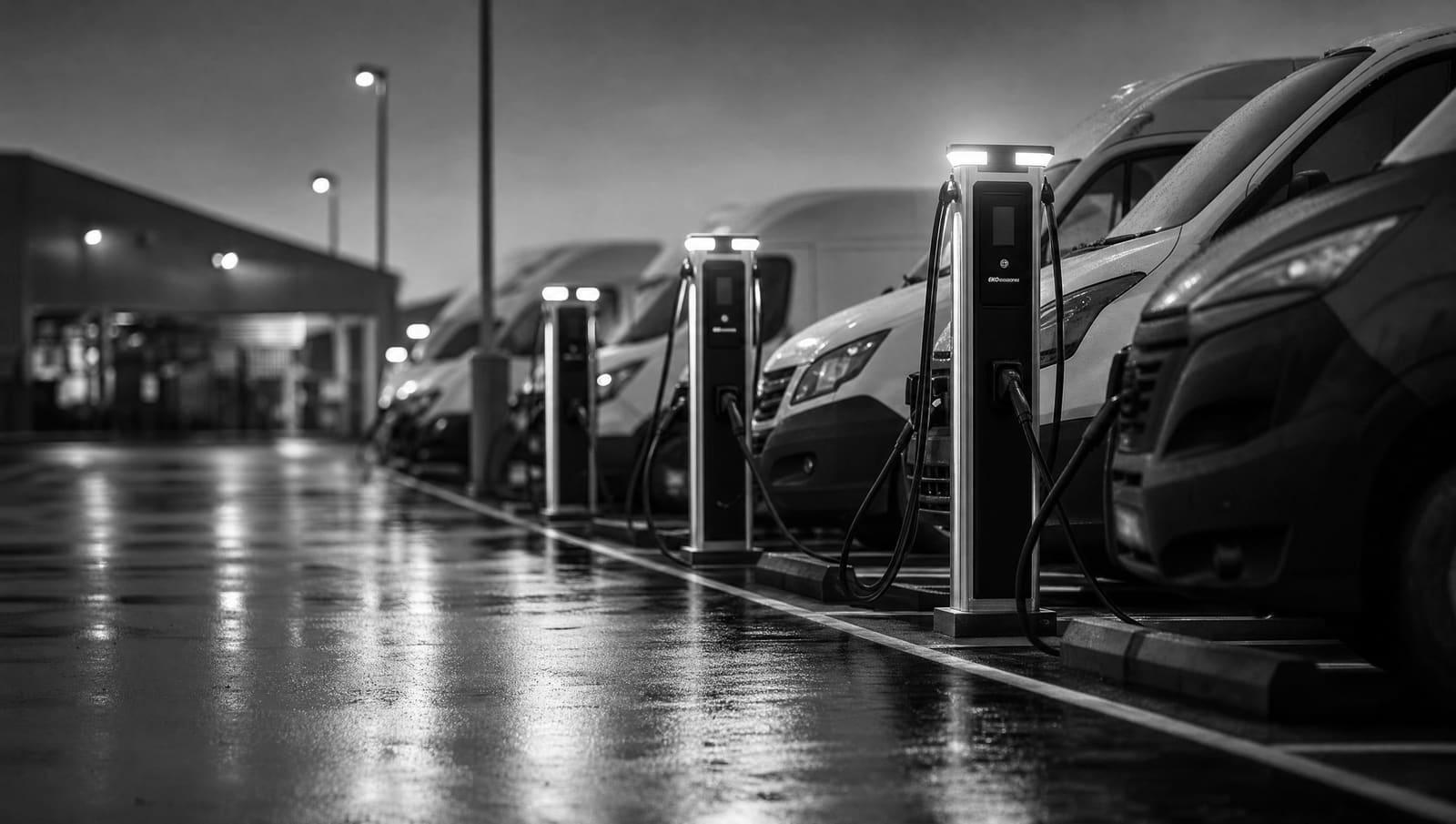
A complete commercial installation starts with vehicle and site needs, an electrical assessment, and charger selection. It then covers utility coordination, design, permitting, make-ready construction, charger mounting, network setup, inspections, commissioning, and turnover. Level 2 often connects through building distribution equipment. DC fast charging can require larger service, switchgear, conversion equipment, and deeper utility involvement.
The site review must confirm usable electrical capacity, power-to-parking routes, accessible stalls, communications, operating rules, and realistic room for expansion.
Start with operations
Make three choices before selecting equipment
The right charger is the one that serves the vehicles during the time they are parked. Begin with who will charge, how long each vehicle stays, and how much energy it must receive before leaving. Then decide who may use the stations and whether drivers will pay.
These choices affect power demand, parking layout, networking, signage, and staff duties. A workplace may value steady charging across a long shift. A fleet may need dependable departure readiness. A public site may need payment, driver support, and clear access rules. Write these operating needs into the project scope before asking for equipment prices. Otherwise, different bidders may quote very different systems that appear comparable only on the surface.
Quote structure
Where installation scope can change
Do not judge proposals by charger price alone. Ask each bidder to separate equipment, electrical work, civil work, utility items, software, and ongoing service.
Equipment choice
Level 2 and DC fast charging solve different problems
Level 2 equipment sends AC power to the vehicle, where onboard equipment converts it for the battery. It is commonly considered for workplaces and other sites where vehicles remain parked for meaningful periods. Because charging can occur over time, the design may spread available power across several ports. That can make managed charging useful when vehicles do not all need maximum output at once.
DC fast equipment performs conversion outside the vehicle and serves drivers or fleets that need faster turnover. That operating benefit can create a much larger electrical project. The review may need to address higher demand, dedicated distribution equipment, cooling or communications needs, utility capacity, and a different construction sequence.
Do not select a category only because it sounds faster. Model a normal operating day. Record arrival times, departure times, expected energy use, vehicle compatibility, and the number of vehicles that may connect together. The result should show whether the site needs many moderate-power ports, fewer high-power ports, or a phased mix. Charger output is only one limit; each vehicle also controls what it can accept.
Project complexity
What makes one installation simpler than another
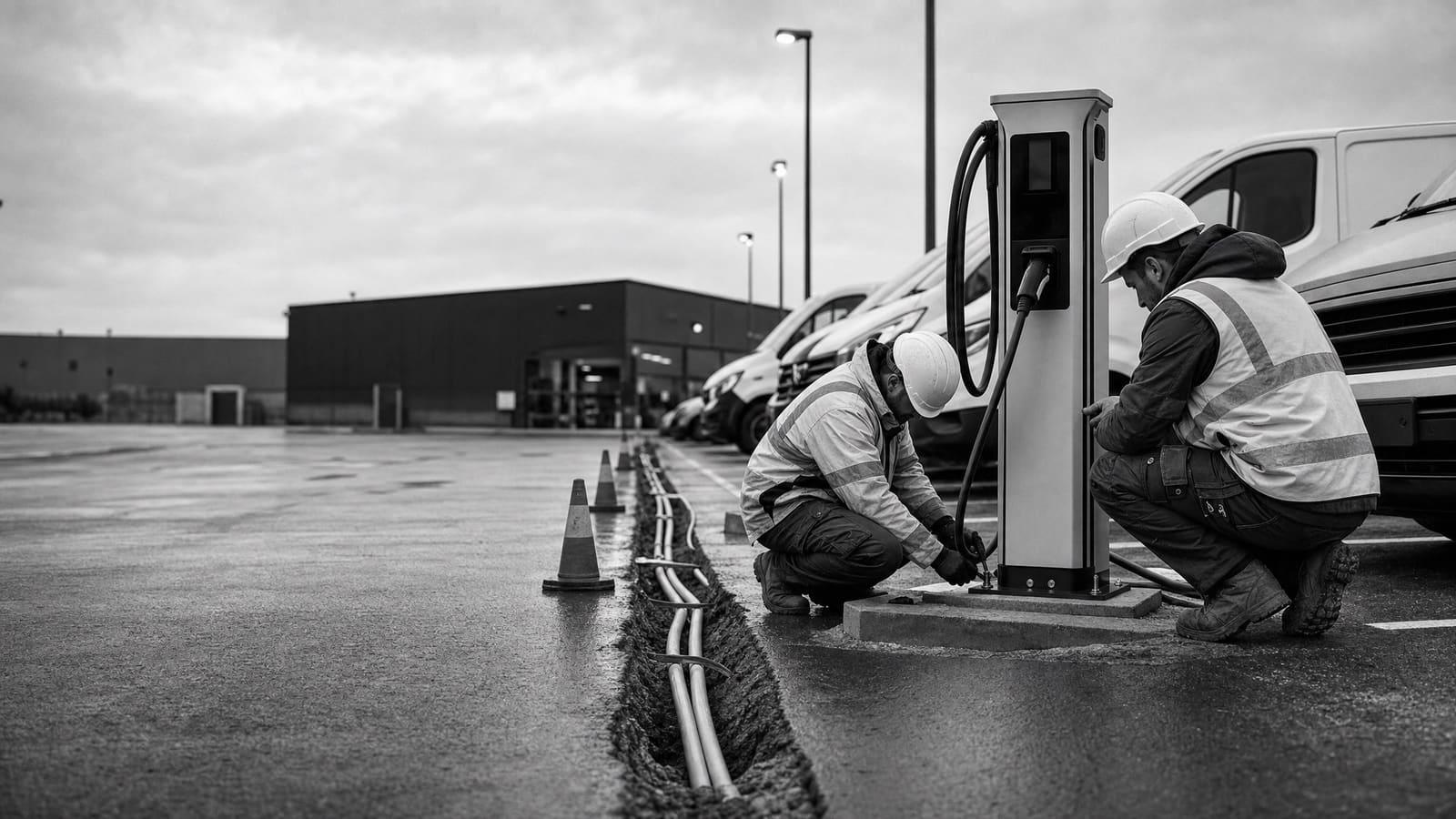
Two projects using similar chargers can require very different work. Electrical capacity, parking distance, civil conditions, utility involvement, and operating requirements shape the installation.
Lower complexity
Capacity and parking are already aligned
The building has usable capacity, parking is near distribution equipment, routing is clear, communications are available, and the selected charging speed fits without major utility work.
Higher complexity
The site needs new supporting infrastructure
The plan requires added service capacity, long underground runs, pavement cuts, new distribution equipment, fast charging, payment features, or construction around active parking and business hours.
Site assessment
Turn the parking plan into an electrical plan
A useful assessment begins at the electrical service and ends at every proposed charging space. The team should document service and distribution equipment, available records, panel conditions, likely load, metering, and the path for conduit and conductors. It should also examine pavement, landscaping, drainage, underground conflicts, mounting locations, cable reach, vehicle movement, signs, lighting, security, and communications.
The parking review matters as much as the electrical review. An accessible position must work as a complete space, not as a charger placed beside an ordinary stall. Equipment should not block required routes. Cables should reach intended vehicle inlets without creating avoidable hazards. Protective equipment should defend chargers from vehicles without making them hard to use.
The assessment should finish with a marked concept plan and a list of open questions. It should identify what is known, what must be verified during design, and which items depend on the utility or permitting authority. That gives bidders a shared basis for pricing and helps the owner separate a firm scope from allowances.
Ask for a load strategy
The proposal should state the assumed charging load, how simultaneous use is handled, what building loads were considered, and when an electrical or utility upgrade becomes necessary.
Fresno permitting
Check the local submittal path before finalizing the layout
The City of Fresno published an EV charging station application checklist that directs applicants to check whether a project qualifies for a streamlined planning process. For projects outside that process, the checklist describes planning information before building-permit submittal. It also calls out accessible EV charging stalls under the California Building Code sections listed in the checklist.
Because that city document was updated in May 2022, the project team should confirm the current process, forms, adopted code, fees, and review sequence before relying on it for an August 2026 project. Make that check during design, before equipment locations and civil work are fixed. A late accessibility or planning correction can change stall geometry, equipment placement, conduit routing, and the construction scope.
Put permit responsibility in the contract
Name who prepares drawings, answers plan-check comments, pays fees, schedules inspections, provides revisions, and closes the permit. Do not leave those duties implied.
Ownership and operation
Decide who runs the stations after construction
Commercial charging can involve the site owner, an equipment vendor, a network provider, a service contractor, drivers, tenants, and the electric utility. Define those roles before procurement. The owner should know who controls pricing and access, who sees utilization data, who answers driver calls, and who may change software settings.
Treat maintenance as part of the buying decision. Chargers combine electrical equipment, connectors, communications, safety devices, and software. The turnover package should explain warranty contacts, monitoring, response procedures, replacement responsibilities, and safe shutdown. If a network subscription ends, the owner should understand which functions remain available.
Owner-controlled
More direct control
The owner may control hardware, policy, data, and service vendors, but must assign staff or contractors to manage access, billing, support, maintenance, and updates.
Service-supported
More outside support
A provider may handle networking or operations. Review contract term, fees, data rights, service levels, hardware compatibility, renewal terms, and the exit process.
Procurement
Buy a working system, not a collection of chargers
A strong request for proposal gives every bidder the same operating brief, concept layout, known electrical information, desired opening date, and expansion goal. It also says whether the facility needs public access, employee use, fleet controls, payment, usage reports, or station-listing support. If those requirements are missing, proposals may use different assumptions and cannot be compared fairly.
Review the full ownership picture. Equipment, make-ready work, networking, payment services, maintenance, repairs, electricity-rate effects, warranties, and future additions can all affect the decision. For a focused discussion of project pricing, see commercial EV charging cost factors. Any tax credit, rebate, utility support, or other funding should be checked against the project address, ownership model, equipment, labor rules, placed-in-service timing, and current program terms. Do not carry an unverified incentive as guaranteed money in the approved budget.
Phasing can protect capital when demand is still developing. Build only the ports needed now while preparing selected pathways and electrical space for a defined later phase. The documents should distinguish installed equipment from future-ready infrastructure so the owner knows exactly what the first contract delivers.
Comparable bids
Five things every quote should show
Require the same five categories from each bidder. Clear boundaries make omissions, allowances, and long-term obligations easier to compare.
01
Design basis
Charger type, port count, output, load assumptions, vehicles, dwell time, site plan, and expansion plan.
02
Complete construction scope
Electrical gear, conduit, conductors, trenching, restoration, mounting, protection, signs, communications, and accessible-space work.
03
Permits and utility duties
Applications, drawings, fees, plan-check responses, inspections, metering, service work, and responsibility for each task.
04
Equipment and operating costs
Hardware, warranties, network activation, subscriptions, payment fees, support, maintenance, and owner-provided items.
05
Schedule, exclusions, and acceptance
Lead times, dependencies, allowances, exclusions, testing, training, closeout documents, and standards for final acceptance.
Keep planning locally
Related EV charging pages in Fresno
Get a defensible number
Price the equipment and the building together.
Send the address, operating target, and target opening date. Flux will identify what must be verified before the project can be priced.
Price my chargersQuestions
Straight answers.
What does commercial EV charger installation include?
A complete scope can include needs planning, a site and electrical assessment, charger selection, load calculations, utility coordination, design, permits, equipment procurement, make-ready electrical and civil work, mounting, wiring, network activation, inspections, commissioning, training, and closeout documents. The quote should state which party owns every task.
Should a Fresno commercial property use Level 2 or DC fast charging?
Choose from the operating need. Level 2 often fits vehicles parked for longer periods, including many workplace uses. DC fast charging is intended for quicker turnover but may require substantially different electrical and utility planning. Compare vehicle dwell time, energy needed before departure, simultaneous demand, compatibility, and available site power.
Can the existing electrical service support EV chargers?
Only a site-specific electrical review can answer that. The review should examine the service, panels, current building loads, proposed charging load, and how many vehicles may charge together. Managed charging may control simultaneous demand, but it does not replace proper engineering or utility review when added capacity is required.
Does a commercial EV charging project need a Fresno permit?
The City of Fresno has published an EV charging station submittal checklist and a path for checking streamlined planning eligibility. The project team should verify the current August 2026 requirements, adopted codes, forms, fees, and review sequence directly with the city before submitting or fixing the final layout.
How should we compare commercial EV charger installation quotes?
Normalize the design basis first. Each quote should use the same port count, charging output, operating rules, and expansion plan. Then compare electrical and civil work, utility responsibilities, permits, equipment, networking, recurring fees, maintenance, warranties, schedule assumptions, exclusions, commissioning, and closeout.
Should we install every planned charger now?
Not always. A phased project can install the ports supported by current demand while reserving selected pathways, panel space, communications, and parking positions for growth. Ask the designer to define the future phase instead of using the vague label “EV ready.” This makes the value and limits of the first phase clear.
What should happen during commissioning?
Commissioning should verify safe energization, operation at every port, connector function, network communication, access rules, payment settings when used, monitoring, and any load-management controls. Turnover should include approved drawings, permits, inspection records, warranties, equipment information, account credentials, training, and service contacts.
Are incentives available for a Fresno commercial installation?
Incentives and tax rules are time-sensitive and may depend on the exact address, equipment, ownership structure, labor requirements, and completion date. Screen the project using current official program rules before approval, and treat possible funding as unconfirmed until eligibility and required documentation are verified.
Sources used for this guide
- [1]afdc.energy.gov — Alternative Fuels Data Center: Procurement and Installation for Electric Vehicle Charging Infrastructure
- [2]betterbuildingssolutioncenter.energy.gov — DOE Better Buildings Commercial EV Charging Infrastructure Guide
- [3]driveelectric.gov — Public electric vehicle charging infrastructure playbook · Joint Office of Energy and Transportation
- [4]energy.gov — DOE Federal Workplace Charging Program Guide
- [5]fresno.gov — Entitlements