The direct answer
Commercial EV charger installation in Baltimore.
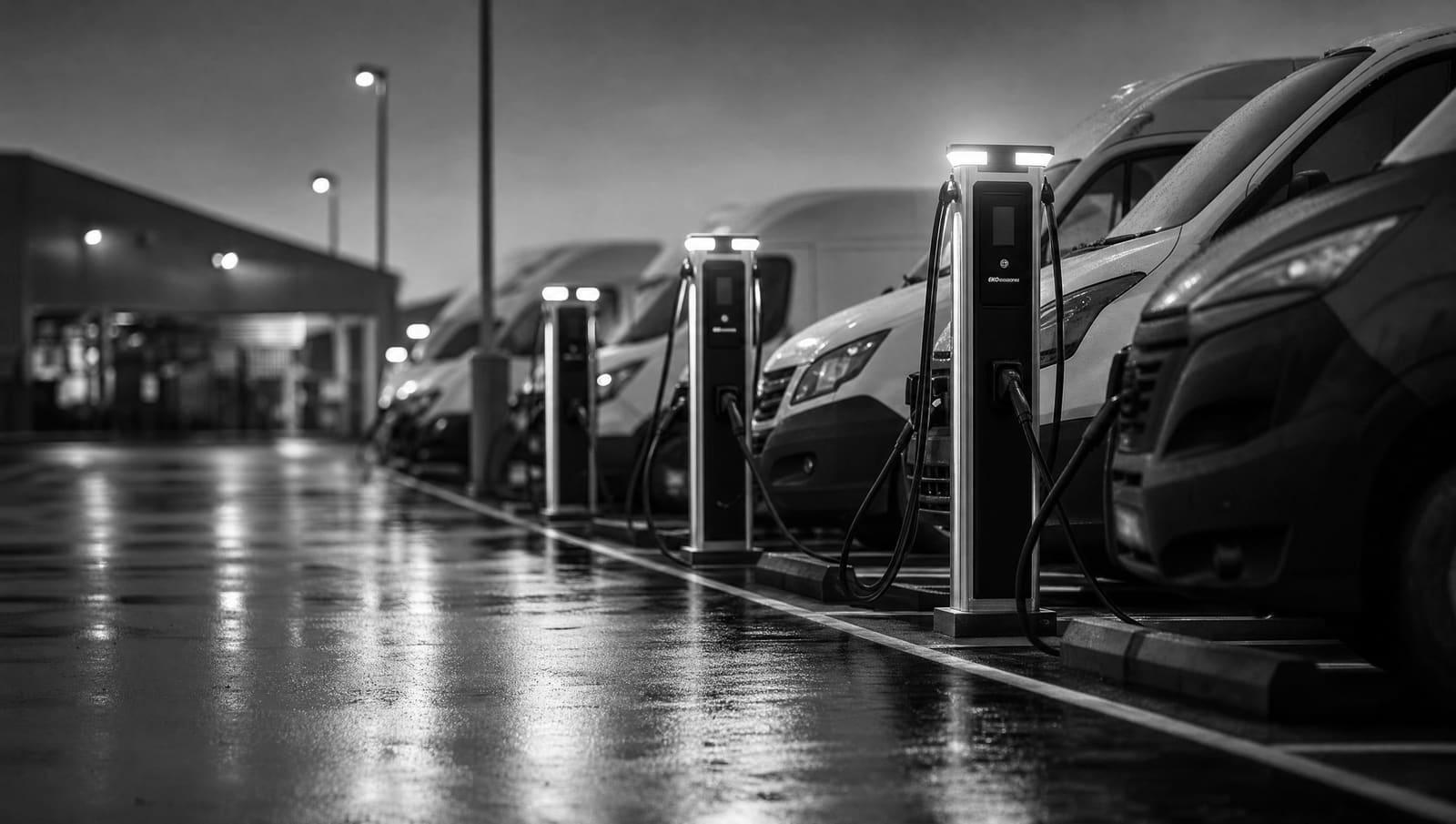
A complete commercial installation covers the site and electrical assessment, charger selection, utility coordination, design, permitting, construction, network setup, inspection, commissioning, and turnover. Level 2 charging often connects through commercial electrical distribution. DC fast charging can require much larger service, transformer, switchgear, and civil scopes.
The site review must verify vehicle needs, parking time, service capacity, equipment locations, cable reach, construction routes, communications, and room for expansion.
Start with operations
Make three choices before selecting chargers
The right design begins with how vehicles use the property. Record which vehicles will charge, when they arrive, how long they remain parked, and how much energy they need before departure. Then decide who may use each port and whether drivers will pay.
These choices determine the number and type of chargers, their power settings, parking layout, network features, and electrical demand. A workplace with long parking periods may favor several Level 2 ports. A fleet with short turnaround windows may need higher power or a carefully scheduled mix. Public charging can add payment, communications, signage, security, and customer-support needs.
Do not choose equipment from its maximum rating alone. A charger cannot deliver more useful power than the site, vehicle, schedule, and operating policy allow. Build the charging plan first. Use that plan to size the equipment and the supporting infrastructure.
Scope the whole project
What belongs in the installation budget
A useful budget separates equipment from the work needed to deliver power, protect the site, pass inspection, and operate the stations.
Equipment fit
Level 2 and DC fast charging create different projects
Level 2 charging is often a strong fit when vehicles remain parked for hours. The vehicle converts building-supplied AC power for its battery. A commercial design may serve workplace drivers, tenants, visitors, or fleet vehicles through wall-mounted or pedestal equipment. Several ports can sometimes share available capacity through managed charging, but the controls and operating rules must be defined in the design.
DC fast charging moves the power conversion into larger external equipment. It serves situations where vehicles need meaningful energy during shorter stops. That higher-power goal can change nearly every part of the project: utility review, service capacity, transformer needs, switchgear, equipment pads, protective barriers, cooling clearance, cable management, and construction sequencing.
Do not treat the two choices as simple good-better-best tiers. Faster equipment is useful only when the operating need supports it. A lower-power port that serves a parked vehicle for its full dwell period may be the better asset. A fleet with tight departure windows may need higher power, scheduling, or both. Compare designs by completed charging sessions and operational fit, not charger nameplate power alone.
Complexity check
What makes an installation easier or harder
Two properties buying the same charger can have very different construction plans. Existing power, routing, parking layout, utility involvement, and future expansion matter more than the equipment box alone.
Lower complexity
Power and parking align
The service has usable capacity, charging spaces sit near distribution, communications are available, and installation avoids major pavement or utility work.
Higher complexity
The site needs new infrastructure
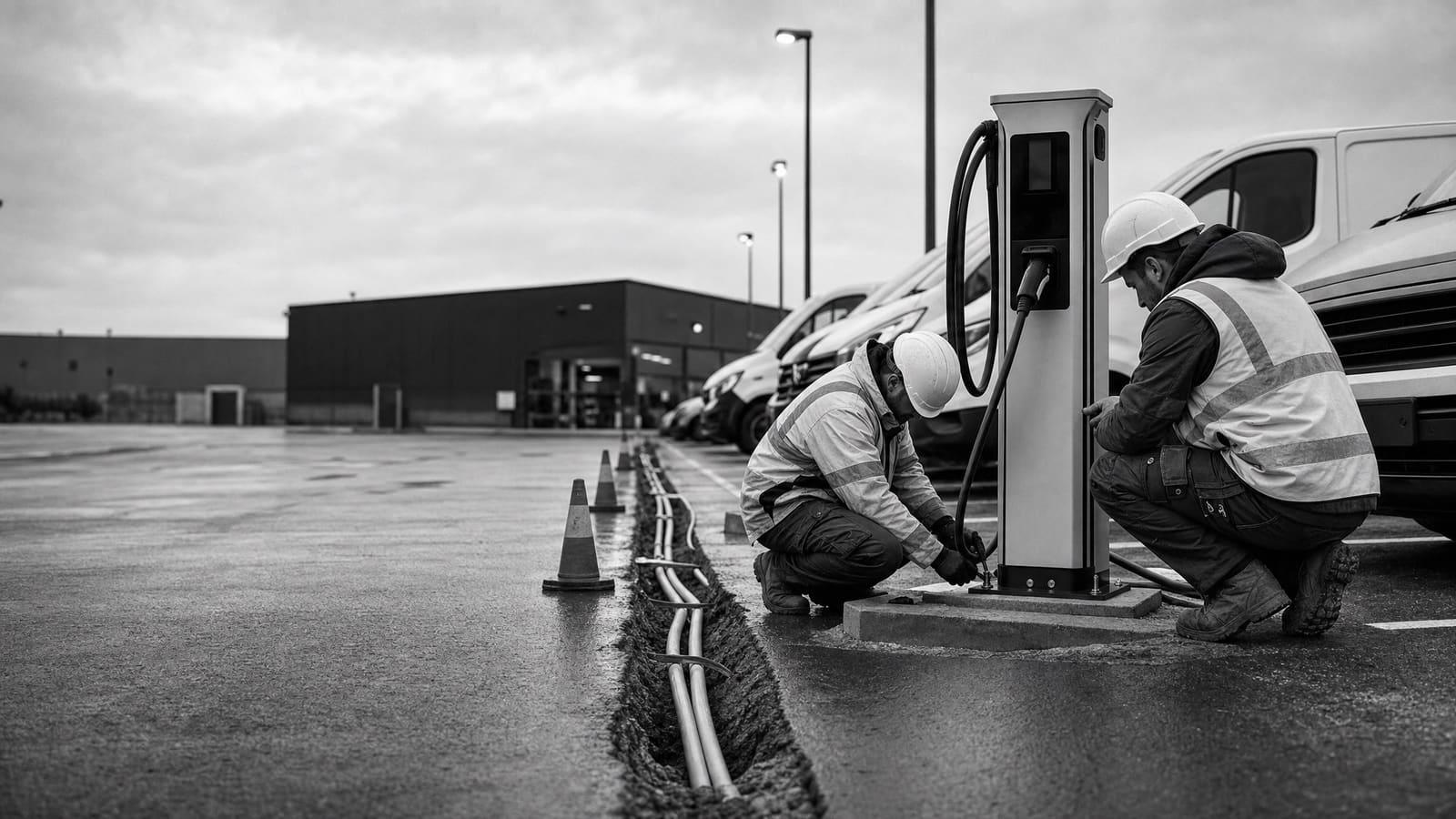
Long feeder routes, service upgrades, transformer work, extensive trenching, constrained parking, or high-power charging add design, coordination, and sequencing.
Site assessment
Measure the conditions that will shape the quote
A commercial site review should begin at the electrical service and end at every proposed charging space. The reviewer should document the meter and service arrangement, panel ratings, connected loads, available breaker positions, equipment condition, and likely route for new conductors. A load calculation is more useful than a visual guess about spare capacity.
Outside, the plan should measure feeder distances and identify pavement, landscaping, drainage, curbs, walkways, traffic paths, and places where vehicles could strike equipment. It should also confirm cable reach, mounting locations, lighting, signage, accessibility, security, and the communications path needed by networked chargers.
The review should compare the first phase with the expected future site. Installing spare conduit or planning distribution space during initial construction may avoid reopening finished surfaces later. That does not mean oversizing every part of the project. It means making deliberate choices about what to install now, what to reserve, and what future trigger will justify expansion.
The resulting scope should state assumptions and unresolved items. If utility capacity, underground conditions, or equipment lead times remain unknown, the proposal should identify who will resolve them and when.
Ask for evidence, not a capacity guess
A site walk should produce measured routes, documented equipment, a load basis, proposed charger locations, and a list of utility or field conditions that still need confirmation.
Local approval
Confirm whether the property is in Baltimore City or Baltimore County
The page supplied by Baltimore County applies to County projects, not automatically to properties inside Baltimore City. It says an electrical permit is required for EV charging station installation and directs commercial applicants to the County permit process. It also requires work by a licensed electrical contractor.
Jurisdiction should therefore be confirmed from the project address before design and permit assumptions are finalized. For a Baltimore County site, outdoor equipment must be listed, rated for outdoor use, secured in place, and installed to its manufacturer’s instructions. The County also identifies cord control, accessible paths, equipment protection, and safe ongoing maintenance as important conditions. A project in Baltimore City needs its own authority review rather than relying on the County page.
Resolve jurisdiction before procurement
Put the property jurisdiction, permit authority, contractor requirements, expected inspections, and responsibility for submittals in the written scope before equipment is ordered.
After energization
Decide who will own the daily operating work
A charger installation becomes an operating system once drivers begin using it. The owner needs clear responsibility for station access, pricing or reimbursement, software accounts, data, payment processing, driver questions, inspections, cleaning, cable care, and repairs.
Networked equipment can support access control, utilization records, payment, remote status, and power management. It can also create subscriptions, account administration, connectivity needs, and dependence on a service provider. Non-networked equipment may reduce software duties, but it offers fewer remote controls and less operating information.
Choose the model that fits the facility team. Put ownership of every account, warranty, credential, and service request in the turnover package.
Owner managed
Keep direct control
The facility team manages equipment, policies, accounts, driver support, service vendors, and operating records.
Service supported
Assign defined responsibilities
A provider may handle selected software or service tasks, but scope, response expectations, fees, and data access must be clear.
Procurement
Compare the completed system, not just the charger price
A charger quote is not a complete installation quote. Compare proposals against the same port count, power target, parking layout, operating policy, and future plan. Each bidder should identify the equipment supplied, electrical basis, feeder route, civil work, utility assumptions, permits, inspections, network setup, commissioning, exclusions, and owner responsibilities.
Review lifecycle fit as well as construction scope. Confirm warranty terms, replacement process, software fees, payment costs, communications requirements, available service, and who responds when a station stops working. Ask whether the proposed equipment can support the access rules and reporting your team needs. Avoid paying for features nobody will manage.
For a phased project, show the ultimate concept and the work included in the current phase. The design might reserve panel space, conduit paths, pads, communications, or capacity for later ports. It should also state what must be studied again before expansion. This makes first-phase bids easier to compare and reduces the chance that a short-term equipment decision blocks the long-term site plan.
Keep incentive assumptions separate from the base construction scope. Federal, state, utility, and local programs can change. Verify eligibility, location rules, deadlines, tax treatment, and application sequence at the time of purchase. For broader budget planning, see commercial EV charging costs.
Quote checklist
Five items every comparable proposal should show
Give bidders the same operating requirements, then require these five answers in writing. Differences will be easier to find before contracts are signed.
01
Charging outcome
Ports, power, users, dwell time, access rules, and expansion basis.
02
Electrical and civil scope
Service assumptions, panels, routes, trenching, protection, restoration, and exclusions.
03
Equipment and software
Models, listings, warranties, networking, communications, payment, and recurring fees.
04
Approvals and schedule
Design, utility tasks, permits, inspections, procurement, milestones, and responsible parties.
05
Commissioning and turnover
Port testing, activation, training, records, credentials, manuals, and service contacts.
Keep planning locally
Related EV charging pages in Baltimore
Get a defensible number
Price the equipment and the building together.
Send the address, operating target, and target opening date. Flux will identify what must be verified before the project can be priced.
Price my chargersQuestions
Straight answers.
What is included in commercial EV charger installation?
A complete scope includes site assessment, load review, equipment selection, design, utility coordination, permits, electrical and civil construction, mounting, networking, inspection, commissioning, training, and turnover documents. The proposal should clearly identify exclusions and owner responsibilities.
Should a commercial property use Level 2 or DC fast charging?
Use parking time and required energy to decide. Level 2 often fits vehicles parked for hours. DC fast charging fits shorter turnaround needs but can require much larger electrical and utility infrastructure. Some sites benefit from a planned mix.
Can the existing electrical service support EV chargers?
That requires a load review based on the service, distribution equipment, existing demand, charger plan, and charging schedule. Managed charging may help control demand, but it must be designed around the vehicles’ required departure times.
Does a Baltimore commercial charger project need a permit?
Permit requirements depend on the property jurisdiction and scope. Baltimore County states that an electrical permit is required for EV charging station installation. A property inside Baltimore City needs review under the City’s applicable process rather than the County process.
When should the utility become involved?
Engage the utility during planning when the project may affect service capacity, metering, transformers, rates, or the construction schedule. High-power charging and service upgrades usually make early coordination more important.
What should happen during commissioning?
Every port should be energized and tested through a charging session. Network status, access controls, payment functions, power settings, cable reach, labels, and safety features should be checked. The owner should receive manuals, credentials, warranty records, drawings, and service contacts.
How should incentives be handled in the budget?
Treat incentives and tax credits as time-sensitive. Verify the address, technology, applicant, deadlines, eligible costs, and required application order before relying on funds. Keep the base project price visible so the decision does not depend on an unconfirmed award.
Sources used for this guide
- [1]afdc.energy.gov — Alternative Fuels Data Center: Procurement and Installation for Electric Vehicle Charging Infrastructure
- [2]betterbuildingssolutioncenter.energy.gov — DOE Better Buildings Commercial EV Charging Infrastructure Guide
- [3]driveelectric.gov — Public electric vehicle charging infrastructure playbook · Joint Office of Energy and Transportation
- [4]energy.gov — DOE Federal Workplace Charging Program Guide
- [5]baltimorecountymd.gov — Electric Vehicle (EV) Charging Station Permit | Baltimore County Government